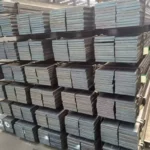
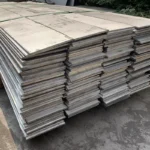
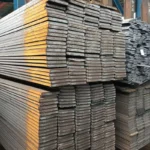
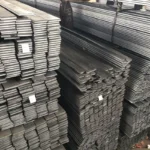
Description
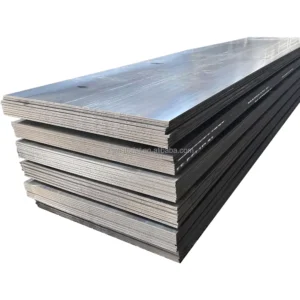
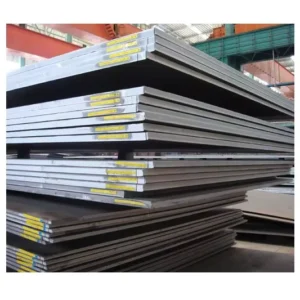
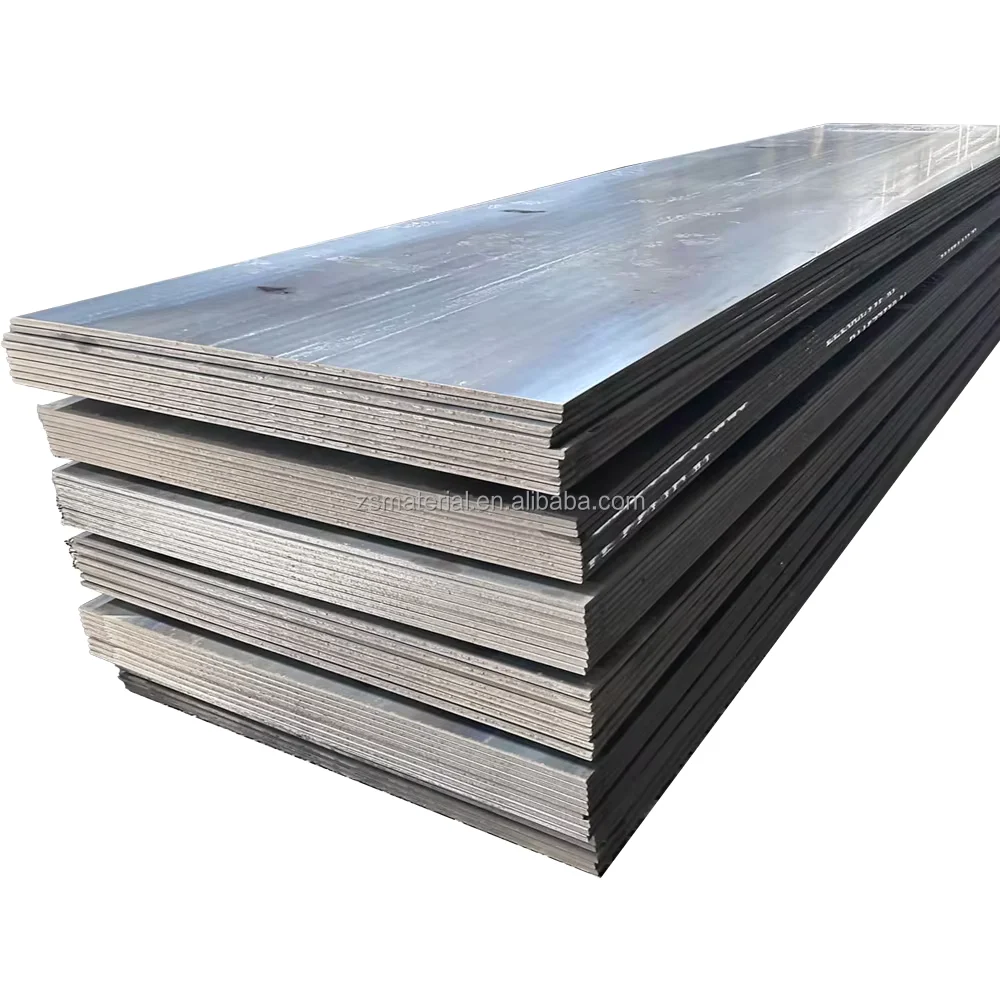
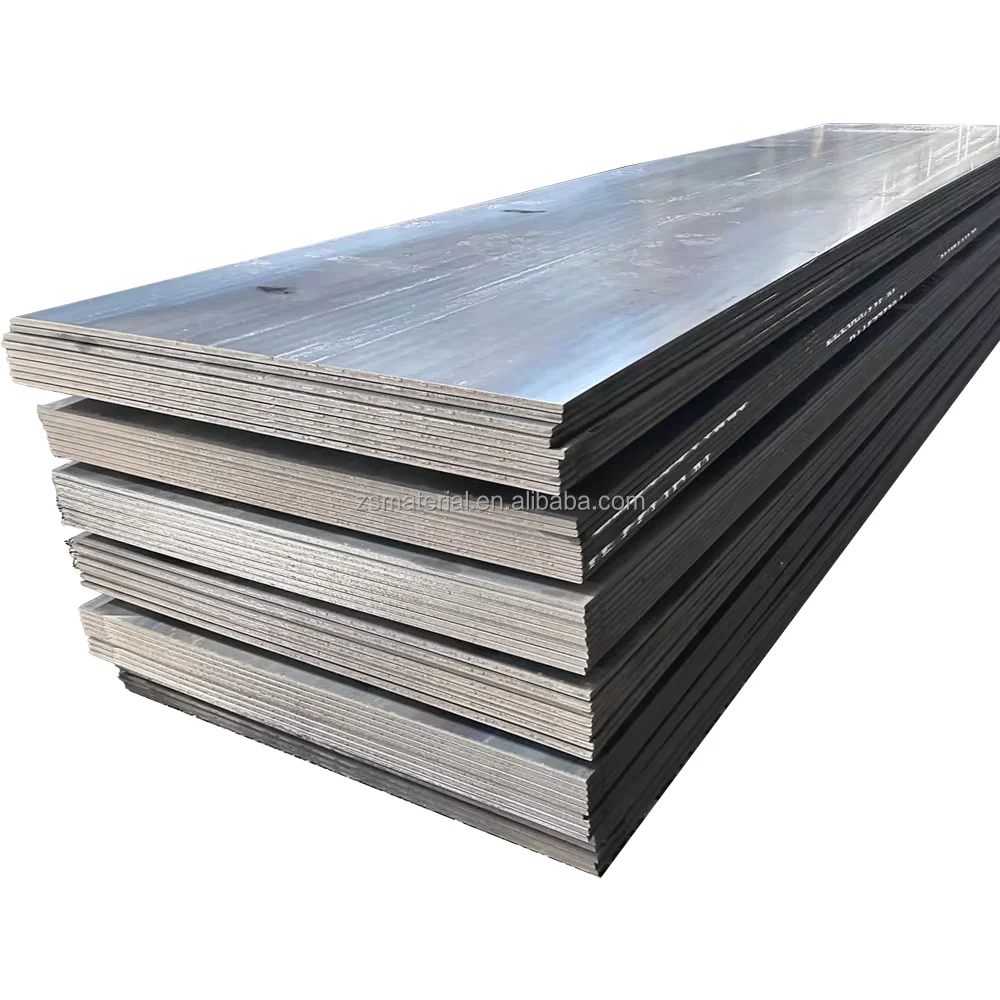
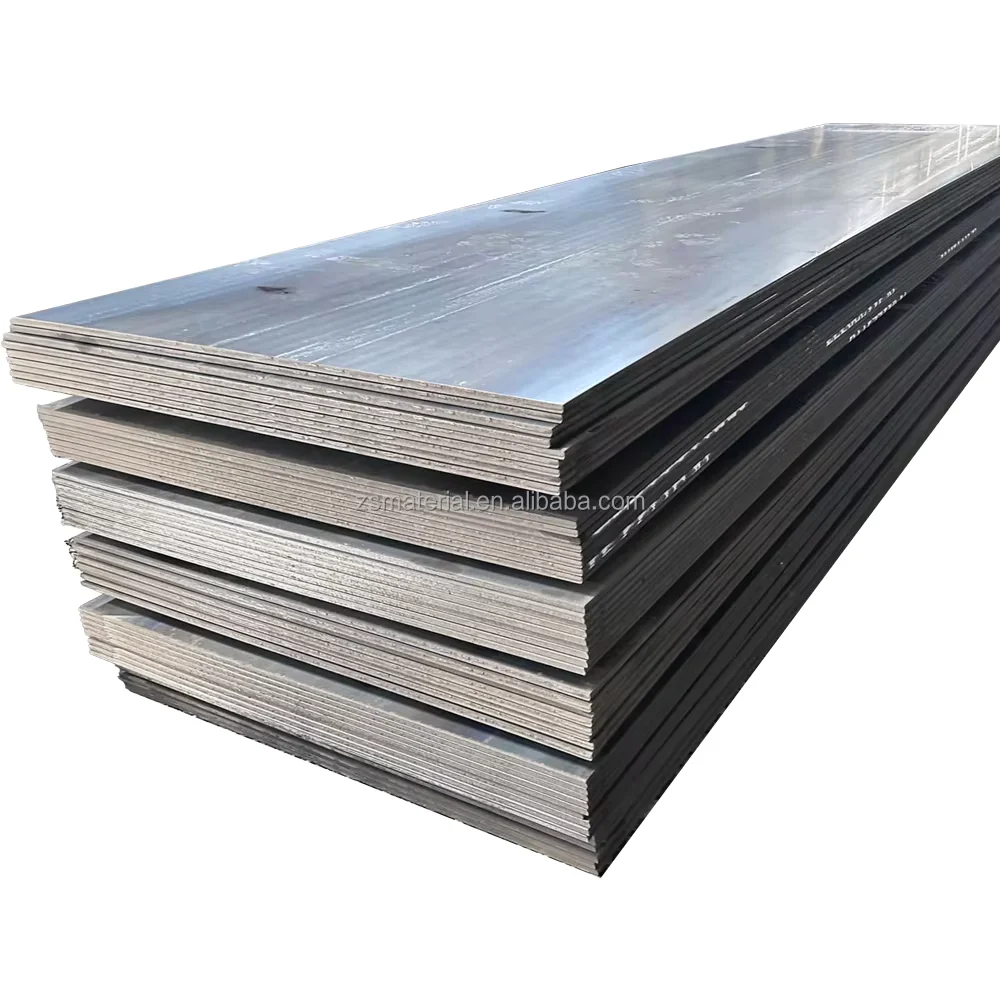
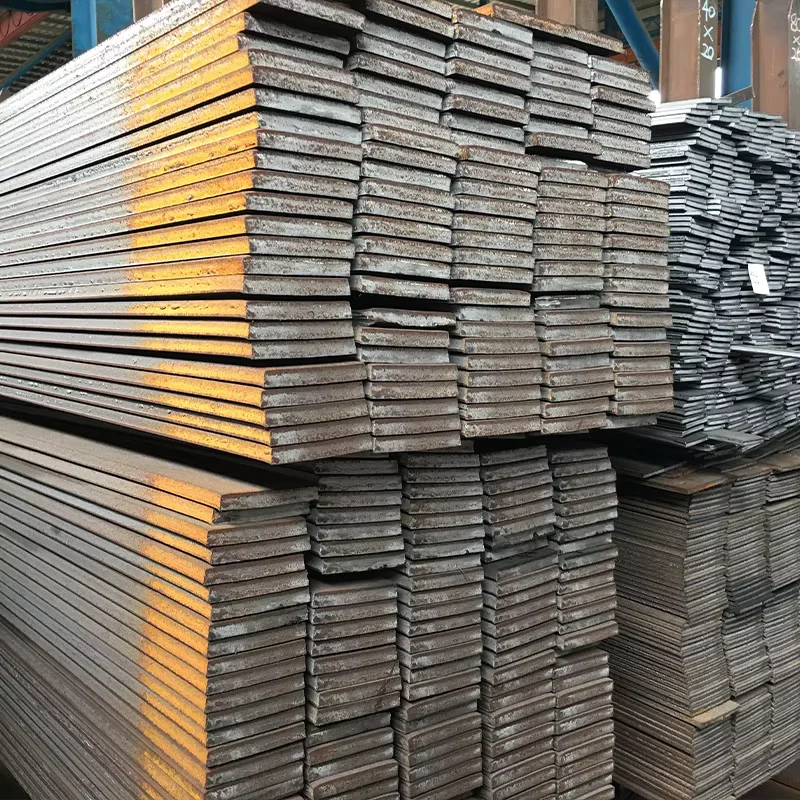
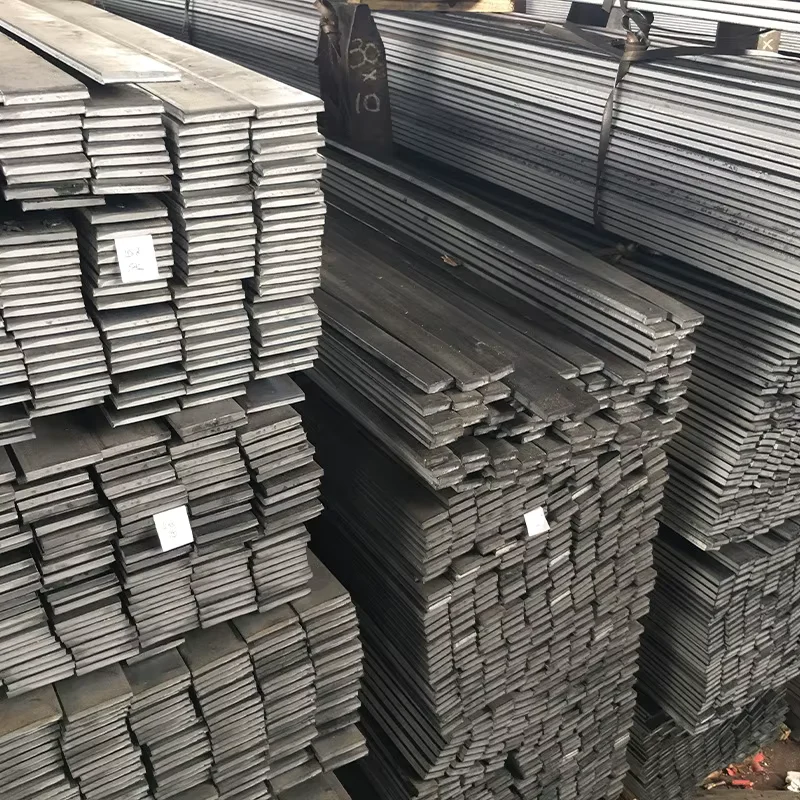
One-Source Carbon Flat Bar Supply — Hot rolled Q235, A36, S235JR, S275JR, S355JR and SS400 flat bars with ±1% tolerance, full processing and original mill test certificates under one roof.
Technical Specifications
| Parameter | Value |
|---|---|
| Designation | Q235 / A36 / S235 / S275 / S355 / SS400 Carbon Steel Flat Bar |
| Product Type | Carbon Steel Flat Bar |
| Steel Grade | Q235, Q235B, A36, S235JR, S275JR, S355JR, SS400 |
| Standard | GB/T 700, ASTM A36, EN 10025, JIS G3101 |
| Section Shape | Flat Bar |
| Technique | Hot Rolled |
| Material Type | Non-Alloy Steel |
| Tolerance | ±1% |
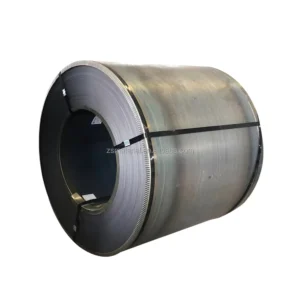
| Processing Services | Bending, Welding, Decoiling, Punching, Cutting |
| Application | Construction frames, structural steel fabrication, industrial platforms, machinery bases, general engineering |
| Lead Time | 8–14 Days |
| Origin | China |
Application Suitability
| Industry | Typical Applications |
|---|---|
| Structural Steel Fabrication | Welded frames, bracket assemblies, column base plates, truss bracing members |
| Construction & Infrastructure | Bridge walkway supports, building skeleton bracing, scaffolding ledger blades |
| Industrial Platforms | Grating support bars, mezzanine edge trim, conveyor frame rails |
| Machinery Manufacturing | Equipment mounting bases, gear guard frames, hydraulic press platens |
| General Engineering | Anchor bolts backing plates, pipe rack stringers, crane runway beams |
Where Grade Equivalence Gaps Cause Customs Holds and Rework
Q235B, A36, S235JR and SS400 overlap in yield range but diverge in chemistry, impact testing and marking — mixing them on one PO creates both fabrication risk and documentation rejection.
Buyers sourcing carbon steel flat bars across multiple project sites routinely hit the same wall: the fabricator in Southeast Asia asks for S355JR per EN 10025, the EPC contractor in the Middle East specifies A36 per ASTM, and the workshop in South America draws SS400 per JIS G3101. On paper these grades sit close together in tensile strength, yet their sulfur-phosphorus limits, Charpy impact requirements and elongation clauses differ enough that a mill test certificate for one cannot substitute for another. [NEED_CITE: steel grade equivalence between EN, ASTM and JIS standards] When a single shipment arrives with mixed heat numbers and no clear grade segregation, the receiving inspector flags the lot, customs holds the container for document verification, and the fabricator refuses to cut until chemistry is confirmed. As a Q235 A36 S235 S355 carbon steel flat bar supplier, we segregate every heat at the mill, mark each bundle with grade and heat number, and issue one MTC per heat — so the grade on the certificate matches the stamp on the steel and the entry on the packing list.
Matching Flat Bar Grades to Structural and Fabrication Loads
Non-alloy carbon steel flat bars in Q235B through S355JR cover the full spectrum of general structural work — from light bracing and secondary framing where Q235B or A36 suffices, to primary load-bearing members and machinery bases that call for S355JR’s higher yield floor. The hot rolled surface scale bonds well with shop primer and weld prep, while the ±1% thickness tolerance keeps connection plate stacking within bolt-hole clearance. For a Q235 A36 S235 S355 carbon steel flat bar supplier serving EPC and fabrication workshops, the practical question is never which single grade to push — it is whether the mill can roll, certify and ship the full grade ladder in one consolidated order so the buyer does not end up splitting a single project across four vendors.
Engineering Compliance and Certification Pathways
Structural flat bars used in load-bearing frames must trace back to a recognized standard: EN 10025 for European projects, ASTM A36 for North American and many Middle Eastern specifications, GB/T 700 for domestic Chinese work, and JIS G3101 for Japanese-spec industrial plants. [NEED_CITE: EN 10025 hot rolled structural steel product requirements] CE marking becomes mandatory when the flat bars enter the EU construction products regulation chain, and SGS or BV third-party inspection is routinely called for on government-funded infrastructure tenders in Africa and the Gulf. Weldability is consistent across the Q235–S355 range thanks to low carbon equivalents, but the fabricator’s WPS must reference the correct grade designation — another reason the MTC must travel with the steel, not arrive later by email.
Reading the Grade Ladder: Q235, A36, S-Series and SS400
The Q-series (GB/T 700) and the S-series (EN 10025) both use a yield-strength naming convention — Q235 and S235JR both target a 235 MPa minimum yield floor, while S355JR steps up to 355 MPa. ASTM A36, by contrast, names by tensile range (36 ksi minimum tensile) and allows a slightly wider carbon window, which matters when the flat bar will be galvanized or bent to a tight radius. JIS SS400 is a tensile-only designation with no mandatory impact test, making it a common choice for non-critical bracing in warm-climate plants. As a Q235 A36 S235 S355 carbon steel flat bar supplier, we roll all six grades on the same hot-rolled strip mill, so a buyer can consolidate a mixed-grade order — say S355JR for primary beams and Q235B for secondary bracing — into one shipment with one set of shipping documents and separate MTCs per heat.
The Hidden Cost of Unverified Flat Bar Procurement
Ordering flat bars by size alone, without locking the grade and demanding a heat-level MTC, shifts the real cost from the purchase invoice to the job site. A bundle stamped S235JR that actually tests as Q235B will pass visual inspection but fail the structural engineer’s chemistry audit, forcing the fabricator to halt welding and request replacement material — typically weeks after the original delivery. [NEED_CITE: consequences of non-conforming structural steel in construction projects] Negative tolerance abuse compounds the problem: a flat bar ordered at 20 mm that arrives at 18.5 mm reduces the section modulus and voids the design calculation, yet the weight-based invoice still charges for nominal thickness. Certification gaps create a separate failure mode — shipments without traceable MTCs get held at destination port until the importer pays for retrospective chemistry testing, often exceeding the original freight cost.
Why Fabricators and EPC Buyers Consolidate Here
We operate the flat bar division from our own rolling and finishing lines in Jinan, so every Q235 A36 S235 S355 carbon steel flat bar leaves the mill with our quality team’s eyes on it — no trading-company markup, no blind relabeling from unknown stock. Our in-house lab issues the MTC before the container is stuffed, recording heat number, chemical composition and mechanical test results against the specific standard the PO calls for. Buyers running multi-grade projects — S355JR for primary structure, Q235B for bracing, A36 for North American-spec equipment skids — consolidate onto one PO because we hold rolling schedules across the full grade ladder and cut to length, punch, bend and weld in our own shop before dispatch. Every flat bar is CE-marked where required, ISO 9001:2015 certified in our quality system, and available for SGS or BV third-party inspection at the buyer’s request. For heavy flat bar shipments, our loading crew uses flatbed and open-top container plans built around the actual bundle length and weight, avoiding the overweight penalties and port delays that come from generic stowage.
Documentation & Compliance
- Mill Test Certificate per EN 10025 or ASTM A36, documenting heat number, chemical composition and mechanical properties for each S355JR, Q235B or A36 flat bar bundle
- CE Declaration of Performance for flat bars entering EU construction product supply chains, referencing EN 10025 test clauses
- ISO 9001:2015 quality management certificate covering the full hot rolling, cutting and inspection process
- SGS or BV third-party inspection report available at the loading port, witnessing dimensional check, visual surface audit and MTC cross-verification
- Full material traceability from heat number through bundle marking to packing list and bill of lading
- Export customs package: commercial invoice, packing list, bill of lading, certificate of origin and standard-grade declaration
Packaging, Loading & Delivery
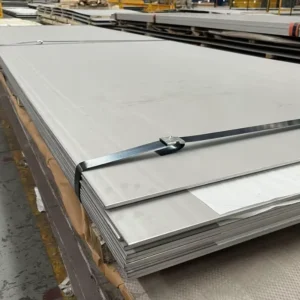
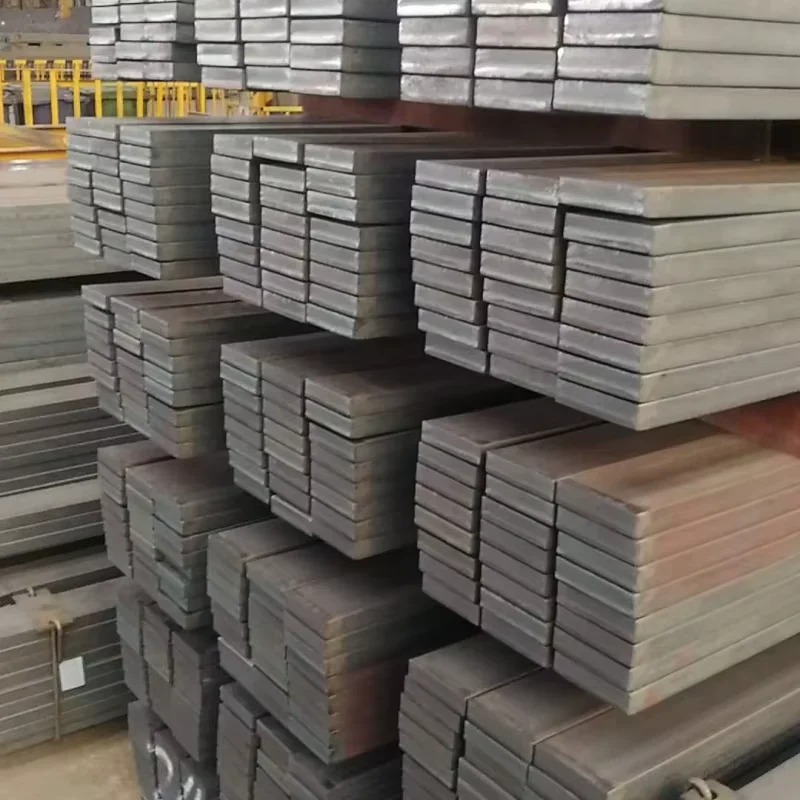
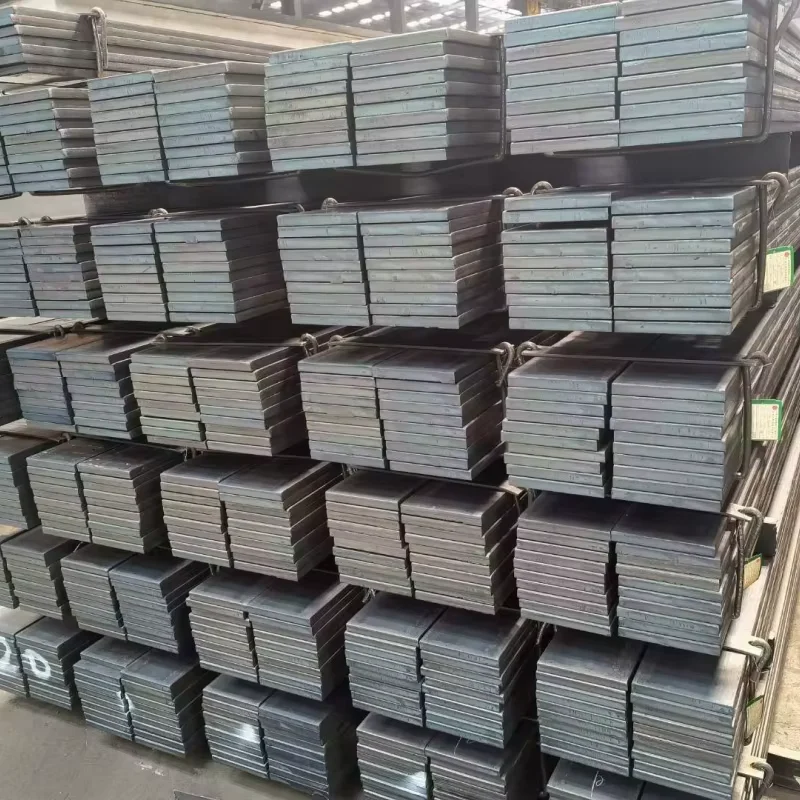
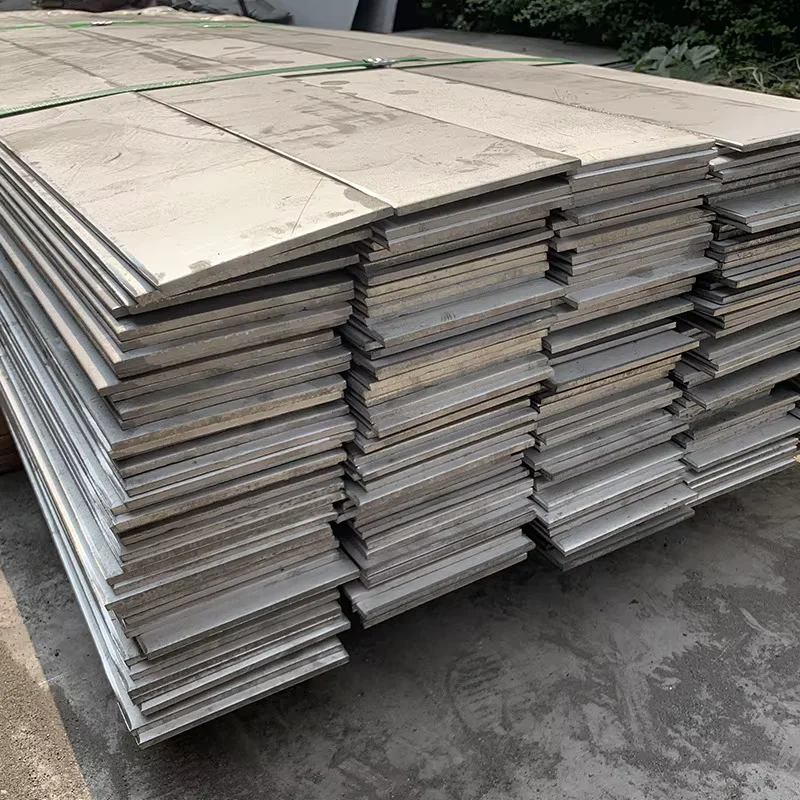
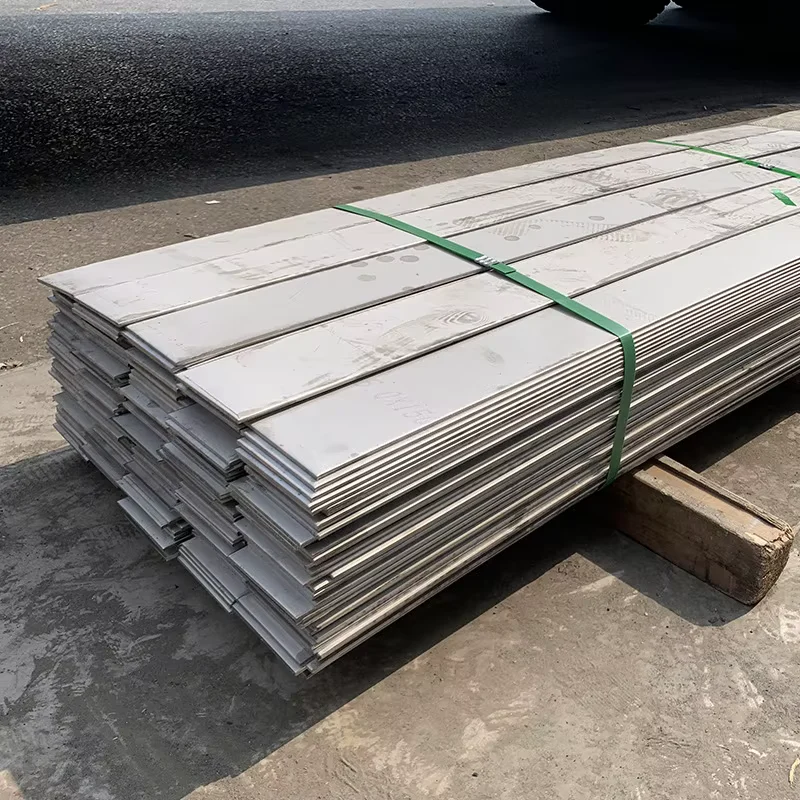
- Hot rolled Q235, A36 and S355JR flat bars bundled with galvanized steel straps at both ends, with edge protectors preserving the rolled surface during ocean transit
- Cut-to-length flat bars stacked by grade and heat number on timber sleepers, each bundle labeled with steel grade, heat number, dimensions and purchase order reference
- Flatbed and open-top container loading plans matched to bundle length — 6 m and 12 m lengths loaded longitudinally to avoid overhang and port rejection
- Custom cutting, punching and bending completed before dispatch, so the fabricator receives ready-to-weld pieces rather than raw stock requiring secondary work
- FOB, CIF and DDP terms available, with door-to-door coordination for project sites in West Africa, Southeast Asia and the Middle East
Getting a Firm Quote and Mill Test Certificate
Send the grade breakdown — which heats need S355JR, which need Q235B or A36 — along with thickness, width, length per piece, total tonnage and destination port. We return a line-item quote separating material cost, processing charges and freight terms within one working day, together with a sample MTC template for your engineer’s review. Confirm the order with a signed PI and deposit, and we lock the rolling schedule, arrange third-party inspection if required, and load under our own supervision.
Frequently Asked Questions
Q: What is the grade equivalence between Q235B, A36, S235JR and SS400?
A: These grades share overlapping yield and tensile ranges but differ in chemistry limits, impact testing requirements and marking conventions. Q235B and S235JR both target 235 MPa yield; A36 is named by its 36 ksi tensile floor; SS400 is a tensile-only JIS designation. We supply each to its own standard and issue separate MTCs — substitution should only proceed after the project engineer approves.
Q: Can you provide Mill Test Certificates and accept third-party inspection?
A: Yes. Every bundle of Q235 A36 S235 S355 carbon steel flat bar ships with an original MTC showing heat number, chemical composition and mechanical properties. SGS and BV third-party inspection is available at the loading port at the buyer’s request.
Q: What processing services are available for hot rolled flat bars?
A: We offer cutting to length, bending, punching, welding and decoiling in our own shop. Processing is completed before dispatch so the fabricator receives ready-to-install pieces.
Q: What tolerance do your hot rolled flat bars meet?
A: Our hot rolled flat bars are held to ±1% on thickness and width. For projects requiring tighter dimensional control, we can arrange precision leveling and edge trimming as part of the processing package.
Q: How do you handle export documentation and heavy cargo logistics?
A: We prepare the full export document set — commercial invoice, packing list, bill of lading, certificate of origin and MTC — and coordinate flatbed or open-top container loading based on bundle length and destination port requirements.
Secure Your Grade, Certificate and Delivery in One Order
Submit your grade mix, dimensions, tonnage and destination port — we return a detailed quote with sample MTC within one working day.
Shandong Xin Jiyuan Special Steel Tube Co., Ltd · www.xjyplate.com · +86 531 8573 6315 · admin@xjyplate.com · Mobile/WhatsApp/WeChat: +86 188 5315 7756