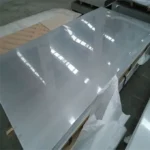
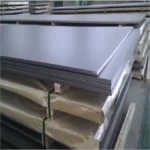
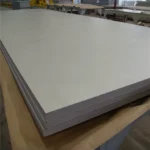
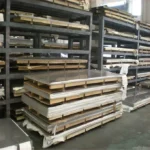


Description
Certified Stainless Plate, Direct Mill Supply — Every 304 316 stainless steel plate ships with original MTC, heat-number traceability, and ISO 9001:2015 certification for project-grade procurement.
Technical Specifications
| Parameter | Value |
|---|---|
| Designation | 300 Series Stainless Steel Plate |
| Product Type | Stainless Steel Plate / Sheet |
| Steel Grade | 201, 304, 304L, 304N, 309S, 310S, 316, 316L, 316Ti, 317L, 321, 410S, 420J1, 430, 904L, S30815 |
| Standard | ASTM A240 / ASME SA240, JIS 4305, DIN EN 10088-2, AISI, GB, EN |
| Thickness | 0.1–200mm |
| Width | 1000mm / 1219mm / 1500mm / 1800mm / 2000mm / 2500mm (or as required) |
| Length | 2000mm / 2440mm / 3000mm / 6000mm (or as required) |
| Technique | Hot Rolled / Cold Rolled |
| Surface Finish | No.1 / 2B / BA / HL / No.4 / 8K / Mirror / Polished / Color |
| Tolerance | ±1% |
| Processing Service | Bending, Welding, Decoiling, Punching, Cutting (Laser / Plasma / Waterjet) |
| Edge | Slit Edge / Mill Edge |
| Application | Construction / Chemical industry / Building / Automotive / Petrochemical / Machinery manufacturing / Ship equipment / Kitchen equipment / Household appliances |
Application Suitability
| Industry | Typical Applications |
|---|---|
| Chemical & Petrochemical | 316L / 317L / 904L plates for storage tanks, reactor vessels, and corrosive piping systems |
| Construction & Architecture | 304 / 430 plates with HL / 8K mirror finish for elevator cab panels, facade cladding, and kitchen installations |
| High-Temperature Equipment | 309S / 310S plates for furnace liners, heat treatment fixtures, and boiler internals |
| Shipbuilding & Marine | 316 / 316Ti plates for deck hardware, exhaust ducts, and saltwater-exposed structural components |
| Machinery Manufacturing | 304 / 321 plates for food processing equipment, pharmaceutical machinery frames, and conveyor systems |
Why Grade Substitution on a 316L Order Can Shut Down a Refinery Turnaround
A missing titanium stabilizer or an unreported molybdenum shortfall turns a routine pressure vessel plate into a chloride stress-corrosion failure waiting to happen.
On a West African refinery expansion, a contractor received 321 plates labeled under ASTM A240 — but the heat number on the mill certificate pointed to a 304 melt. The third-party inspector at the discharge port flagged the molybdenum and titanium content mismatch before the plates reached site. That single container sat for six weeks while the project team scrambled for replacement material, burning through critical-path days on a shutdown window measured in hours. Grade confusion between ASTM, EN, and JIS designations remains one of the most common procurement failures in stainless flat products [NEED_CITE: stainless steel grade equivalence mapping across ASTM EN JIS standards].
Matching 300 Series Grades to Corrosive and Thermal Environments
Selecting the right 300 series grade is not about picking the highest alloy content — it is about matching the service environment. A 304 316 stainless steel plate order for a coastal EPC project in Lagos needs 316L for its molybdenum-enhanced pitting resistance, while the same thickness in 304 would suffice for an inland food processing facility. We supply the full austenitic range from 304 through 904L, with hot-rolled plates for structural thickness above 6mm and cold-rolled sheets for tight-tolerance decorative work. Every plate is cut to size by laser, plasma, or waterjet before shipping, so your fabrication team receives finished blanks rather than raw mill sheets.
Engineering Compliance and Surface Finish Selection for Project Specifications
Structural and pressure-boundary applications require documentation that traces each plate back to its original melt. ASTM A240 / ASME SA240 governs most international procurement, while DIN EN 10088-2 applies to European-spec projects — and the chemical composition limits differ subtly between the two [NEED_CITE: chemical composition limits comparison ASTM A240 vs EN 10088-2 stainless plate]. Surface finish selection matters beyond aesthetics: a 2B finish suits chemical tank interiors where smooth weldability is critical, while an 8K mirror finish serves architectural facades requiring uniform reflectivity. For marine and offshore work, 316Ti plates with No.1 hot-rolled surface provide both corrosion resistance and the grain structure needed for heavy-gauge welding. All plates ship with CE marking and Lloyd’s certification documentation where required.
Decoding the 300 Series: Austenitic Stability, Sensitization, and High-Temperature Behavior
The 300 series owes its corrosion resistance to chromium-nickel austenitic structure, but each grade solves a different problem. 304 and 304L handle general atmospheric and mild chemical exposure — the low-carbon L variant prevents chromium carbide precipitation at weld zones. 316 and 316L add molybdenum for chloride resistance, essential in coastal and chemical plant environments. 321 stabilizes with titanium to prevent sensitization during high-temperature service between 425°C and 815°C, while 309S and 310S carry higher chromium-nickel ratios for continuous service above 1000°C in furnace applications. 904L pushes further with copper addition for sulfuric acid resistance. The ±1% thickness tolerance on our 304 316 stainless steel plate inventory means fabrication teams can rely on consistent material volume without hidden negative-tolerance surprises.
The Hidden Cost of Unverified Mill Certificates and Negative Tolerance Practices
Ordering stainless plate without independent certificate verification invites three categories of loss: customs rejection at the discharge port when MTC heat numbers do not match physical stamp markings, fabrication rework when actual thickness falls below the specified tolerance, and — in the worst case — in-service corrosion failure when alloy content does not match the grade designation. Pressure vessel codes and marine classification societies require full material traceability from melt to final plate [NEED_CITE: pressure vessel material traceability requirements ASME VIII]. A forged or mismatched certificate does not just delay a single shipment; it can invalidate an entire project’s quality audit trail.
Procurement Confidence: From Mill Floor to Discharge Port
I spent my early career on the rolling floor watching stainless slabs move through annealing and pickling lines before switching to export coordination. That background means I understand what a mill test certificate should look like — and more importantly, what it should not. Every 304 316 stainless steel plate in our inventory carries an original MTC with verifiable heat number, chemical composition, and mechanical property data. We maintain dedicated stock across common specifications in 304, 316L, 310S, and 321, with custom cutting available by laser, plasma, or waterjet. Our logistics team handles heavy-gauge plate loading on flatbed trailers and open-top containers, with experience shipping to West African, Middle Eastern, and Southeast Asian ports. ISO 9001:2015 certification and third-party inspection through SGS or BV are standard on every order.
Documentation & Compliance
- Mill Test Certificate documenting 304 / 316L / 310S chemical composition and mechanical properties per ASTM A240, with traceable heat number for every plate
- CE certificate and Lloyd’s classification documentation for marine-grade 316Ti and 316 plates destined for European and offshore projects
- ISO 9001:2015 quality management certificate covering the full 300 series stainless steel plate supply chain from mill to shipment
- SGS or BV third-party inspection report available upon request, covering dimensional verification, surface finish check, and positive material identification
- Full material traceability by heat number linking each 304 316 stainless steel plate to its original melt, rolling schedule, and annealing batch
- Complete customs documentation package including packing list, bill of lading, and certificate of origin for destination-country clearance
Packaging, Loading & Delivery
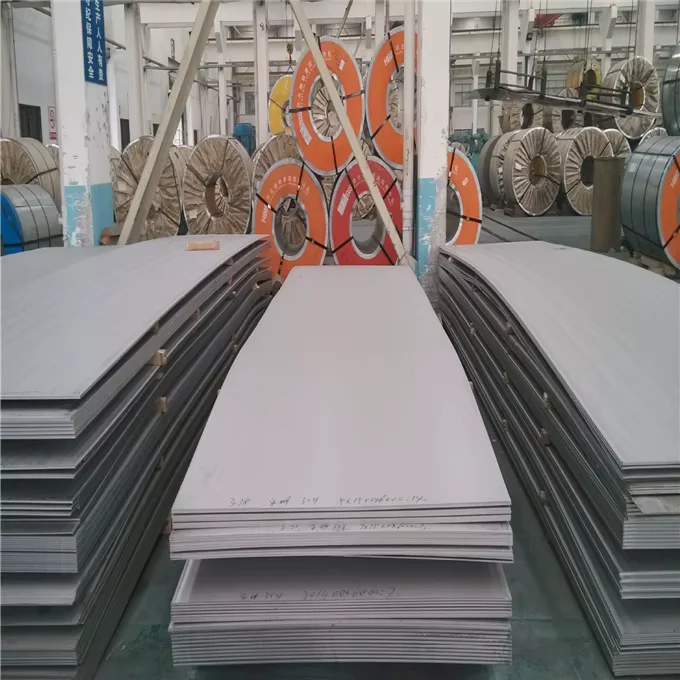
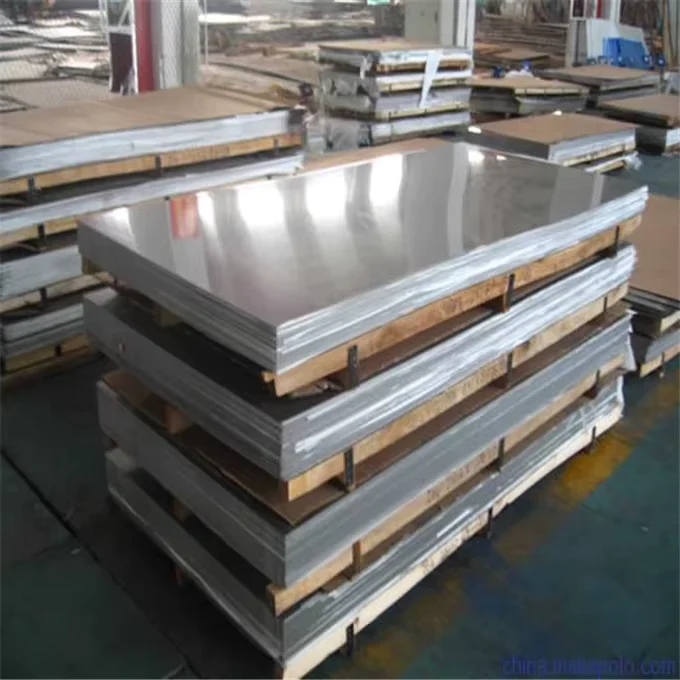
- Stainless steel plates bundled with steel strips and wrapped in waterproof cloth, with plywood crate protection for 8K mirror and HL finish surfaces to prevent transit scratching
- Edge protectors applied to all slit-edge and mill-edge plates in 304 and 316L grades to preserve surface integrity during container loading and ocean freight
- Open-top container and flatbed loading optimized for plates exceeding standard container height, with weight distribution calculated to avoid port overweight penalties
- Custom cut-to-size service available for 309S and 310S high-temperature plates, with finished blanks packed separately and labeled by heat number and grade
- Every plate stamped with heat number, steel grade designation, and thickness marking for on-site verification before fabrication
- FOB, CIF, and DDP shipping terms available with professional heavy-cargo logistics experience across West African, Middle Eastern, and Southeast Asian discharge ports
Requesting a Grade-Specific Quotation with Full Documentation
Submit your required steel grade, thickness, width, length, quantity, and destination port — we respond within twelve hours with a detailed quotation covering material cost, any custom cutting or processing fees, and shipping terms. For projects requiring ASTM A240 or EN 10088-2 compliance, we provide the original mill test certificate before or alongside shipment for your quality team’s verification. Non-standard thickness or cut-to-size requirements for 321, 310S, or 904L grades can be confirmed against current mill rolling schedules.
Frequently Asked Questions
Q: What is the difference between 304 and 304L stainless steel plate for welding applications?
A: 304L contains lower carbon content than standard 304, which prevents chromium carbide precipitation at weld heat-affected zones. For any 304 316 stainless steel plate order involving field welding without post-weld annealing, we recommend the L variant to maintain corrosion resistance at the weld line.
Q: Can you supply 316Ti plate with EN 10088-2 certification for European projects?
A: Yes. We supply 316Ti plates conforming to DIN EN 10088-2 with full chemical composition and mechanical property documentation. The titanium stabilization prevents sensitization during high-temperature service, and all plates carry original mill test certificates with heat-number traceability.
Q: What surface finishes are available for 304 stainless steel plate?
A: Our 304 inventory covers No.1 hot-rolled, 2B cold-rolled, BA bright annealed, HL hairline, No.4 brushed, and 8K mirror finishes. Surface selection depends on application — 2B suits chemical equipment interiors, while 8K mirror serves architectural and decorative facades.
Q: Do you provide third-party inspection before shipment?
A: Yes. SGS and BV third-party inspection is available on every order. The inspection covers dimensional verification, surface finish assessment, material grade confirmation through positive material identification, and mill test certificate cross-checking against physical plate markings.
Q: What is the minimum order quantity for custom cut-to-size 316L plates?
A: We accept cut-to-size orders for 316L and other 300 series grades without requiring full-coil or full-plate minimums. Processing lead time depends on the number of cuts and plate thickness — contact us with your drawing or dimension list for a specific processing fee quotation.
Get Your 304 316 Stainless Steel Plate Quote with Mill Test Certificate
Send your grade, thickness, dimensions, and destination to receive a detailed quotation and original MTC within twelve hours.
Mobile / WhatsApp / WeChat: +86 188 5315 7756
Email: admin@xjyplate.com