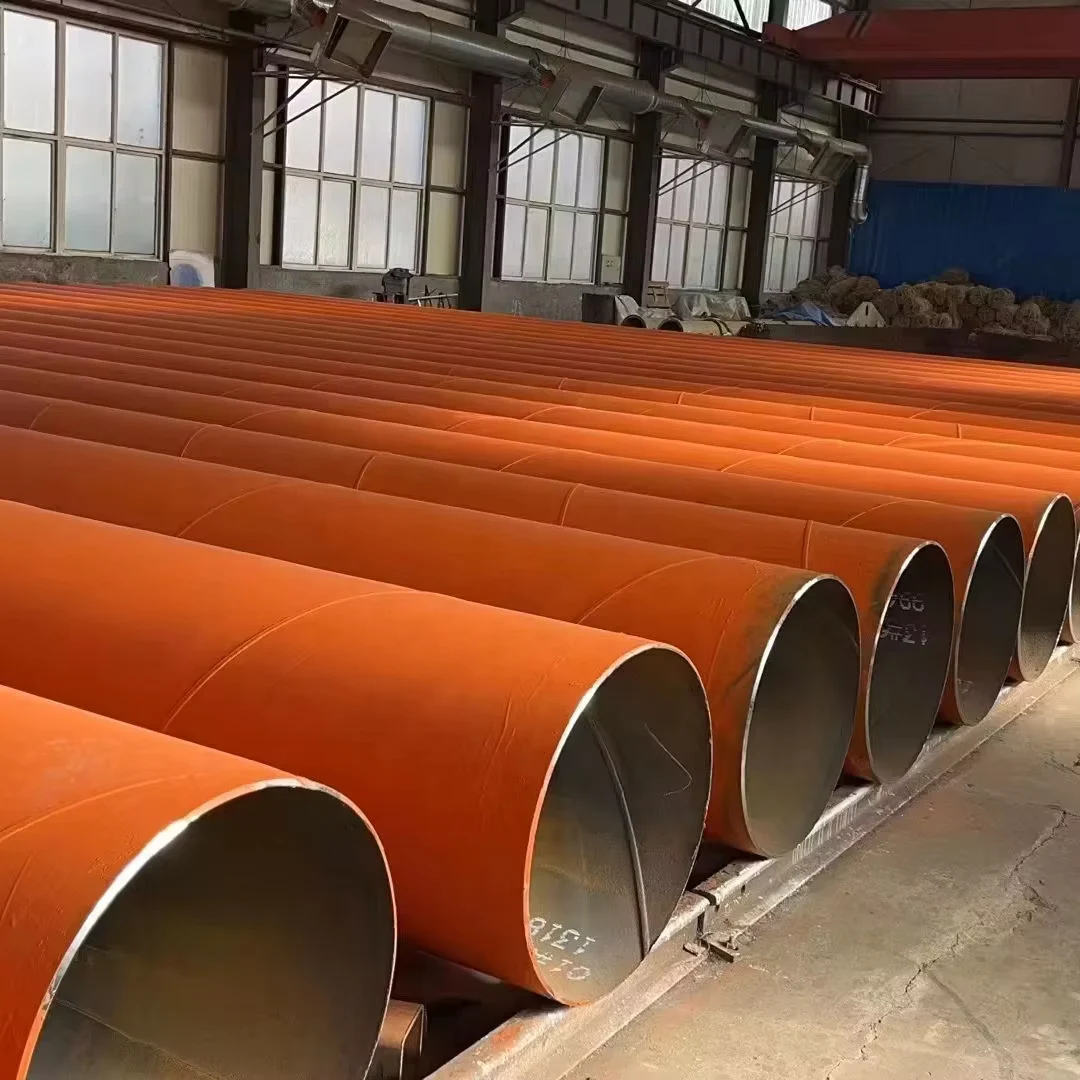
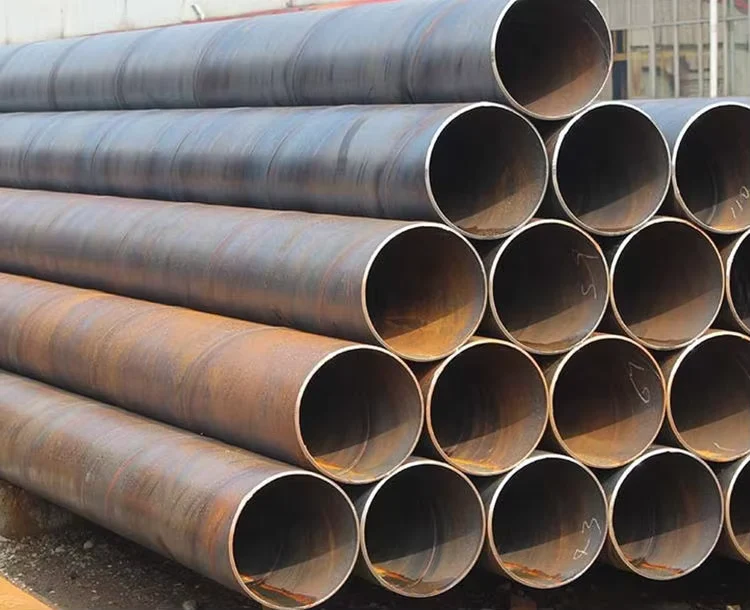
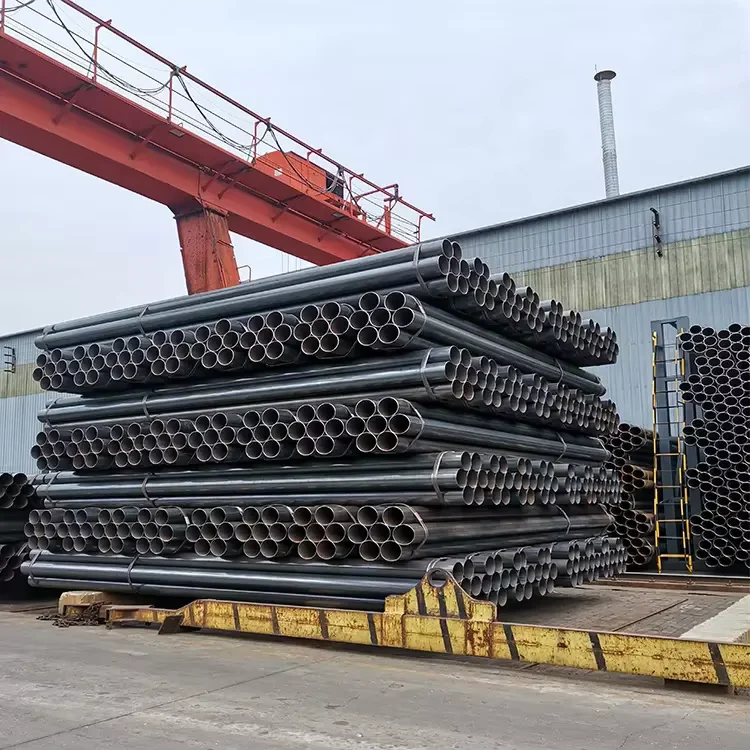
Description
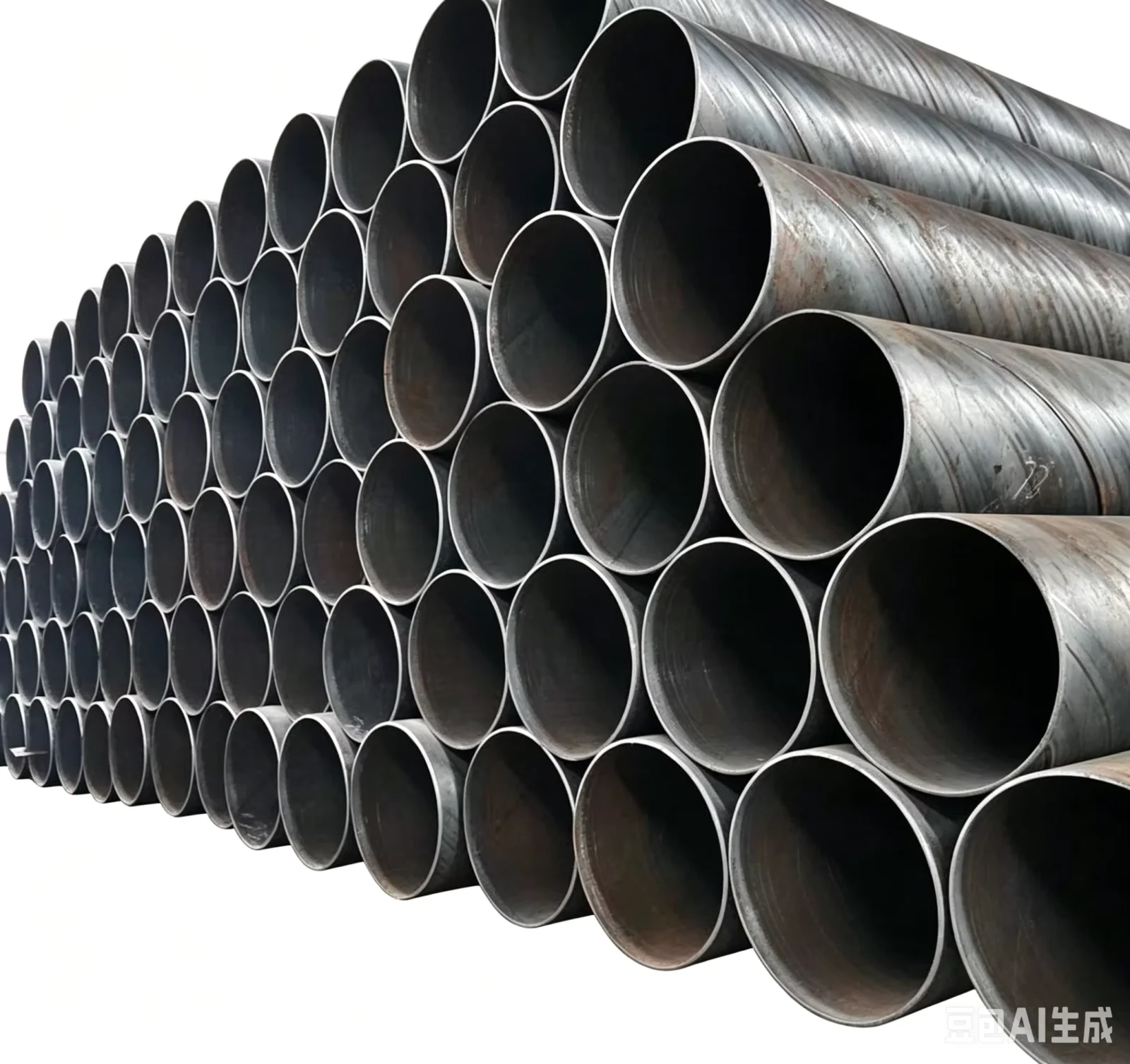
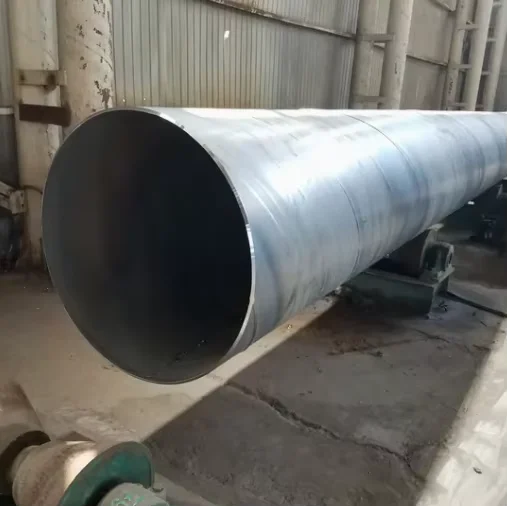
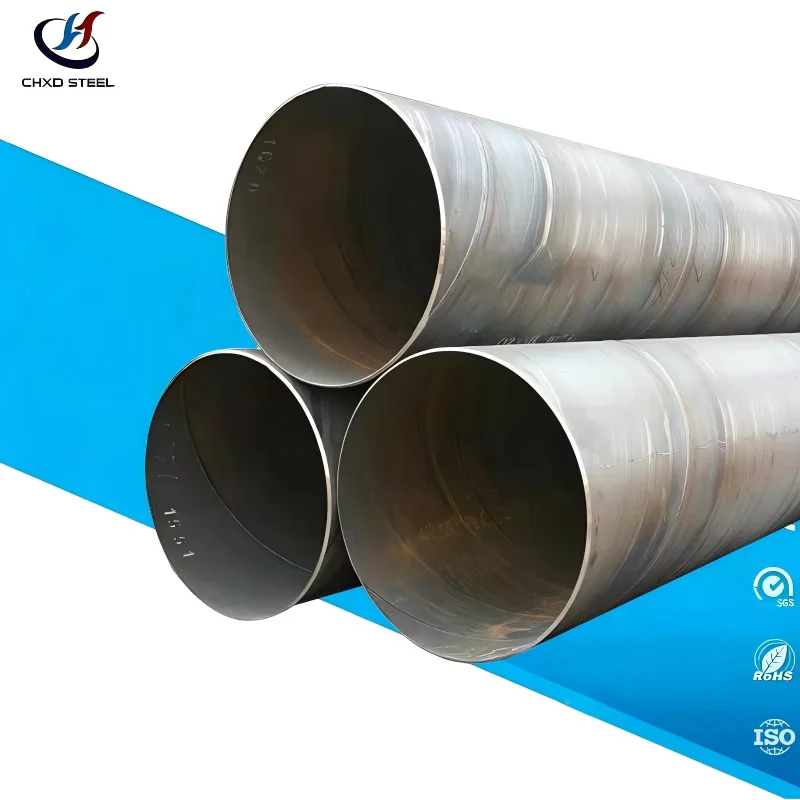
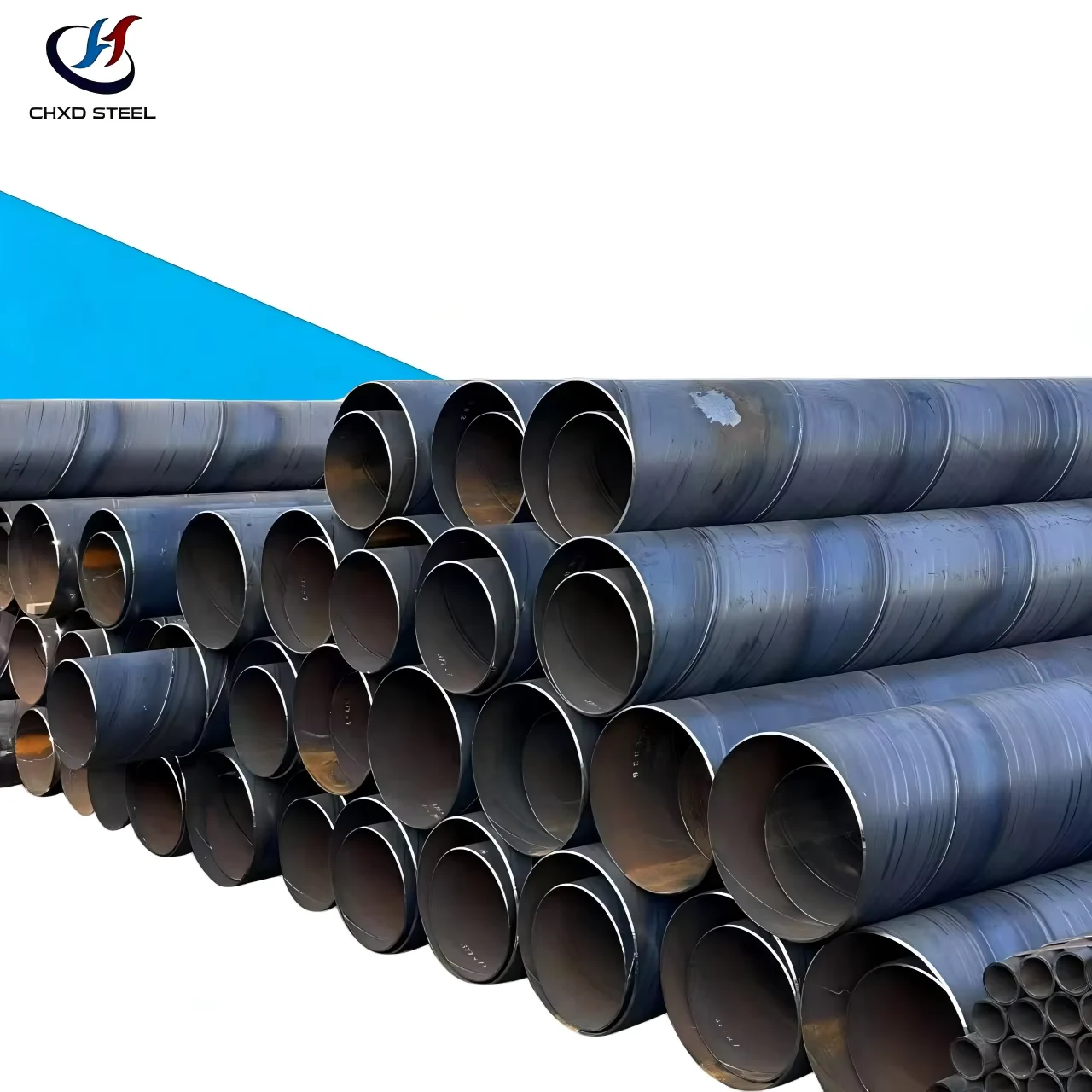
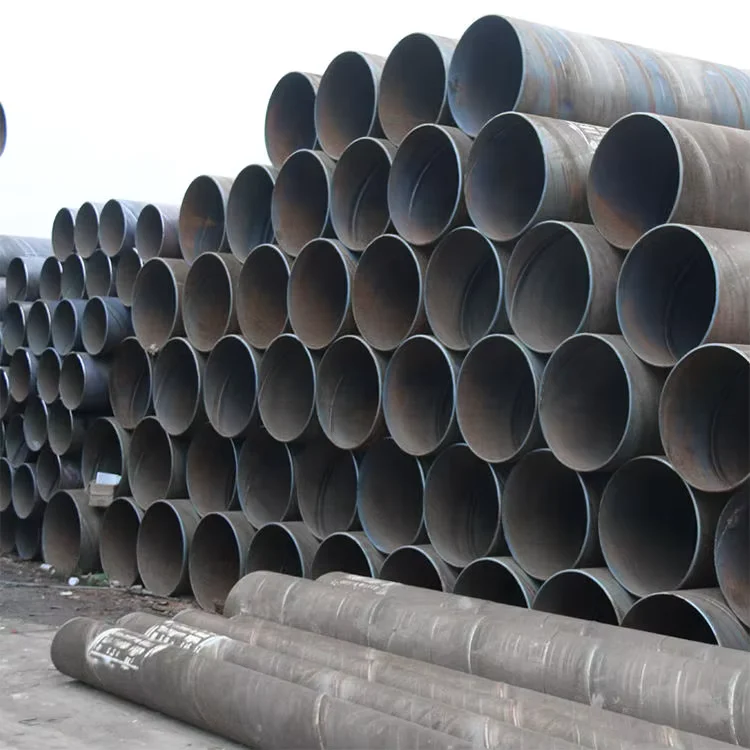
Direct Mill Supply for Pipeline Projects — Every ASTM A36 SSAW pipe rolls with traceable heat numbers and ships with original mill test certificates, cutting out trading markups on large-diameter spiral welded orders.
Technical Specifications
| Parameter | Value |
|---|---|
| Designation | ASTM A36 SSAW Steel Pipe |
| Product Type | SSAW Steel Pipe / Spiral Submerged Arc Welded Pipe |
| Steel Grade | A106, A53, A36 |
| Standard | ASTM (A106, A53, A36); API |
| Section Shape | Round |
| Outer Diameter | 219–3048 mm |
| Length | 6 m / 12 m / 6.4 m |
| Technique | SSAW (Spiral Submerged Arc Welded) |
| Surface Treatment | Hot Rolled |
| Tolerance | ±1% |
| Ends | Plain (default) |
| Processing Service | Welding, Punching, Cutting, Bending, Decoiling |
| Application | Fluid Pipe, Boiler Pipe, Drill Pipe, Hydraulic Pipeline, Oil and Water Pipeline |
| MOQ | 1 Ton |
| Origin | China |
Application Suitability
| Industry | Typical Applications |
|---|---|
| Oil & Gas Transmission | Long-distance crude oil and natural gas trunk pipelines, gathering line networks |
| Municipal Infrastructure | Urban water supply mains, drainage and sewage discharge pipelines |
| Industrial Plants | Process fluid transfer lines, cooling water circulation systems |
| Hydraulic Engineering | Slurry transport, dredging discharge pipelines, intake and outfall structures |
When Negative Tolerance Turns a Pipeline Budget Into a Liability
Tolerance stacking on large-diameter spiral welded pipe is where project budgets quietly bleed.
I once watched a Southeast Asian municipal water project stall for two weeks because wall thickness readings on SSAW pipe fell outside the acceptable deviation band. The third-party inspector rejected the lot on the spot. The cargo sat at port while replacement certificates were air-freighted in. On a 3048 mm diameter pipe, even a ±1% tolerance shift means measurable metal loss per meter — and when you multiply that across kilometers of pipeline, the weight discrepancy becomes a cost discrepancy. API 5L SSAW steel pipe supplier documentation must show actual measured thickness, not just nominal values, or you are signing off on unknown structural margins. [NEED_CITE: API 5L dimensional tolerance requirements for spiral welded pipe]
Matching Large-Diameter Spiral Pipe to Pipeline Engineering Demands
Large-diameter SSAW pipe from 219 mm to 3048 mm eliminates the need for longitudinal seam splicing on wide-bore runs, which matters when you are laying municipal water mains or oil transmission lines under variable soil conditions. The spiral weld geometry distributes hoop stress more evenly than straight-seam alternatives at equivalent diameters, making ASTM A36 SSAW steel pipe a practical choice for buried infrastructure where external loading and internal pressure both apply. Anti-corrosion coating options — 3LPE, 3LPP, FBE, and cement mortar lining — extend service life to three or four decades in aggressive soil environments, and our coating thickness is verified before shipment.
Engineering Compliance and Certification Pathways
Pipeline projects crossing international borders face scrutiny on steel grade equivalence: ASTM A36 must map correctly to project-specified EN or API designations, and missing documentation triggers customs holds that delay site delivery by weeks [NEED_CITE: steel grade equivalence between ASTM and EN standards for pipeline applications]. Structural承载 calculations depend on verified wall thickness and yield strength data from original mill test certificates — not trader-issued summaries. For pressure-containing applications, API certification and CE marking determine whether the pipe clears port inspection in the destination country. Our SSAW pipes ship with heat-number traceability linking every joint back to the steelmaking batch, and SGS or BV third-party inspection is available for clients who need independent verification before loading.
Steel Grade Selection and Spiral Welding Process
ASTM A36 is a carbon structural steel with minimum yield strength of 250 MPa, widely specified for general-purpose pipeline and structural applications where extreme pressure ratings are not the primary design driver. A106 Grade B serves higher-temperature service in boiler and process piping, while A53 covers general low-pressure fluid conveyance — choosing among them depends on operating temperature, pressure class, and the governing project code. The SSAW process forms pipe by helically winding steel coil and submerged-arc welding both inner and outer seams, which allows production of diameters up to 3048 mm from relatively narrow coil stock — an economic advantage over LSAW for large-bore, lower-pressure runs. Hot-rolled surface condition provides a clean base for subsequent coating application, whether 3LPE for buried service or cement mortar for potable water contact. Wall thickness tolerance of ±1% applies across the full diameter range, and actual measurements are recorded on the mill test certificate for each production lot.
The Hidden Cost of Unverified Pipe Procurement
Purchasing SSAW pipe without original mill test certificates means you cannot prove chemical composition or mechanical properties to the project owner’s engineer — and that gap becomes a rejection at site inspection, triggering replacement costs and schedule delays that dwarf any initial price savings [NEED_CITE: consequences of missing mill test certificates in pipeline construction]. Coating thickness below specification leads to premature corrosion and early rehabilitation expense. Negative tolerance beyond the stated ±1% band reduces pressure containment margin, and on a 3048 mm diameter water main, that margin is the difference between passing hydrostatic testing and failing it.
Why Source SSAW Pipe From Our Mill Division
We operate as a dedicated plate and pipe supplier with direct mill relationships, meaning the ASTM A36 SSAW steel pipe you order comes with factory-level pricing rather than layered trading margins. Every pipe leaves the mill with an original test certificate showing heat number, chemical composition, and dimensional measurements — no reissued documents from intermediaries. Our logistics team handles heavy cargo loading on flatbed trailers and open-top containers, securing large-diameter pipe to prevent transit damage and avoiding overweight penalties that delay port clearance. Custom cutting to 6 m, 6.4 m, or 12 m lengths is available, along with end preparation, punching, and bending to project drawings. ISO 9001:2015 and CE certification are in place, and SGS or BV third-party inspection can be arranged at the mill before shipment.
Documentation & Compliance
- Mill Test Certificate documenting ASTM A36 chemical composition, yield strength, and tensile properties per heat number
- API 5L certification for line pipe applications where project specification requires API-grade spiral welded pipe
- ISO 9001:2015 quality management certificate covering the full production and inspection process
- SGS or BV third-party inspection report verifying dimensional accuracy, coating thickness, and weld quality before shipment
- Material traceability report linking each pipe joint to its original heat number and coil batch
- Export documentation including packing list, bill of lading, and certificate of origin for customs clearance
Packaging, Loading & Delivery
- ASTM A36 SSAW pipes bundled with steel strip bands and edge protectors to preserve hot-rolled surface condition during ocean transit
- Large-diameter pipe (above 1500 mm OD) loaded on flatbed trailers or break-bulk vessels with welded cradle supports to prevent rolling and ovality damage
- Coated pipe (3LPE/3LPP/FBE/cement mortar) wrapped with protective sleeves at weld ends and contact points to prevent coating abrasion during handling
- Cut-to-length service available for 6 m, 6.4 m, and 12 m pieces, with length tolerance marked on each pipe end alongside heat number and steel grade
- Heat number and ASTM A36 designation stenciled on every pipe for site identification and traceability verification
- FOB, CIF, and DDP shipping terms available with professional heavy-cargo logistics planning for open-top container and break-bulk loading
Start Your SSAW Pipe Inquiry
Submit your required outer diameter, wall thickness, length, steel grade (A36, A106, or A53), quantity, and destination port — we return a detailed quotation with material cost, processing fees, and shipping terms within 12 hours, along with a sample mill test certificate for your engineer’s review.
Request Quotation and Mill Test Certificate
Send your ASTM A36 SSAW steel pipe specifications to our team and receive pricing with full traceability documentation.
Mobile/WhatsApp/WeChat: +86 188 5315 7756 | Email: admin@xjyplate.com
Frequently Asked Questions
Q: What is the difference between SSAW, LSAW, and ERW for large-diameter pipeline projects?
A: SSAW (Spiral Submerged Arc Welded) pipe is formed by helically winding steel coil and welding both seams, allowing diameters up to 3048 mm from narrower coil stock — making it cost-effective for large-bore, lower-pressure water and gas transmission lines. LSAW uses a single longitudinal seam and is preferred for high-pressure, thick-wall applications. ERW produces smaller diameters with a longitudinal electric-resistance weld. The choice depends on diameter, pressure class, and project code requirements.
Q: How do ASTM A36, A106, and A53 grades differ for pipeline use?
A: ASTM A36 is a general carbon structural steel suited for low-pressure fluid conveyance and structural support. A106 Grade B is designed for high-temperature service in boiler and process piping. A53 covers general low-pressure plumbing and water lines. Selection depends on operating temperature, pressure rating, and the governing project specification.
Q: What coating options are available for buried SSAW pipe?
A: We offer 3LPE and 3LPP for aggressive soil environments requiring long-term corrosion protection, FBE (fusion-bonded epoxy) for standard buried service, and cement mortar lining for potable water pipelines where internal water quality must be maintained. Coating type is selected based on soil resistivity, operating temperature, and the fluid being transported.
Q: How can I verify the mill test certificate is authentic?
A: Every pipe we supply ships with an original mill test certificate showing the heat number, chemical composition, and mechanical test results. The heat number is stenciled on the pipe itself, allowing you to match the physical product to the certificate. SGS or BV third-party inspection is available at the mill before shipment for independent verification.
Q: How are large-diameter SSAW pipes loaded for international shipping?
A: Pipes above 1500 mm outer diameter are loaded on flatbed trailers or break-bulk vessels using welded cradle supports to prevent rolling. Smaller diameters are secured in open-top containers with proper lashing. Coated pipes receive additional protective wrapping at contact points to prevent coating damage during transit.