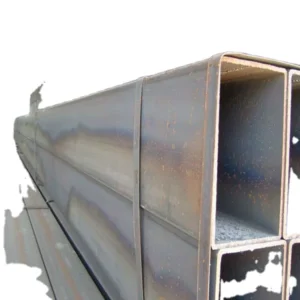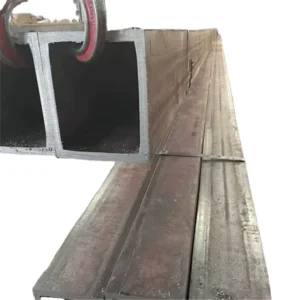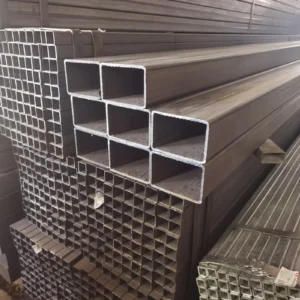



Description
One-Source ERW Hollow Section Supply — from 20×20mm to 300×500mm square and rectangular tubes in Q195–Q345, S235–S355, and A36 grades, all backed by original mill test certificates and third-party inspection.
Technical Specifications
| Parameter | Value |
|---|---|
| Designation | Q195-Q345 ERW Square & Rectangular Steel Tube |
| Product Type | Square and Rectangular Steel Tube / Hollow Section (SHS & RHS) |
| Steel Grade | Q195, Q215, Q235, Q345, 10#, 20#, Gr.A, Gr.B, Gr.C, S235, S275, S355, A36, SS400 |
| Standard | ASTM A500, EN 10219, EN 10210, JIS G3466, GB/T 6728 |
| Section Shape | Square / Rectangular |
| Size Range | Square 20×20mm–400×400mm; Rectangular 20×40mm–300×500mm |
| Wall Thickness | 0.8–20mm |
| Length | 3–12m (or as required) |
| Technique | ERW (High-Frequency Welded) |
| Surface Treatment | Black Iron / Hot Rolled / Oiled / Pre-Galvanized (30–150g/m²) / Hot Dipped Galvanized (220–260g/m²) / Painted (Black Varnish/Lacquer) / Bare |
| Tolerance | ±1% |
| Ends | Plain End / Bevel End / Groove End / Threaded (with coupling & plastic cap) / Flange Joint |
| Application | Construction structure / Steel structure / Scaffolding / Fence post / Fire protection / Greenhouse / Low-pressure liquid line / Irrigation / Handrail |
| MOQ | 25 Tons |
| Origin | Shandong, China |
Application Suitability
| Industry | Typical Applications |
|---|---|
| Construction & Infrastructure | Building frames, column supports, beam structures, handrail systems |
| Steel Fabrication | Welded portal frames, truss members, equipment support structures |
| Scaffolding & Access | Scaffold uprights, ledger braces, shore props |
| Agriculture & Greenhouse | Greenhouse skeleton frames, irrigation pipe supports, fence posts |
| Low-Pressure Fluid Transport | Water supply lines, gas distribution pipes, oil conveyance, irrigation networks |
When Wall-Thickness Tolerance Decides Whether a Batch Passes Site Inspection
A ±1% tolerance on a 3mm wall is 0.03mm — small on paper, but enough to fail a caliper check at the dock.
I have watched entire container loads of ERW square and rectangular steel tube get rejected at project sites because the actual wall thickness drifted below the specified negative tolerance limit. The paperwork looked fine. The mill test certificate matched the order. But when the site engineer pulled out a digital caliper and measured the corner of a 100×100×3 SHS, the reading came in at 2.68mm. That single data point triggered a full-batch hold, and the replacement shipment cost more in air freight than the original tubes were worth. [NEED_CITE: EN 10219 dimensional tolerance requirements for cold-formed hollow sections]
Matching Hollow Section Profiles to Structural and Environmental Demands
When an ERW square and rectangular steel tube supplier delivers Q345 RHS for a portal frame in a coastal industrial park, the steel grade must carry the design load while the surface treatment must resist salt-laden air for the structure’s intended service life. Hot-dipped galvanized coating at 220–260g/m² suits outdoor exposure, while pre-galvanized or black oiled finishes serve indoor structural frames where appearance and moderate protection suffice. End finishing — beveled for welding, grooved for mechanical coupling, or flanged for bolted connections — is specified per the erection sequence on site, and getting it wrong means field rework that no amount of schedule padding can absorb.
Engineering Compliance Across GB, EN, and ASTM Frameworks
Structural hollow sections must satisfy the governing design code of the destination market: EN 10219 for cold-formed welded structural hollow sections in Europe, ASTM A500 for cold-formed welded and seamless carbon steel structural tubing in North America, and GB/T 6728 for cold-formed welded hollow sections in China. Each standard defines its own tolerance band, chemical composition limits, and mechanical property requirements. [NEED_CITE: steel grade equivalence mapping between GB Q-series and EN S-series structural grades] CE marking per EN 10210 or EN 10219 is mandatory for EU customs clearance, while ASTM A500 Grade B or C documentation is expected on North American projects. Specifying the correct standard from the inquiry stage avoids rejection at the port or during the engineer’s submittal review.
Reading the Steel Grade Designation: Q-Series, S-Series, and ASTM Equivalents
The number in a structural steel grade designation indicates the minimum yield strength in MPa (for Q and S series) or ksi (for ASTM grades). Q235 and S235 both target 235 MPa yield, making them functionally equivalent for many structural applications, though their chemical composition ranges and impact testing requirements differ under their respective standards. Q345 and S355 follow the same logic at the 345–355 MPa tier. ASTM A36 sits at roughly 250 MPa yield, closer to S235 than S355. ERW high-frequency welding produces a consistent longitudinal seam with a narrow heat-affected zone, making it suitable for structural framing, scaffolding, and low-pressure fluid conveyance — but not for high-pressure piping where seamless or SSAW processes are specified. [NEED_CITE: structural steel grade equivalence chart between Chinese GB, European EN, and American ASTM standards]
Surface treatment selection follows the exposure environment: hot-dipped galvanizing at 220–260g/m² provides decades of corrosion protection for outdoor fence posts and greenhouse frames; pre-galvanized at 30–150g/m² offers shorter-term protection at lower cost for indoor scaffolding; black oiled or varnished finishes serve temporary structures or tubes that will be painted on site.
The Hidden Cost of Unverified Grade Claims and Missing Traceability
Ordering S355 RHS that arrives with a certificate stating S355 but tests as S275 does not just mean a paperwork discrepancy — it means the structural engineer’s load calculations are based on a yield strength that the delivered material cannot provide. [NEED_CITE: consequences of steel grade misidentification in structural engineering applications] Missing heat numbers on the mill test certificate mean the tubes cannot be traced back to the original slab, which is a non-negotiable requirement on most certified construction projects. Negative tolerance abuse — where wall thickness consistently sits at the lower limit or below — reduces the section modulus and load-bearing capacity, creating a latent structural risk that only surfaces during inspection or, worse, under load.
Why Project Procurement Teams Source ERW Hollow Sections Through XJY Plate
Every ERW square and rectangular steel tube we ship carries an original mill test certificate with heat number, chemical composition, and mechanical properties — traceable back to the slab. Our in-house quality lab verifies dimensional accuracy before release; I personally check wall thickness with a caliper on random pieces from each batch because I have seen what happens when tolerance drift goes unchecked. We stock the full range from 20×20mm square to 300×500mm rectangular in wall thicknesses from 0.8mm to 20mm, covering Q195 through Q345, S235 through S355, and A36 — so a single order for mixed sizes and grades ships in one lot rather than three. Custom cutting to length, beveling, grooving, and threading are done in-house before packing. Our loading team knows how to nest small-section tubes inside larger ones and distribute weight across container axles to avoid overweight penalties at port. ISO 9001:2015 and CE certifications are in place, and SGS, BV, or CCIC third-party inspection is arranged on request before the container is sealed.
Documentation & Compliance
- Mill test certificate documenting Q235/Q345 or S235/S355 chemical composition and yield strength per EN 10219 or ASTM A500, with traceable heat number
- CE certificate per EN 10210 / EN 10219 for structural hollow sections exported to EU member states
- ISO 9001:2015 quality management system certificate covering the full production and inspection process
- SGS / BV / CCIC third-party inspection report verifying dimensional accuracy, surface coating thickness, and visual quality before shipment
- Material traceability sheet linking each bundle to its heat number, steel grade, and production date
- Full customs documentation set: commercial invoice, packing list, bill of lading, and certificate of origin
Packaging, Loading & Delivery
- ERW square and rectangular tubes in sizes below 273mm OD equivalent are packed in hexagonal seaworthy bundles secured with steel strips; larger sections are loaded loose piece by piece to prevent deformation
- Hot-dipped galvanized SHS and RHS bundles include edge protectors and moisture-resistant wrapping to preserve the zinc coating during ocean transit
- Pre-galvanized and black oiled tubes are bundled with anti-rust paper interleaving to prevent surface scratching and white rust formation
- Mixed-size orders are nested — small sections inserted inside larger ones — to maximize container payload and reduce per-ton freight cost
- Each bundle is tagged with heat number, steel grade, size, length, and purchase order reference for immediate site identification
- Shipping terms available: FOB, CIF, and DDP, with professional flatbed and open-top container loading for lengths up to 12m
Getting a Quote That Matches Your Project Specification
Send us the steel grade, section dimensions, wall thickness, length, surface treatment, quantity, and destination port — we respond with a detailed quotation including material cost, any cutting or end-finishing charges, and shipping terms within 12 hours. If your project requires mixed grades or non-standard lengths, we provide a consolidated packing plan before you commit. Mill test certificates and third-party inspection reports are confirmed at the quotation stage so there are no surprises at customs or on site.
Frequently Asked Questions
Q: How do Q235 and S235 compare for structural use?
A: Both target 235 MPa minimum yield strength and are widely used in building frames and scaffolding. The key differences lie in chemical composition ranges and impact testing requirements under their respective GB and EN standards. We provide a grade equivalence guide with every inquiry to help you confirm the right designation for your project code.
Q: Can you provide mill test certificates for every shipment?
A: Yes. Every bundle of ERW square and rectangular steel tube ships with an original mill test certificate showing heat number, chemical composition, and mechanical properties. The certificate is traceable to the production batch and available for your review before or with shipment.
Q: What is the difference between pre-galvanized and hot-dipped galvanized finish?
A: Pre-galvanized coating ranges from 30–150g/m² and suits indoor or short-term outdoor use such as scaffolding and indoor structures. Hot-dipped galvanized coating at 220–260g/m² provides long-term corrosion resistance for outdoor applications like fence posts, greenhouse frames, and coastal structures. We advise on the right choice based on your project environment.
Q: Do you offer custom cutting and end finishing?
A: Yes. We provide cut-to-length, beveling, grooving, threading with coupling and plastic cap, and flange joint finishing — all done in-house before packing. This eliminates the need for secondary processing at your site and ensures dimensional accuracy matches your drawing specifications.
Q: What is the minimum order quantity?
A: The MOQ is 25 tons per order. Mixed sizes and grades within this quantity are accepted, and we optimize the nesting and bundling plan to maximize container utilization.
Get Your ERW Hollow Section Quote with Mill Test Certificate
Submit your specification — steel grade, section size, wall thickness, length, surface finish, quantity, and destination — and receive a detailed quotation with full documentation within 12 hours.
Shandong Xin Jiyuan Special Steel Tube Co., Ltd
Website: www.xjyplate.com
Tel: +86 531 8573 6315
Mobile/WhatsApp/WeChat: +86 188 5315 7756
Email: admin@xjyplate.com
Address: No.11889, Jingshi West Road, Lulian Group, Jinan City, Shandong Province, China