






Description
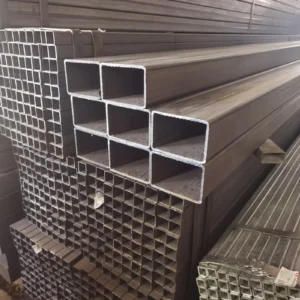
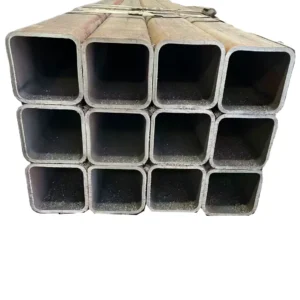
Direct Mill Supply — every Q235 Q345 S355 square steel tube ships with verified heat-number traceability and original mill test certificates.
Technical Specifications
| Parameter | Value |
|---|---|
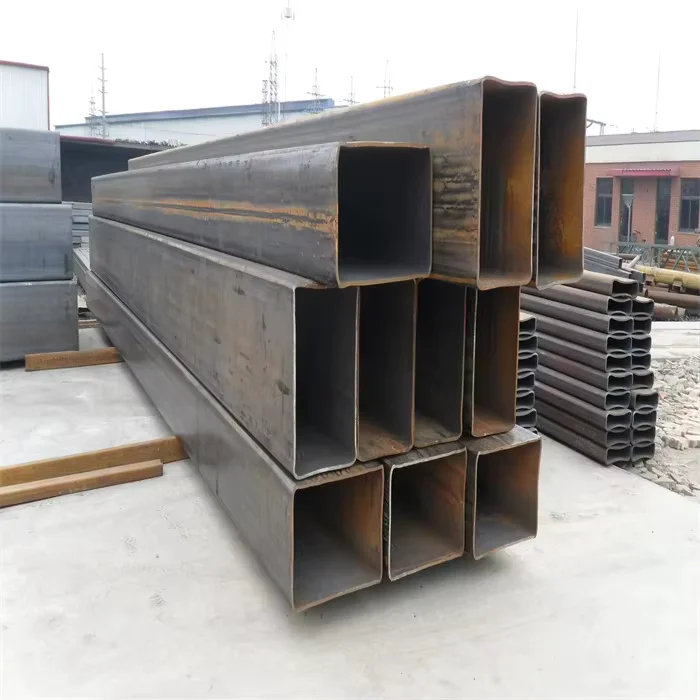
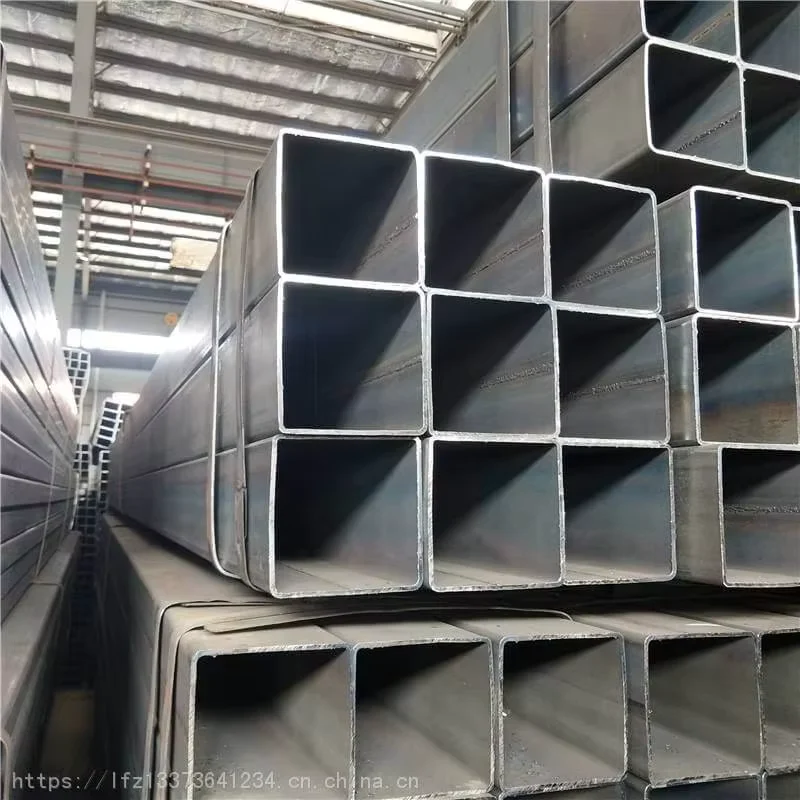
| Designation | Q235 Q345 S355 Square Steel Tube |
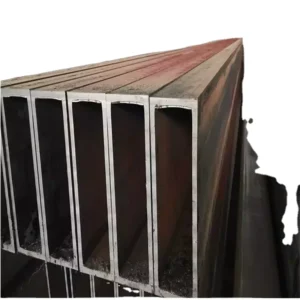
| Product Type | Square / Rectangular Hollow Section |
| Steel Grade | Q235, Q235B, Q345, Q345B, SS400, ASTM A53, ASTM A106, S235JR, S275JR, S355J2 |
| Standard | ASTM A53, ASTM A106, API 5L, EN 10219, GB/T 6728, JIS |
| Section Shape | Square / Rectangular |
| Size Range | 15mm × 15mm – 800mm × 800mm |
| Wall Thickness | 1mm – 50mm |
| Length | 6000mm / 12000mm or Customized |
| Technique | ERW / Hot Rolled / Cold Rolled |
| Surface Treatment | Black Painted / Varnished / Hot-Dip Galvanized / Electro-Galvanized / 3LPE / 3LPP Coated / Oiled |
| Tolerance | ±1% |
| Tensile Strength | 350 – 850 MPa |
| Yield Strength | 205 – 700 MPa |
| Elongation | 10% – 35% |
| Hardness | ≤ 200 HB |
| Application | Construction, Oil & Gas, Automotive, Machinery, Shipbuilding |
| Origin | Shandong, China |
Application Suitability
| Industry | Typical Applications |
|---|---|
| Construction & Infrastructure | Structural frameworks, scaffolding systems, bridge support columns |
| Oil & Gas / Petrochemical | Pipeline transmission supports, drilling platform framing |
| Shipbuilding | Marine piping racks, offshore platform structural members |
| Machinery Manufacturing | Hydraulic cylinder housings, pneumatic system frames |
| Automotive | Chassis components, exhaust system structural brackets |
What Wall-Thickness Tolerance Costs on a Structural Frame Order
A ±1% tolerance on a 50mm wall square tube means the difference between passing structural inspection and scrapping an entire batch at the port.
I learned this the hard way. A Gulf project ordered square hollow sections specified at 2mm wall — the mill shipped 1.5mm under the guise of “acceptable negative tolerance.” The third-party inspector caught it at the discharge port. The container was rejected. Weeks of delay, replacement freight, and a fabricator who would never take our call again. That failure sits behind every tolerance commitment we make today.
When sourcing a Q235 Q345 S355 square steel tube supplier, buyers routinely face three compounding problems: grade equivalence confusion between GB, EN, and ASTM systems; inconsistent actual thickness that deviates from declared specifications; and missing or unverifiable mill test certificates that make customs clearance and engineering sign-off impossible. [NEED_CITE: steel grade equivalence mapping between EN 10219 and ASTM standards]
Matching Hollow Section Grades to Structural Load Paths
Square and rectangular hollow sections in Q235, Q345, and S355 grades serve fundamentally different load-bearing roles. Q235 covers general structural framing where moderate yield strength suffices — scaffolding, light support columns, and non-critical bracing. Q345 steps into heavier load paths: bridge girders, crane runway beams, and high-rise moment frames. S355J2, governed by EN 10219, targets European-spec projects requiring certified impact toughness at sub-zero temperatures. As a Q235 Q345 S355 square steel tube supplier, we map grade equivalence at inquiry stage so that a client specifying S275JR receives material that meets the EN standard without customs surprises.
Engineering Compliance and Surface Environment Selection
Structural hollow sections must satisfy both load-bearing codes and environmental durability requirements. EN 1993-1-1 governs steel structure design across EU member states, while AISC 360 applies in North America — the steel grade you select determines which code path your engineer follows. For offshore platforms and marine piping, hot-dip galvanizing or 3LPE coating provides corrosion resistance that black painted finishes cannot deliver in salt-spray environments. [NEED_CITE: EN 10219 cold-formed structural hollow section compliance requirements] Cut-to-length and pre-punching services eliminate on-site rework, which matters when port-side fabrication yards charge premium rates for secondary processing.
Understanding ERW Process and Grade System Differences
The ERW (Electric Resistance Welding) process forms square and rectangular sections by rolling steel strip into shape and welding the seam under pressure — it delivers tight dimensional tolerance at lower cost than seamless alternatives, making it the standard choice for structural applications below high-pressure service. Hot-rolled sections handle thicker walls up to 50mm for heavy-load columns, while cold-rolled variants achieve sharper corner definition for architectural exposure.
The grade systems themselves reflect different standardization traditions. Q235 and Q345 follow the Chinese GB/T 6728 system, where the number indicates approximate yield strength in MPa. S235JR, S275JR, and S355J2 follow EN 10219, with the suffix indicating impact test temperature — JR for +20°C, J2 for −20°C. ASTM A53 and A106 serve the North American market with different chemical composition limits. [NEED_CITE: comparison of GB EN ASTM steel grade chemical composition requirements] A competent Q235 Q345 S355 square steel tube supplier provides equivalence documentation so that S355J2 can substitute for Q345B where the project engineer approves.
Wall thickness tolerance directly affects both theoretical weight and structural capacity. A declared 10mm wall that measures 9.2mm reduces load-bearing capacity and triggers rejection under EN 10219 dimensional tolerances. Our ±1% control applies across the full 1–50mm range, verified by ultrasonic measurement at multiple points per piece.
The Hidden Cost of Unverified Material Procurement
Procuring square hollow sections without certified traceability creates cascading failure points. Material that fails to match its declared grade triggers engineering rejection — the entire batch becomes scrap regardless of physical condition. Missing mill test certificates block customs clearance in markets requiring CE marking or third-party verification. [NEED_CITE: customs documentation requirements for structural steel imports] Negative tolerance beyond declared limits forces redesign or replacement, with costs multiplying through fabrication delays and reshipment freight. These are not theoretical risks — they are the standard failure pattern when buyers prioritize unit price over material verification.
Why XJY Plate Operates Differently
We control quality from the mill gate rather than relying on trader-supplied paperwork. Every Q235 Q345 S355 square steel tube ships with an original mill test certificate showing heat number, chemical composition, and mechanical properties — verifiable against the physical material. Our ISO 9001:2015 certification and CE compliance under EN 10219 provide the documentation framework that EU and international projects require. SGS and BV third-party inspection is available upon request for clients who need independent verification before shipment. Custom cutting, punching, and bending are completed in-house before dispatch, reducing on-site fabrication cost. Professional flatbed and open-top container loading handles the full 800mm × 800mm × 50mm range without damage or overweight penalties.
Documentation & Compliance
- Mill test certificate documenting Q235/Q345/S355 chemical composition, yield strength, and tensile strength per GB/T 6728 or EN 10219, issued with heat number traceability
- CE certificate confirming EN 10219 compliance for S235JR, S275JR, and S355J2 grades exported to EU member states
- ISO 9001:2015 quality management certificate covering the full production and inspection process
- SGS or BV third-party inspection report available for independent dimensional and chemical verification before shipment
- Full material traceability linking each piece to its heat number, mill rolling record, and test certificate
- Export documentation including packing list, bill of lading, and certificate of origin for customs clearance
Packaging, Loading & Delivery
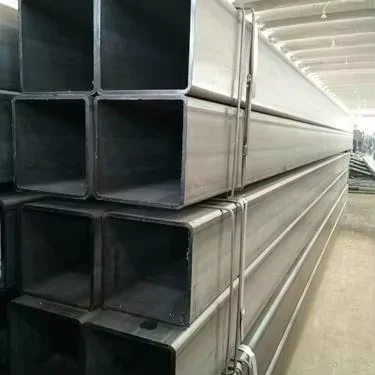
- ERW square tubes bundled with steel strip ties and edge protectors, sized to match the 6000mm or 12000mm standard length for container optimization
- Hot-dip galvanized surfaces wrapped with moisture-barrier interleaving to prevent white rust formation during ocean transit
- Heavy-wall sections above 20mm loaded on flatbed or open-top containers with timber cradles to prevent point-contact deformation
- Custom cut-to-length pieces individually labeled with heat number, steel grade, and dimensional specification for site identification
- Black painted and oiled surfaces protected with plastic end caps to prevent moisture ingress at cut edges
- FOB, CIF, and DDP shipping terms available with full export documentation and container tracking to destination port
Start Your Procurement with Verified Specifications
Submit your required steel grade, section dimensions, wall thickness, quantity, and destination port — we respond within 12 hours with a detailed quotation including material cost, any processing fees, and shipping terms. Original mill test certificates are provided before or with shipment for your quality verification. For non-standard dimensions or custom cutting requirements, our engineering team provides a processing plan alongside the commercial offer.
Request Your Quote and Mill Test Certificate Today
Send your specification sheet to receive pricing, availability confirmation, and sample MTC documentation within one business day.
Company: Shandong Xin Jiyuan Special Steel Tube Co., Ltd
Website: www.xjyplate.com
Tel: +86 531 8573 6315
Mobile/WhatsApp/WeChat: +86 188 5315 7756
Email: admin@xjyplate.com
Address: No.11889, Jingshi West Road, Lulian Group, Jinan City, Shandong Province, China
Frequently Asked Questions
Q: What is the grade equivalence between Q235, S235JR, and ASTM A36?
A: Q235, S235JR, and ASTM A36 share similar yield strength ranges around 235 MPa, but their chemical composition limits and impact test requirements differ. We provide a detailed equivalence mapping at the inquiry stage so your engineer can confirm interchangeability for your specific application and code requirements.
Q: Can you provide third-party inspection before shipment?
A: Yes. SGS and BV third-party inspection is available upon request. The inspection covers dimensional verification, surface quality, and witness testing, with the report issued before container sealing.
Q: How do you ensure thickness tolerance and avoid negative tolerance issues?
A: We maintain ±1% tolerance across the full 1–50mm wall thickness range. Each piece undergoes ultrasonic thickness measurement at multiple points, and results are documented in the inspection report accompanying the mill test certificate.
Q: What surface treatment is recommended for offshore or high-corrosion environments?
A: Hot-dip galvanizing provides the most durable corrosion protection for marine and offshore applications, with zinc coating thickness suited to salt-spray exposure. For submerged or buried service, 3LPE or 3LPP coating offers superior resistance. We advise on the appropriate treatment based on your specific environment and design life.
Q: What is the minimum order quantity for custom cut-to-size square tubes?
A: MOQ depends on the section size, wall thickness, and processing complexity. Standard stock sizes have no minimum beyond one piece. For custom lengths or non-standard dimensions, we confirm the MOQ based on mill rolling constraints at the quotation stage.