Description
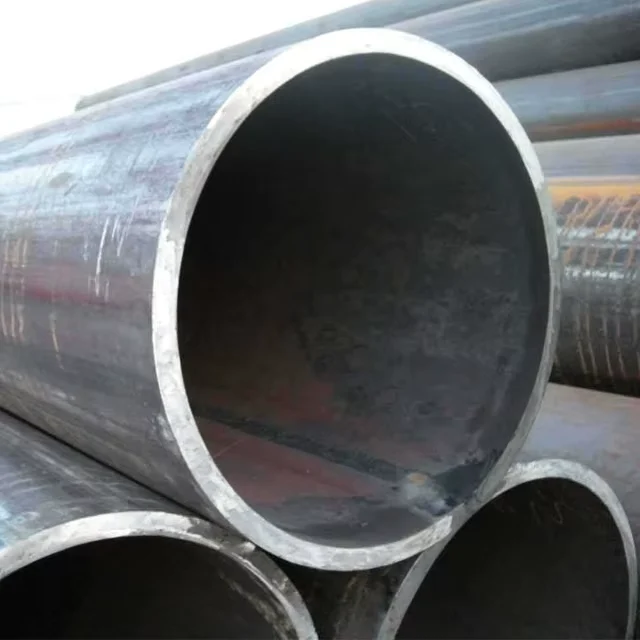
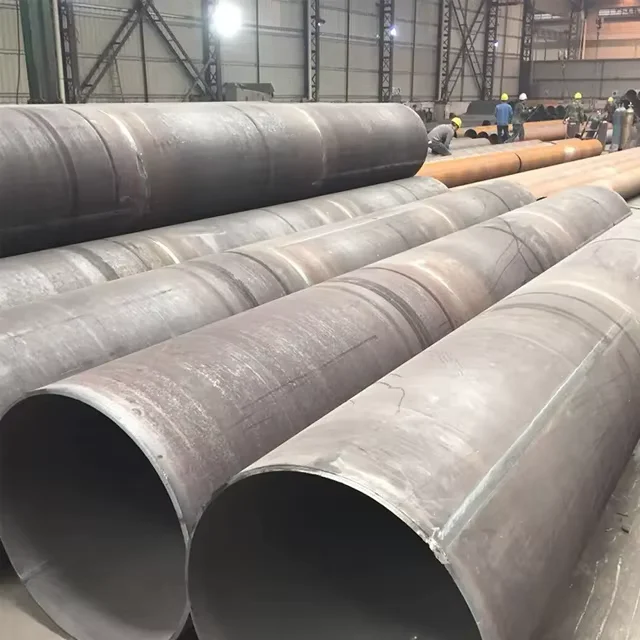
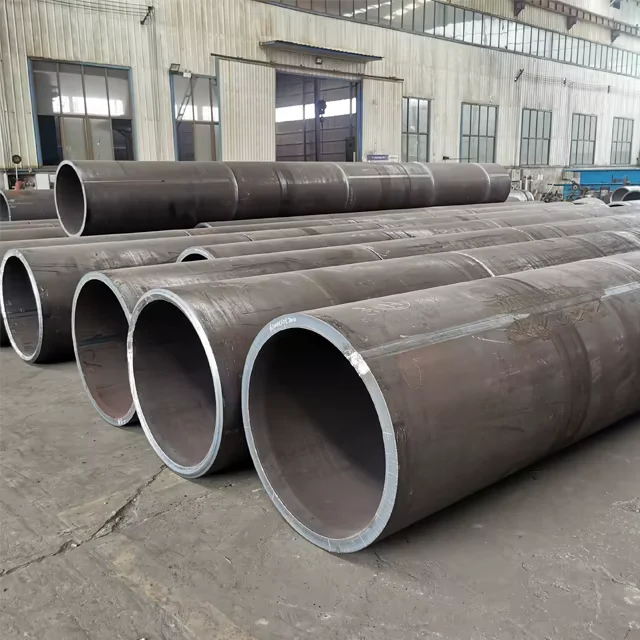
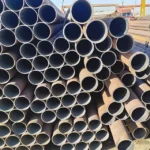
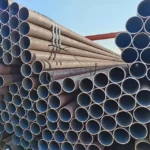
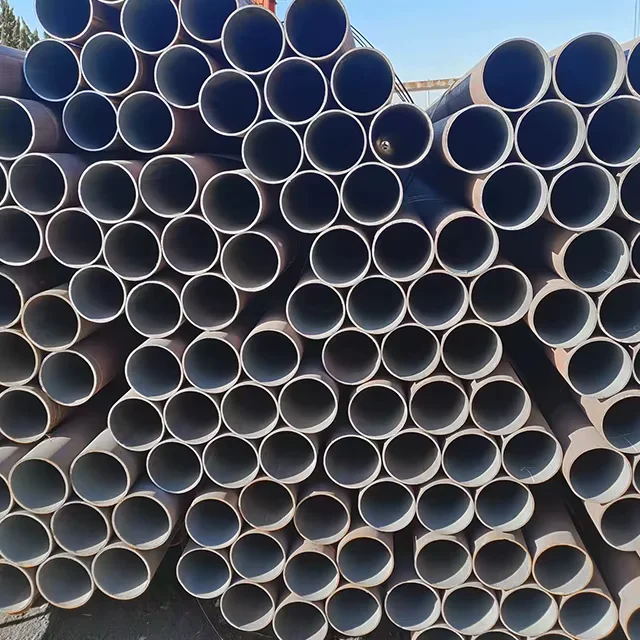
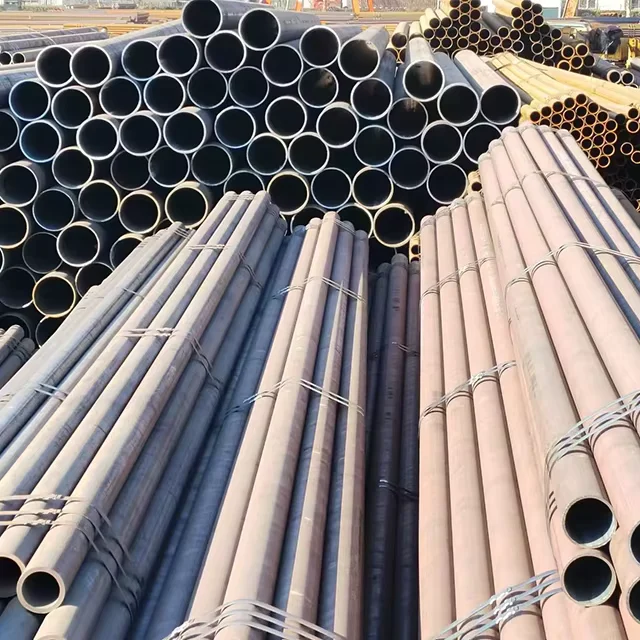
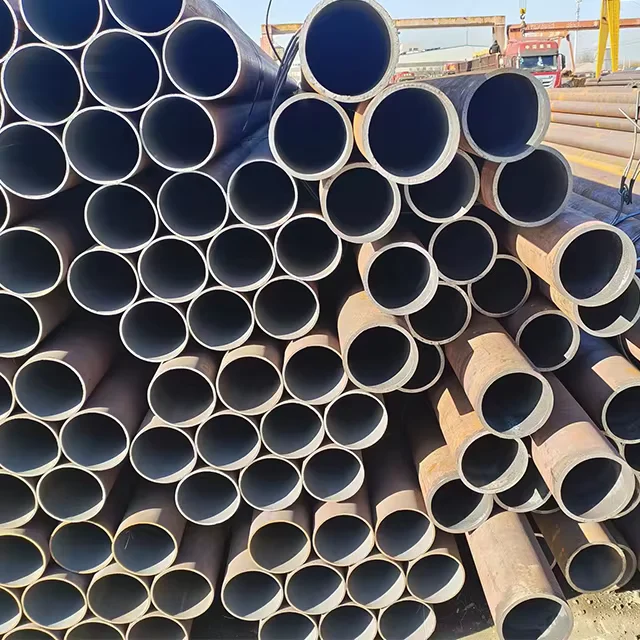
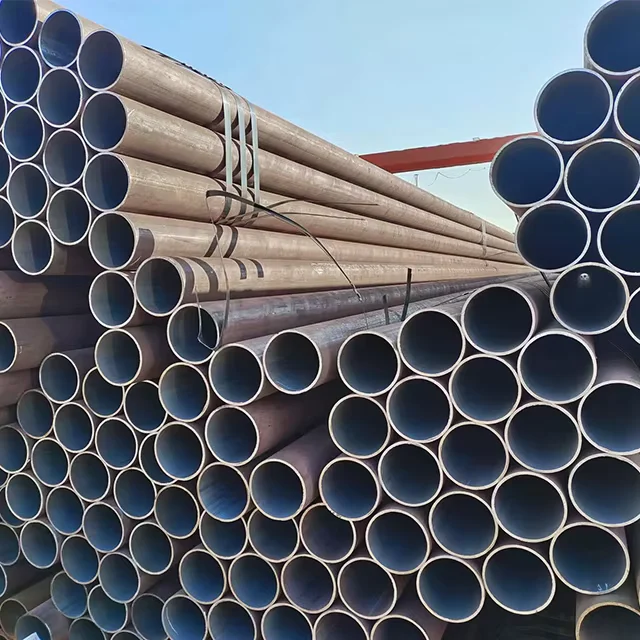
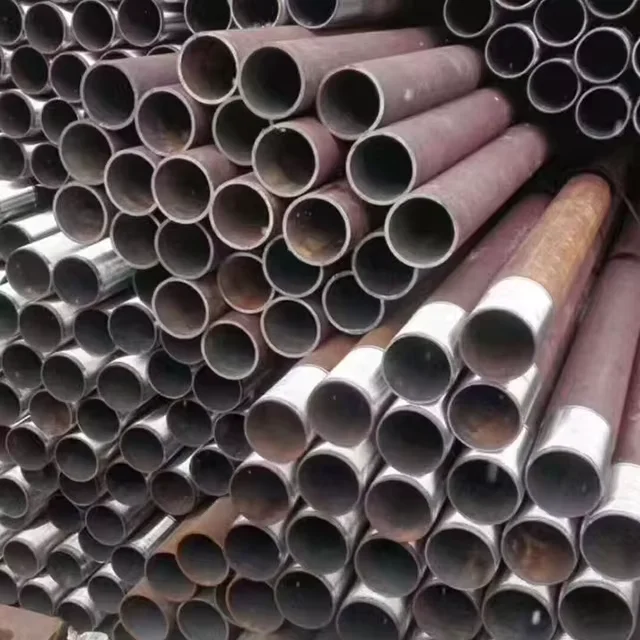
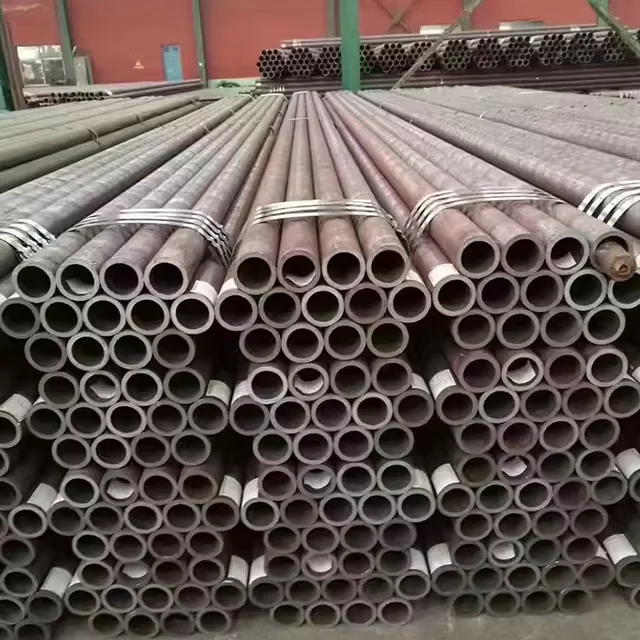
Factory-direct ERW welded steel pipe — every Q235 Q355 S355JH ERW Welded Steel Pipe ships with original mill test certificates verified against heat numbers before container sealing.
Technical Specifications
| Parameter | Value |
|---|---|
| Designation | Q235 Q355 S355JH ERW Welded Steel Pipe |
| Product Type | Round Steel Pipe / ERW Welded Steel Pipe |
| Steel Grade | Q195, Q235, Q345, Q355, S355JH, SS400, A53, A36, ST35, ST52, 10#, 20#, 45#, 16Mn |
| Standard | API 5L, ASTM A53, ASTM A252, ASTM A500, ASTM A671, BS 1387, BS EN 10219, BS EN 10296, BS 6323, BS 6363, GB/T 3091, GB/T 13793, GB/T 9711, ASME B36.10M |
| Section Shape | Round |
| Outer Diameter | 10–700 mm |
| Wall Thickness | Cold rolled 1–4.0 mm / Hot rolled 4–20 mm |
| Length | 1–12 m |
| Technique | ERW (Electric Resistance Welded) / Hot Rolled / Cold Rolled |
| Surface Treatment | Hot Rolled / Slightly Oiled / Hot Dip Galvanized (Zinc Coated 200–700 g/m²) |
| Tolerance | ±1% |
| Ends | Plain / Beveled |
| Application | Fluid transport, gas pipeline, oil pipeline, boiler, hydraulic system, structure pipe, scaffolding, fence, machinery |
| MOQ | 1 Ton |
| Origin | Shandong, China |
Application Suitability
| Industry | Typical Applications |
|---|---|
| Construction & Infrastructure | Scaffolding uprights, structural building frames, fence posts, highway guardrail supports |
| Fluid & Energy Transport | Gas distribution pipelines, oil transfer lines, boiler tubes, hydraulic cylinder barrels |
| Machinery & Fabrication | Equipment support frames, hollow structural sections for welded assemblies, conveyor roller tubes |
What Wall-Thickness Tolerance Costs on a Structural Frame Order
Inconsistent wall thickness on ERW pipe forces rework at the fabrication stage and can trigger rejection during structural inspection.
Buyers sourcing Q235 Q355 S355JH ERW Welded Steel Pipe for scaffolding or structural frames regularly encounter three problems: actual wall thickness falling outside the ±1% tolerance band, missing heat-number traceability on mill test certificates, and grade equivalence confusion between GB, EN, and ASTM standards. A 0.3 mm deviation on a 2.5 mm wall tube may pass visual inspection but fails ultrasonic thickness gauging at the project site, leading to full-container rejection and return freight costs. [NEED_CITE: EN 10219 dimensional tolerance requirements for cold-formed welded hollow sections]
Matching ERW Pipe to Structural and Fluid-Transport Demands
The Q235 Q355 S355JH ERW Welded Steel Pipe range covers outer diameters from 10 mm to 700 mm, bridging small-bore hydraulic lines and large-diameter structural columns within a single procurement cycle. For scaffolding and fence applications, cold-rolled walls between 1–4 mm keep weight manageable while maintaining rigidity; for pressure-rated fluid transport, hot-rolled walls up to 20 mm meet API 5L and ASTM A53 requirements. Hot dip galvanizing with zinc coating at 200–700 g/m² extends service life in coastal or industrial corrosion environments where oiled hot-rolled finish would degrade within months.
Engineering Compliance and Certification Pathways
Structural frames designed under EN 1993 require hollow sections conforming to EN 10219, which governs dimensional tolerances, weld seam quality, and impact testing for S-series grades like S355JH. North American projects specifying ASTM A53 or A500 demand separate chemical and mechanical compliance, and the equivalence between Q355 and S355JH is not automatic — carbon content and manganese ranges differ enough to require documented cross-referencing. [NEED_CITE: steel grade equivalence mapping between GB Q-series and EN S-series standards] CE certification and ISO 9001 traceability become non-negotiable for EU customs clearance, while SGS or BV third-party inspection reports satisfy project-owner audit requirements before container loading.
Steel Grade Selection and ERW Process Fundamentals
The Q-series (Q195 through Q355) follows the Chinese GB standard system where the number indicates minimum yield strength in MPa; S355JH follows the European EN system with comparable but not identical chemistry; ASTM A53 and A36 represent the North American framework. Selecting the correct grade depends on design load, welding procedure, and destination-market code acceptance. ERW welding produces a longitudinal seam through electric resistance heating without filler metal, making it cost-effective for diameters up to 700 mm and walls up to 20 mm — but the weld seam zone requires careful ultrasonic inspection to detect lack-of-fusion defects that seamless pipe would not exhibit. [NEED_CITE: ERW weld seam inspection methods per API 5L and EN 10219] Hot dip galvanizing at 200–700 g/m² provides sacrificial corrosion protection for outdoor and buried applications, while slightly oiled hot-rolled finish suits indoor structural use where painting follows.
Hidden Costs of Procuring Without Verified Traceability
Ordering Q235 Q355 S355JH ERW Welded Steel Pipe without original mill test certificates tied to specific heat numbers creates downstream risk: customs authorities in the EU and Middle East increasingly reject shipments lacking verifiable MTC documentation, and project engineers conducting on-site spectrometer checks will flag chemistry mismatches between the delivered grade and the certificate. Negative tolerance abuse — where actual wall thickness consistently sits at the lower boundary — reduces structural load capacity and voids engineering calculations, leading to costly reinforcement or full replacement. [NEED_CITE: consequences of negative tolerance abuse in structural steel procurement]
Procurement Confidence Through Direct Mill Verification
Every Q235 Q355 S355JH ERW Welded Steel Pipe order ships from our Shandong facility with original mill test certificates listing chemical composition, mechanical properties, and heat numbers — verified in our in-house metallurgical laboratory before release. We maintain ready stock across the full 10–700 mm diameter range in Q195 through Q355, S355JH, SS400, and ASTM A53 grades, eliminating the coil-minimum constraints that force smaller buyers into oversized commitments. Custom cutting to length, beveled or plain end preparation, and hot dip galvanizing up to 700 g/m² zinc coating are completed in-house, with dimensional inspection reports covering OD, wall thickness, and length for every bundle. Professional heavy-cargo loading using flatbed and open-top container configurations prevents transit damage on long-length pipes up to 12 m.
Documentation & Compliance
- Mill test certificate documenting Q235/Q355/S355JH chemical composition and yield strength per GB/T 3091, EN 10219, or ASTM A53 as specified
- CE certificate confirming EN 10219 compliance for structural hollow sections exported to European Union markets
- ISO 9001:2015 quality management certificate covering the full ERW welding, galvanizing, and inspection process
- SGS or BV third-party inspection report available for pre-shipment dimensional and coating-thickness verification
- Full material traceability by heat number linking each pipe to its original slab chemistry and rolling record
- Export customs documentation including packing list, bill of lading, and certificate of origin for destination-country clearance
Packaging, Loading & Delivery
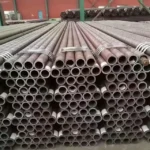
- ERW welded round pipes bundled with steel strips and edge protectors to preserve hot dip galvanized zinc coating during ocean transit
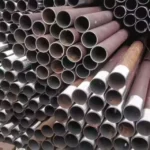
- Slightly oiled hot-rolled pipes wrapped in waterproof cloth to prevent surface oxidation for 1–12 m lengths in container loads
- OD 10–200 mm pipes nested for 20ft container optimization; OD 200–700 mm pipes loaded on flatbed or open-top containers with wooden cradle supports
- Custom cut-to-length service available for 1–12 m requirements, with each bundle labeled by steel grade, heat number, and dimensional specification
- FOB, CIF, and DDP shipping terms supported with professional break-bulk and container tracking through to destination port
Request Your Quotation with Mill Test Documentation
Submit your required steel grade, outer diameter, wall thickness, length, quantity, and destination port to receive a detailed quotation including material cost, processing fees, and shipping terms — along with a sample mill test certificate for your quality team review before order confirmation.
Get Your Q235 Q355 S355JH ERW Welded Steel Pipe Quote
Send your specification sheet to receive pricing and original mill test certificates within 12 hours.
Mobile/WhatsApp/WeChat: +86 188 5315 7756 | Email: admin@xjyplate.com
Frequently Asked Questions
Q: How do Q235, Q355, S355JH, SS400, and ASTM A53 compare in chemical composition and mechanical properties?
A: These grades follow different national standard systems — Q-series follows Chinese GB standards, S355JH follows European EN standards, SS400 follows Japanese JIS standards, and ASTM A53 follows American standards. While they share similar yield strength ranges, their carbon, manganese, and sulfur-phosphorus limits differ. We provide cross-standard equivalence documentation and original mill test certificates so your engineering team can verify compliance with your project specification.
Q: Can you provide original mill test certificates and accept SGS or BV third-party inspection before loading?
A: Yes. Every shipment includes original mill test certificates documenting chemical composition, mechanical properties, and heat numbers. We welcome SGS, BV, or Lloyd’s third-party inspection at our facility before container sealing, and we coordinate the inspection schedule with your surveyor.
Q: What is the minimum order quantity for custom cut-to-length ERW pipe with beveled ends?
A: The minimum order is 1 Ton. We provide custom cutting to any length within the 1–12 m range, with plain or beveled end preparation per your drawing requirements. Processing fees are quoted separately based on the number of cuts and end treatment type.
Q: When should I specify hot rolled oiled finish versus hot dip galvanized coating?
A: Hot rolled with slight oiling suits indoor structural applications, scaffolding, and short-term outdoor use where painting or further coating will follow. Hot dip galvanizing with 200–700 g/m² zinc coating is required for long-term outdoor exposure, coastal environments, buried installations, and corrosive industrial atmospheres where maintenance access is limited.
Q: How is invoicing calculated — theoretical weight or actual weight, and what tolerance applies?
A: Invoicing is based on theoretical weight calculated from nominal outer diameter, wall thickness, and length per the applicable standard formula. Our dimensional tolerance is ±1% on wall thickness, verified by ultrasonic gauging and documented in the inspection report shipped with each order.