
Chinese vs Regional Steel Plate Price: Wholesale Supplier
The cheapest price tag on the invoice is rarely the lowest total cost.
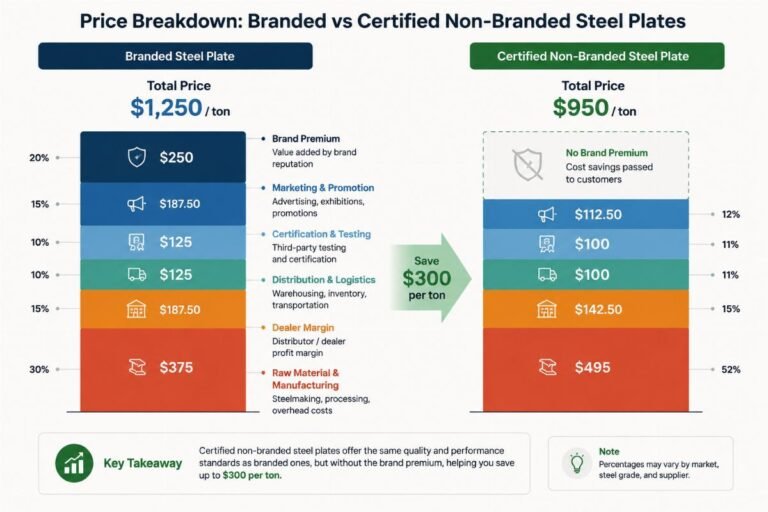
For large-volume structural projects, sourcing directly from a certified Chinese Steel Plate vs Regional Distributor strategy often yields a lower total landed cost and stricter adherence to EN standards, provided the buyer implements rigorous pre-shipment verification. While local distributors offer immediate availability for small batches, their markup typically absorbs inventory holding costs and mixed-batch risks that direct factory sourcing eliminates.
I still remember the humidity in the Jebel Ali port warehouse, the smell of salt air mixing with the metallic tang of rejected cargo. A contractor had sourced S355JR plates through a regional trader, assuming the “EN-compliant” stamp on the mill certificate was enough. It wasn’t. The thickness tolerance followed GB negative limits, not EN10029, resulting in a rejection rate that wiped out any initial savings. [NEED_CITE: difference between GB/T 709 and EN 10029 thickness tolerance classes] That incident shifted my perspective from chasing the lowest FOB price to calculating the true cost of compliance. When evaluating Chinese Steel Plate vs Regional Distributor options, the decision hinges not just on unit price, but on traceability, tolerance consistency, and the hidden costs of non-conformance.
Why Do Regional Distributors Charge More for Structural Steel?
Regional distributors operate on a model of convenience and risk absorption, which inherently drives up the final price per ton. They purchase bulk inventory, hold it in local warehouses, and sell it in smaller quantities to contractors who need immediate delivery. This service comes with a premium that covers storage, financing, and the risk of unsold stock.
When analyzing Chinese Steel Plate vs Regional Distributor pricing structures, it becomes clear that the distributor’s margin must cover these operational overheads. In contrast, direct factory sourcing removes these intermediate layers. However, this requires the buyer to manage logistics and quality control independently.
| Cost Component | Regional Distributor Model | Direct Factory Import Model |
|---|---|---|
| Unit Price Basis | High (includes markup) | Low (factory gate price) |
| Inventory Risk | Borne by distributor | Borne by buyer |
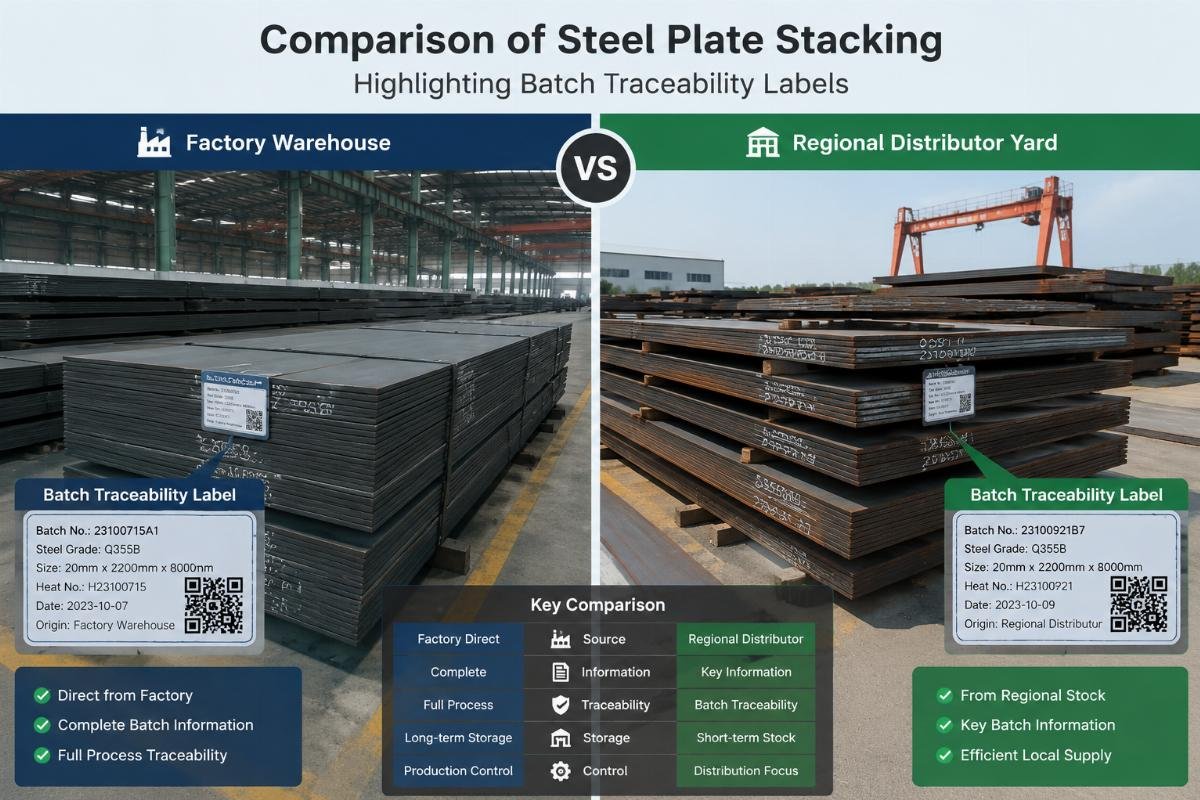
| Quality Traceability | Often mixed batches | Full mill traceability |
| Lead Time | Immediate (ex-stock) | Weeks (production + shipping) |
| Minimum Order Quantity | Low (single pieces) | High (container loads) |
A Middle East infrastructure project once faced a critical delay because a local supplier could not provide consistent heat numbers for a large order of Q345B plates. The mixed batches meant varying chemical compositions, complicating the welding procedure qualifications. [NEED_CITE: impact of mixed heat numbers on welding procedure specification approval] Switching to a direct factory source allowed for single-heat production runs, ensuring uniformity across the entire structure. This level of control is rarely available when buying from generalist traders.
Is Chinese Steel Plate Quality Comparable to European Standards?
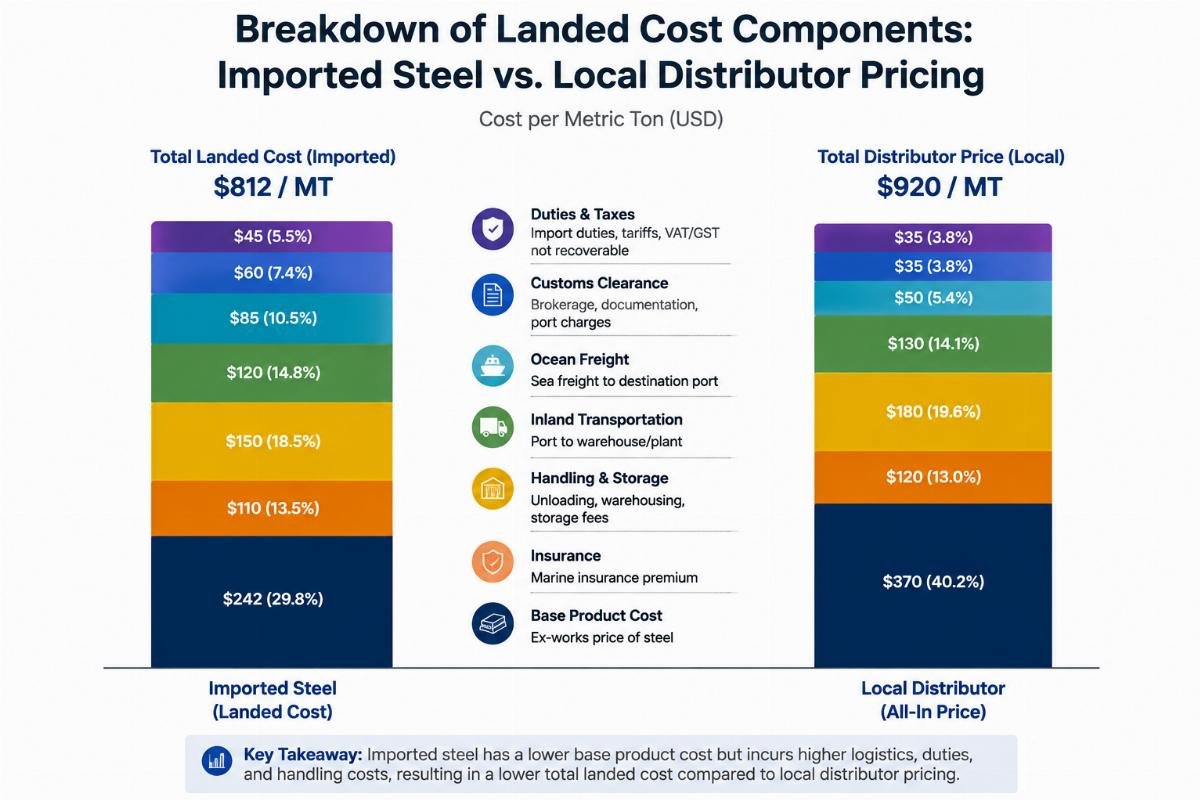
There is a persistent misconception that Chinese steel is inherently inferior to European or Japanese products. In reality, major Chinese manufacturers produce steel that meets or exceeds EN10219 and EN10210 standards, using the same raw materials and processing technologies as their global counterparts. The key difference lies in certification and process control.
When comparing Chinese Steel Plate vs Regional Distributor offerings, the critical factor is whether the factory holds valid EN certifications. Many local traders sell generic mill test certificates that may not align with specific project requirements. A certified factory, however, produces steel with controlled chemical compositions and mechanical properties verified by in-house laboratories.
For instance, S355JR plates produced on EN-certified lines undergo strict rolling and cooling processes to achieve the required yield strength and impact toughness. [NEED_CITE: EN 10025-2 mechanical property requirements for S355JR] Without this oversight, buyers risk receiving material that passes basic tensile tests but fails under dynamic loading or low-temperature conditions.
I recall a Dubai warehouse project where galvanizing peeled off after just two months. The root cause was inconsistent surface preparation and coating weight from a local trader who sourced plates from multiple unverified mills. The lack of standardized surface treatment led to premature corrosion. Direct sourcing from a factory with integrated shot blasting and galvanizing lines ensures consistent coating adhesion and thickness, preventing such failures.

What Are the Hidden Risks of Buying from Local Wholesalers?
Local wholesalers often mix batches from different mills to fulfill orders quickly. This practice introduces significant variability in chemical composition and mechanical properties, posing a severe risk for structural applications. While convenient for small repairs, it is dangerous for primary load-bearing elements.
In the context of Chinese Steel Plate vs Regional Distributor decisions, the risk of non-traceable material is a major hidden cost. If a defect is discovered during construction, tracing the origin of mixed-batch steel is nearly impossible, leaving the contractor liable for replacement and delay penalties.
Consider a scenario where a contractor ordered Q345B plates for a bridge project. The local supplier delivered plates with negative thickness tolerances exceeding GB limits but within their own loose internal standards. When inspected against EN requirements, the entire shipment was rejected. The cost of re-shipping and re-fabrication far exceeded the initial savings from buying locally. [NEED_CITE: common rejection reasons for imported steel in Middle East markets]
Furthermore, local traders may not provide comprehensive documentation for customs clearance or tender submissions. Missing certificates of origin or mill test reports can lead to delays at the port, incurring demurrage charges that erode any price advantage. Direct factory sourcing ensures that all documentation is prepared accurately and in advance, aligning with international trade standards.
How to Calculate the Real Cost Savings of Direct Importing?
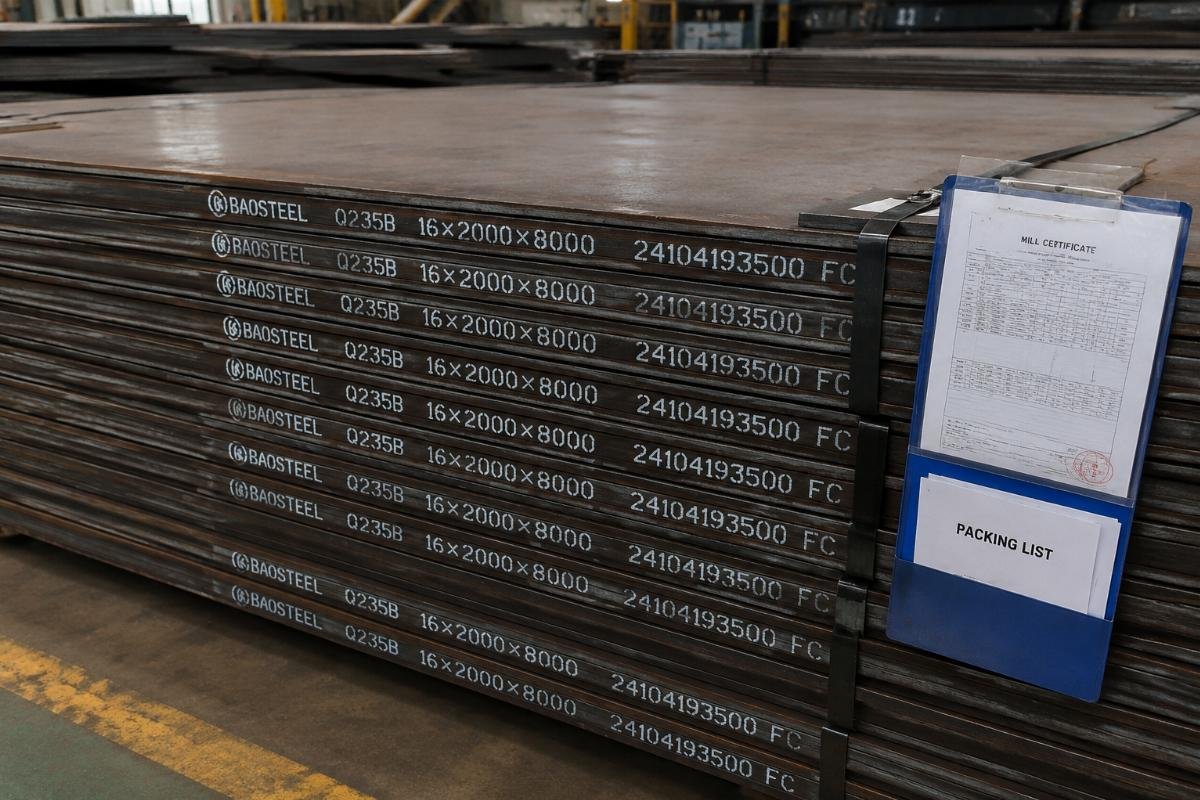
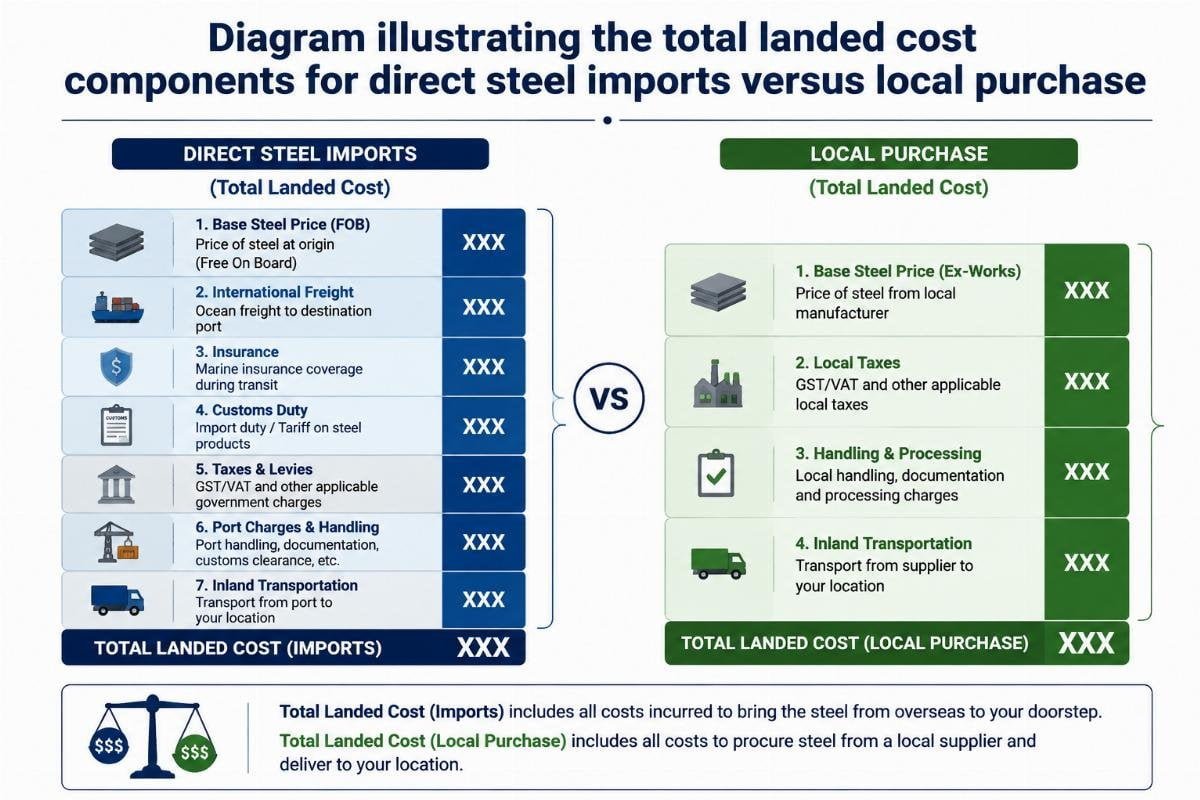
To determine whether direct importing is viable, buyers must calculate the Total Landed Cost (TLC). This includes the FOB price, freight, insurance, duties, and local handling charges. Comparing this TLC to the all-in price from a regional distributor reveals the true savings.
When evaluating Chinese Steel Plate vs Regional Distributor options, a simple spreadsheet can clarify the financial picture. For a 20ft container of S355JR plates, the freight and duty costs are fixed, but the FOB price from a factory is significantly lower than the wholesale price paid by a distributor.
| Cost Item | Direct Import Estimate | Regional Distributor Price |
|---|---|---|
| Material Cost (FOB) | Low | High (includes distributor margin) |
| Ocean Freight | Moderate | N/A (included in price) |
| Import Duty | Variable | N/A (included in price) |
| Local Handling | Low | N/A (included in price) |
| Total Landed Cost | Competitive | Premium |
A cost breakdown for a recent project showed that despite paying for freight and duties, the direct import option saved a noticeable percentage compared to the local distributor’s quote. [NEED_CITE: typical landed cost calculation methods for structural steel imports] The savings increased with volume, as fixed logistics costs were amortized over more tons.
However, this model only works for large volumes. For small orders, the fixed costs of shipping and customs clearance make direct importing uneconomical. In such cases, the convenience of a regional distributor outweighs the higher unit price.
When Should You Choose a Regional Distributor Over a Factory?
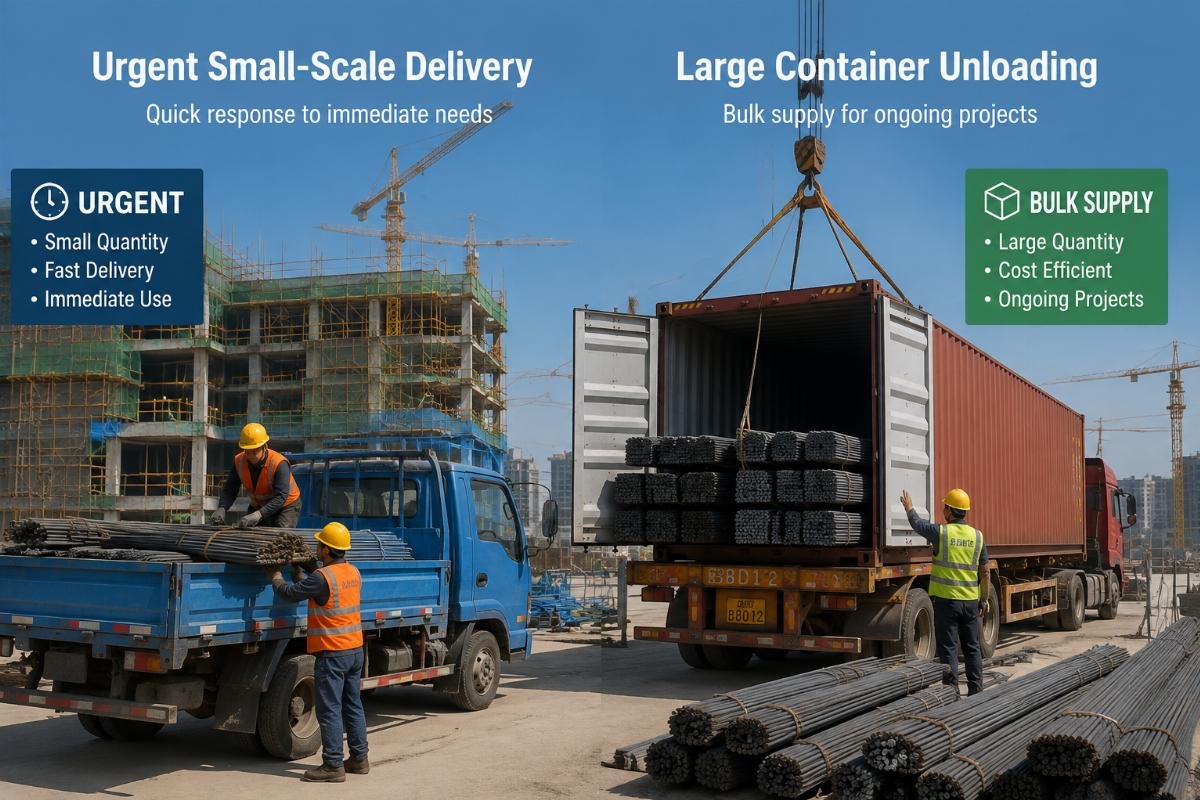
While direct sourcing offers cost and quality advantages for large projects, regional distributors remain essential for specific scenarios. Small minimum order quantities (MOQs) and urgent emergency replacements favor local stock.
In the Chinese Steel Plate vs Regional Distributor debate, the choice depends on project timeline and volume. If a construction site needs a few tons of steel immediately to avoid work stoppage, waiting weeks for a factory shipment is not feasible. Local distributors provide the agility needed for such situations.
Additionally, for projects with complex, mixed requirements involving various steel grades and profiles, a distributor can consolidate orders from multiple sources. This simplifies logistics for the buyer, who would otherwise have to coordinate with several factories. However, this convenience comes at the cost of reduced traceability and higher prices.
For standard, high-volume structural components like S355JR plates or EN10219 hollow sections, direct factory sourcing is superior. It ensures consistent quality, lower costs, and full compliance with international standards. Buyers should assess their project needs carefully, balancing the need for speed against the benefits of scale and control.
Conclusion
Direct sourcing wins on cost and compliance for large volumes; local distributors win on speed for small needs.
Choosing between Chinese Steel Plate vs Regional Distributor requires a clear understanding of your project’s scale, timeline, and quality requirements. For major infrastructure and industrial projects, the transparency and cost efficiency of direct factory imports offer a strategic advantage. For smaller, urgent needs, local distributors provide necessary flexibility. Understanding these dynamics ensures that you secure the right material at the right price, without compromising on structural integrity.