
EN10025 vs ASTM A36 Steel Plate Cross-Reference & Wholesale Supplier
EN10025 and ASTM A36 are not direct equivalents. Substituting one for the other without verifying yield strength gaps and impact testing temperatures leads to structural compliance failures and customs rejection.
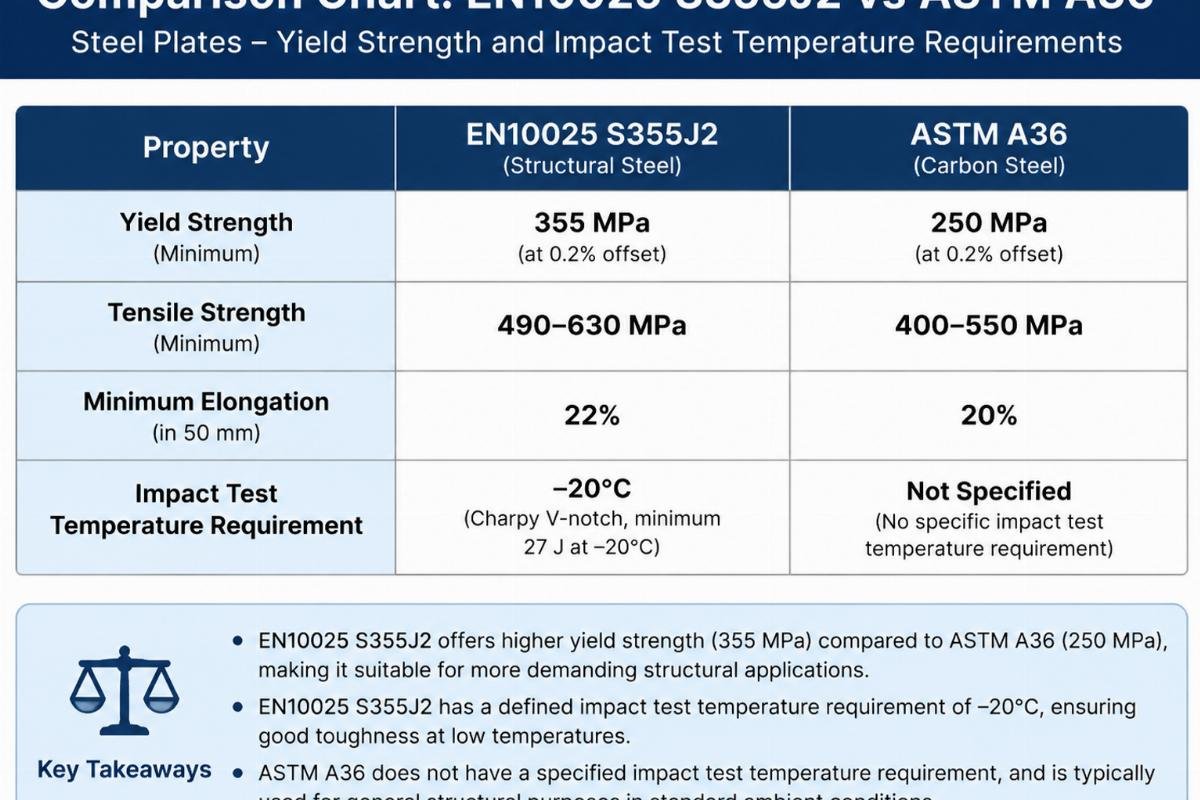
The core difference lies in mechanical property baselines and testing mandates. ASTM A36 specifies a minimum yield strength of 250 MPa, while EN10025 S235JR requires only 235 MPa. More critically, EN10025 grades like S355J2 mandate Charpy V-notch impact tests at specific low temperatures (-20°C), whereas standard ASTM A36 does not require these tests by default. For projects in the Middle East or regions with varying climate conditions, ignoring these suffixes results in material that may pass visual inspection but fail under thermal stress or dynamic loads. [NEED_CITE: fundamental differences in EN10025 and ASTM A36 mechanical requirements]
Understanding these distinctions is vital for procurement managers and EPC contractors who face strict tender specifications. The following analysis breaks down the technical disparities to prevent costly errors during sourcing and installation.
Why Are EN10025 and ASTM A36 Not Direct Equivalents?
Different mechanical property baselines and testing mandates create hidden risks. Many buyers assume that “structural steel” is a universal commodity, leading to dangerous substitutions in critical frameworks.
The misconception often stems from the similar appearance and general application of these steels in construction. However, the governing bodies—European Committee for Standardization (CEN) for EN10025 and American Society for Testing and Materials (ASTM) for A36—prioritize different performance metrics. EN10025 places a heavy emphasis on toughness and weldability through mandatory impact testing for certain grades, while ASTM A36 focuses primarily on tensile and yield strength without inherent low-temperature toughness requirements unless specifically added as a supplementary requirement. [NEED_CITE: scope of impact testing requirements in EN10025 versus ASTM A36]
A common scenario involves a Dubai high-rise project where S355J2 plates were rejected upon arrival. The Mill Test Certificate (MTC) listed an impact energy value of 27 Joules but failed to specify the test temperature. Under EN10025, the suffix “J2” explicitly mandates testing at -20°C. Without this temperature designation, the material could have been tested at room temperature (JR) or 0°C (J0), rendering it non-compliant for structures exposed to cooler night temperatures or air-conditioned environments that induce thermal contraction. The shipment sat at Jebel Ali port for weeks while re-testing was arranged, incurring significant demurrage charges.
This highlights that equivalence is not just about chemical composition but about verified performance under defined conditions. Buyers must look beyond the grade name to the specific suffixes and testing protocols attached to the material certification.
How Do Yield Strength and Tensile Requirements Differ?
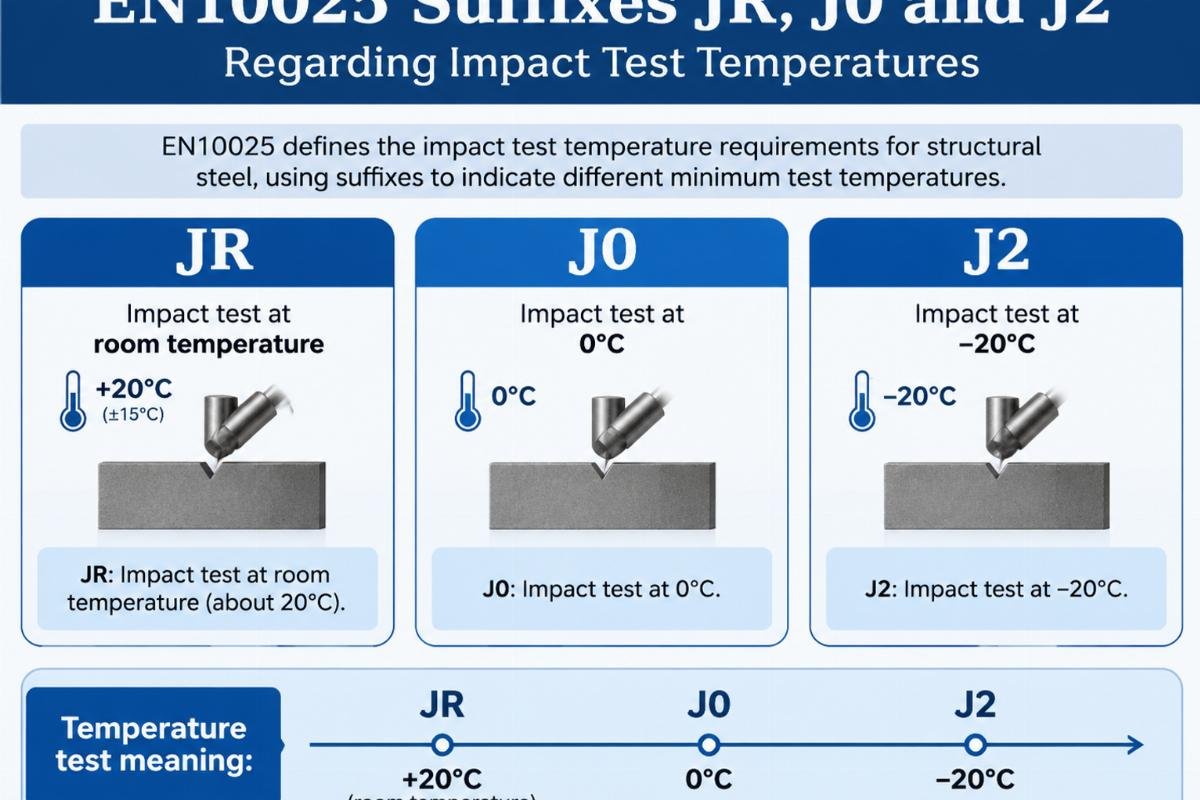
A36 often exceeds S235 in yield, but S355 significantly outperforms A36, requiring careful grade mapping. Misunderstanding these variance percentages can lead to over-engineering or, more dangerously, under-performance.
When comparing ASTM A36 to EN10025 S235JR, many assume they are identical due to their widespread use in general construction. However, ASTM A36 has a higher minimum yield strength (250 MPa) compared to S235JR (235 MPa). This difference affects safety factors and load-bearing calculations. Conversely, when projects specify S355, they are looking for a minimum yield strength of 355 MPa, which is substantially higher than A36. Substituting A36 for S355 without recalculating structural loads can result in framework failure.
| Grade | Standard | Min Yield Strength (MPa) | Min Tensile Strength (MPa) | Impact Test Requirement |
|---|---|---|---|---|
| S235JR | EN10025 | 235 | 360-510 | Yes (at +20°C) |
| S355J2 | EN10025 | 355 | 470-630 | Yes (at -20°C) |
| A36 | ASTM | 250 | 400-550 | No (unless specified) |
| A572 Gr50 | ASTM | 345 | 450 | No (unless specified) |
[NEED_CITE: comparative yield and tensile strength values for structural steel grades]
In a Saudi warehouse project, the framework failed a load test because ASTM A36 was used instead of the specified S355. The contractor assumed A36 was “close enough” to European standards. However, the 100 MPa gap in yield strength meant the beams deflected beyond allowable limits under full storage load. This error required replacing the entire structural skeleton, causing months of delay.
For buyers, this means that cross-referencing must be precise. If a design calls for S355, substituting with A36 is not viable. If the design allows for A36, using S235 might require thicker sections to compensate for the lower yield strength. Always verify the specific mechanical properties against the engineering drawings rather than relying on generic grade names.
What Is the Critical Role of Impact Testing Temperatures?
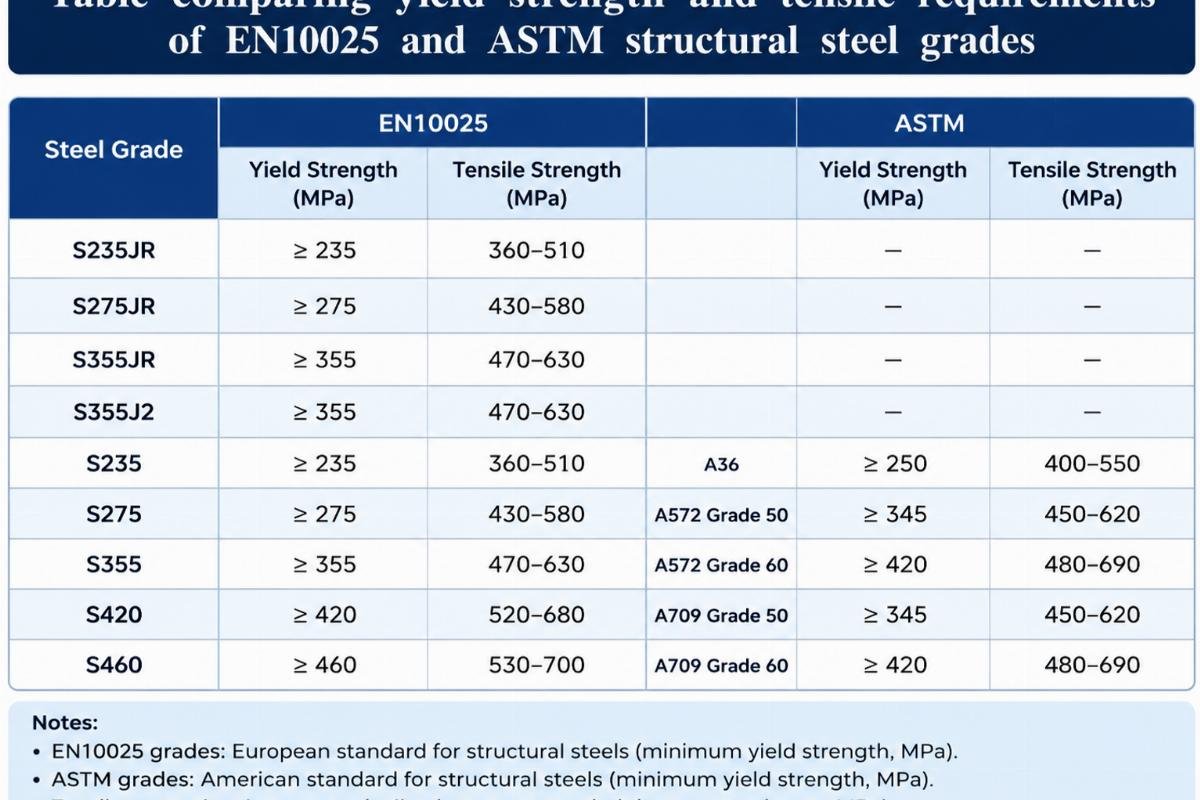
EN10025 suffixes dictate mandatory low-temperature toughness, a key omission in standard A36 specs. This distinction is crucial for projects in regions with temperature fluctuations or specific environmental controls.
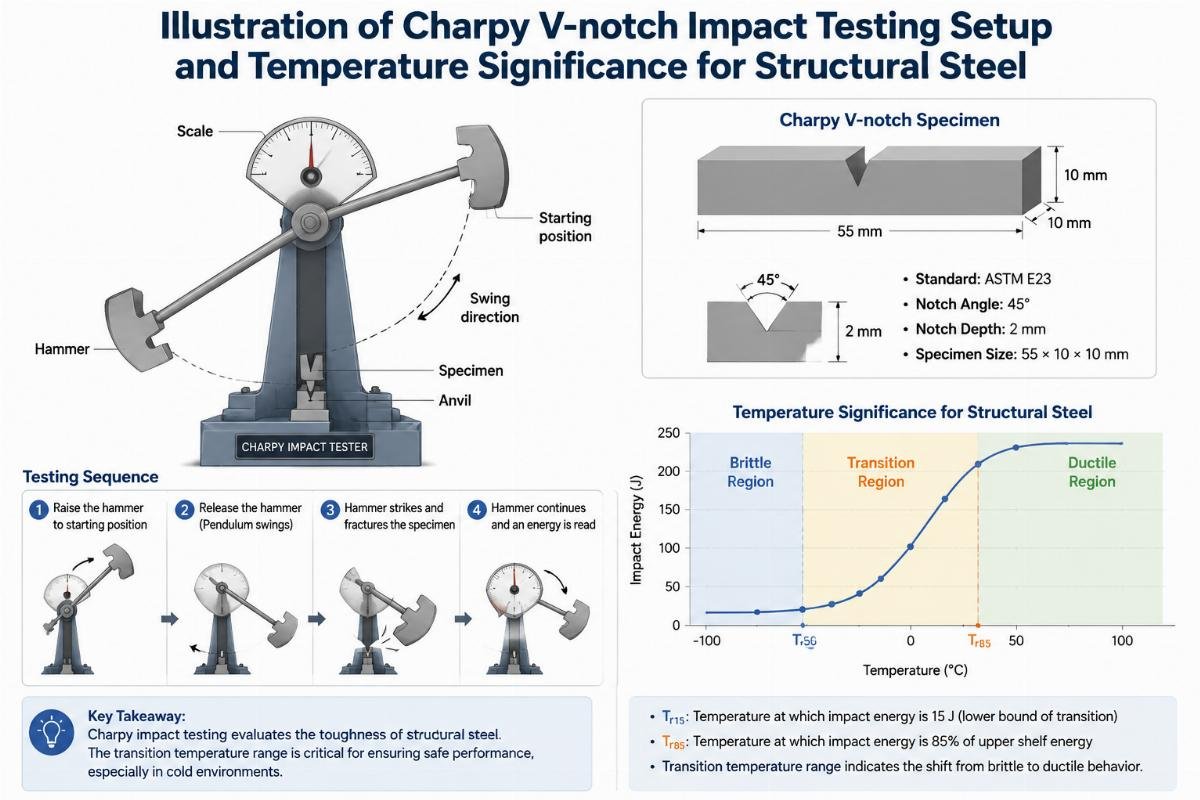
The EN10025 standard uses suffixes to denote the temperature at which the Charpy V-notch impact test is performed. “JR” indicates testing at +20°C, “J0” at 0°C, and “J2” at -20°C. These tests measure the energy absorbed by the material during fracture, indicating its resistance to brittle failure. In contrast, ASTM A36 does not mandate Charpy V-notch tests by default. While supplementary requirements can be added to A36 orders, they are not intrinsic to the base specification.
This difference becomes critical in applications where steel is subject to dynamic loads or thermal stress. For instance, in offshore structures or high-altitude constructions, temperatures can drop significantly. Steel that performs well at room temperature may become brittle and prone to catastrophic failure at lower temperatures if it has not been tested for such conditions.
A mixed-container shipment to Riyadh faced customs delays due to inconsistent standard labeling on H-beams. Some beams were marked with EN10025 S355J2, implying -20°C toughness, while others were marked ASTM A36 with no impact data. Customs officials flagged the inconsistency, suspecting misdeclaration. The clearance process stalled until third-party inspection verified that the A36 beams were intended for non-critical internal supports, while the S355J2 beams were for external frames. This incident underscores the need for clear documentation and consistent standard application within a single project.
Buyers must ensure that the specified grade matches the environmental conditions of the project site. If low-temperature toughness is required, EN10025 grades with appropriate suffixes (J0, J2, K2) should be selected, or supplementary impact testing must be explicitly requested for ASTM grades.
How to Verify Compliance in Mill Test Certificates?
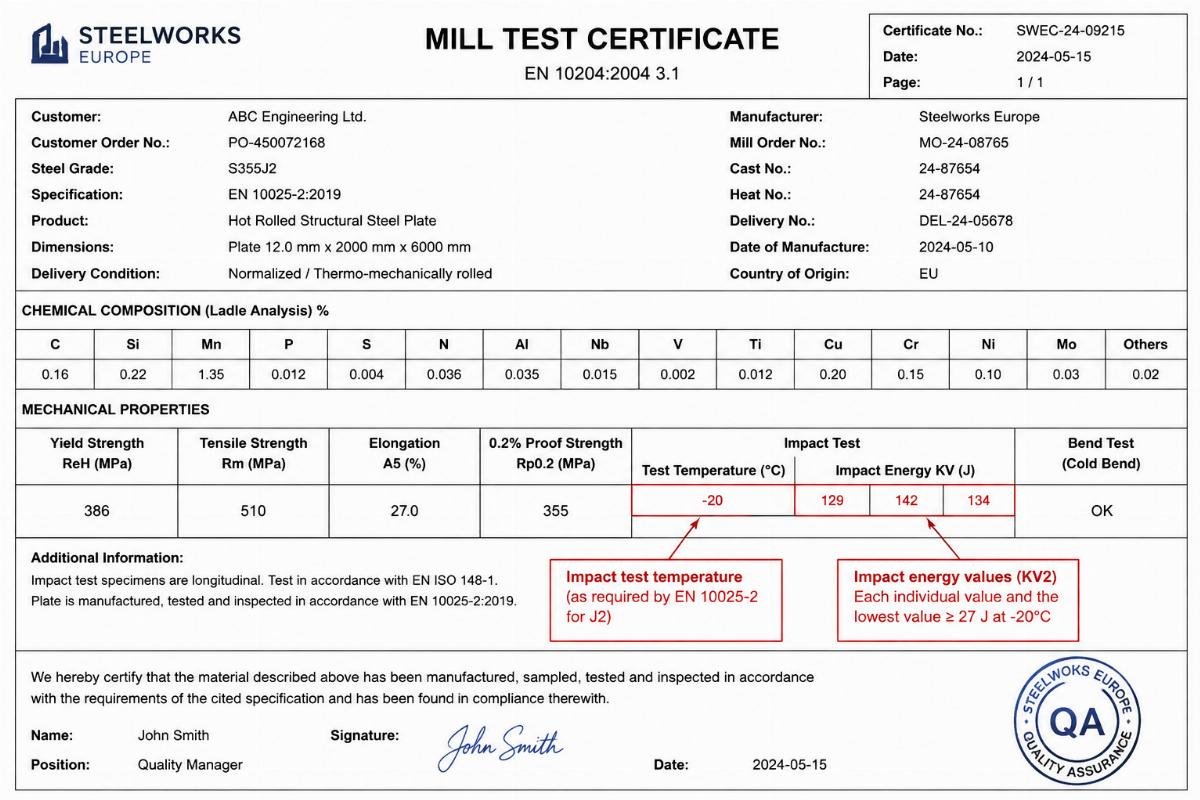
Check for explicit temperature values and impact Joules, not just generic “pass” statements. A Mill Test Certificate (MTC) is the primary document for verifying material compliance, but it can be misleading if not read carefully.
An MTC for EN10025 steel should clearly state the grade, including the suffix (e.g., S355J2). It must also list the actual impact energy values (in Joules) and the test temperature. A generic statement like “Impact test passed” is insufficient for EN10025 J2 grades. The certificate must show that the test was conducted at -20°C and that the results met the minimum requirement (typically 27J for longitudinal samples).
For ASTM A36, the MTC will list yield and tensile strengths. If impact testing was not requested, this section may be blank or marked “N/A.” If impact testing was added as a supplementary requirement, the MTC must specify the test temperature and results, similar to EN10025.
Common errors in MTCs include:
- Missing test temperature for EN10025 grades.
- Listing average impact values without individual sample results.
- Confusing heat number with batch number.
- Omitting chemical composition limits, particularly Carbon Equivalent (CEV), which affects weldability.
To avoid these issues, buyers should request sample MTCs before placing large orders. Verify that the format includes all necessary data points for the specified standard. For complex projects involving multiple standards, consider working with suppliers who can provide dual-certified MTCs or clearly segregated documentation for each standard.
Conclusion
Precision in standard selection prevents structural failure and logistical nightmares. EN10025 and ASTM A36 serve different engineering needs, particularly regarding yield strength baselines and mandatory impact testing.
Procurement teams must move beyond generic grade comparisons and focus on the specific mechanical properties and testing protocols required by their project specifications. Verifying Mill Test Certificates for explicit temperature data and impact values ensures that the material performs as intended under real-world conditions. By understanding these critical differences, buyers can avoid costly rejections, delays, and structural compromises.