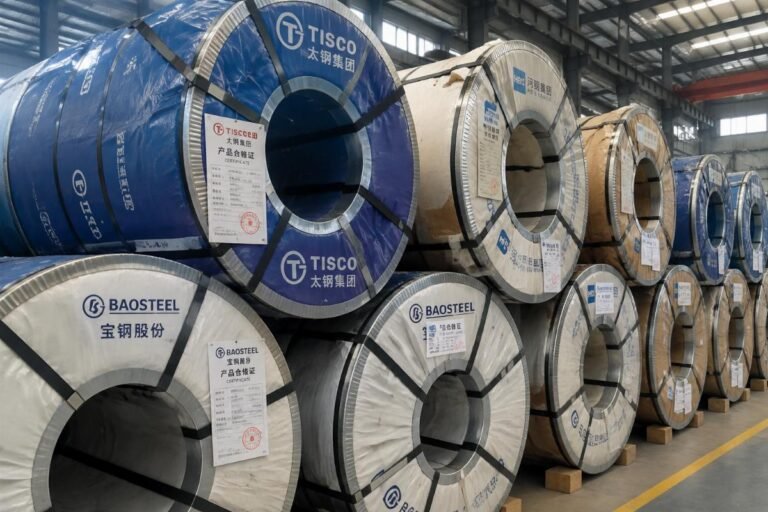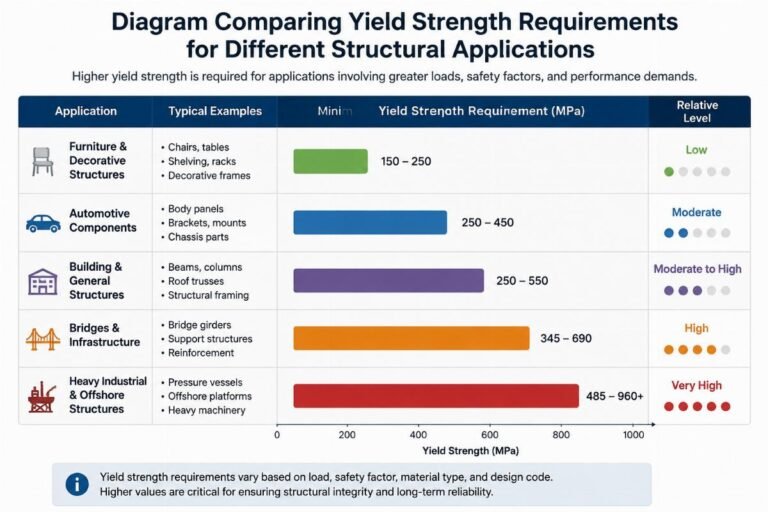

304/316 Stainless Steel Plate Manufacturer: EN-Certified Factory Direct Wholesale for Global Buyers
Stainless steel does not mean maintenance-free. In humid coastal or industrial environments, improper surface treatment during manufacturing leads to rapid corrosion, regardless of the grade.
Selecting a reliable 304/316 stainless steel plate manufacturer requires strict verification of EN-standard compliance, surface treatment quality, and precise dimensional tolerance to prevent customs rejection or fabrication delays. It is not enough to simply confirm the grade; buyers must validate the mill test certificates against actual heat numbers and ensure the supplier has in-house capabilities for custom sizing and certified shot blasting.
I still remember the silence on the phone line when a client in the Middle East told me they were rejecting an entire container of structural plates. The issue was not the chemical composition, which was perfect, but the surface preparation. The plates had arrived with visible mill scale and insufficient rust removal because the factory had skipped the certified shot blasting step to save time. The cost of return shipping and replacement exceeded the initial profit margin by several times. That incident changed how I approach every single order from the Jinan production floor to the port of Qingdao. Now, I inspect the surface finish personally before any loading takes place. [NEED_CITE: impact of surface preparation on corrosion resistance in marine environments]
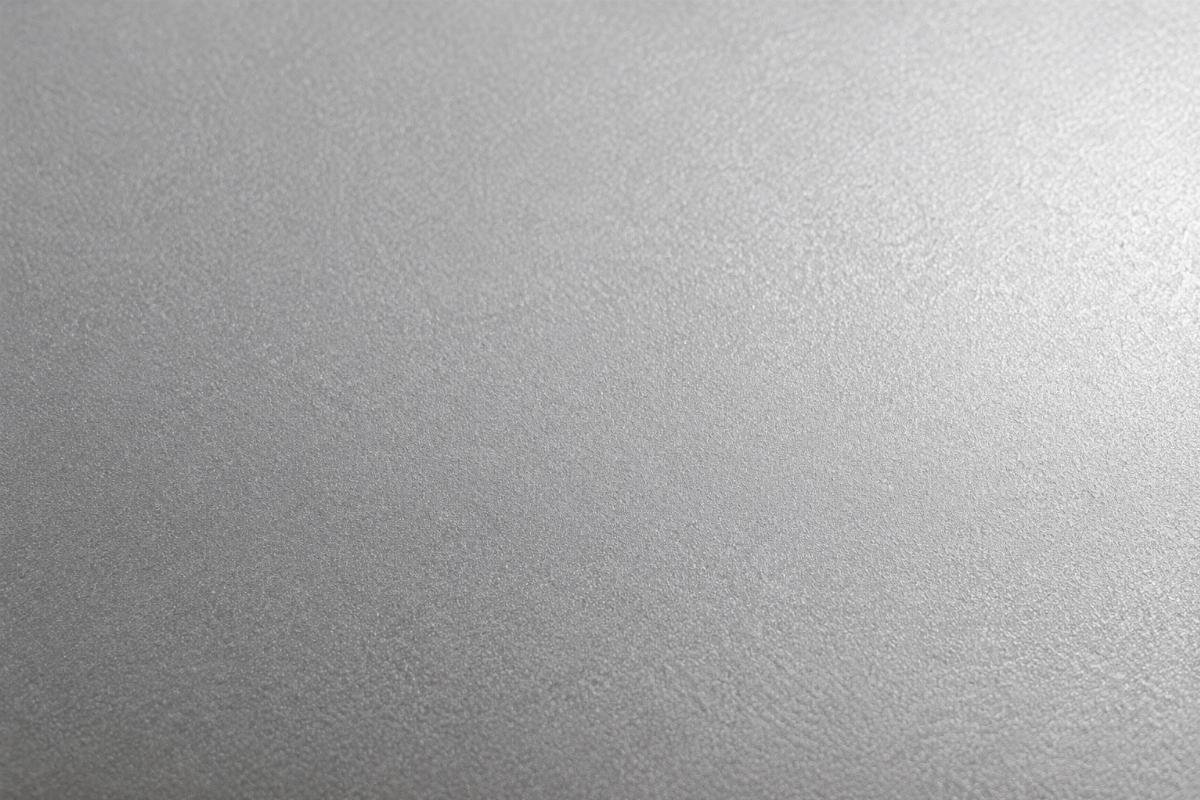
This guide breaks down the critical differences between grades, the non-negotiable quality checks, and how to verify a supplier’s true capability beyond their sales brochure.
Why Do 304 and 316 Grades Matter for Your Project?
The choice between 304 and 316 is not about quality hierarchy, but environmental suitability. Using 316 where 304 suffices wastes budget, while using 304 in a marine environment invites failure.
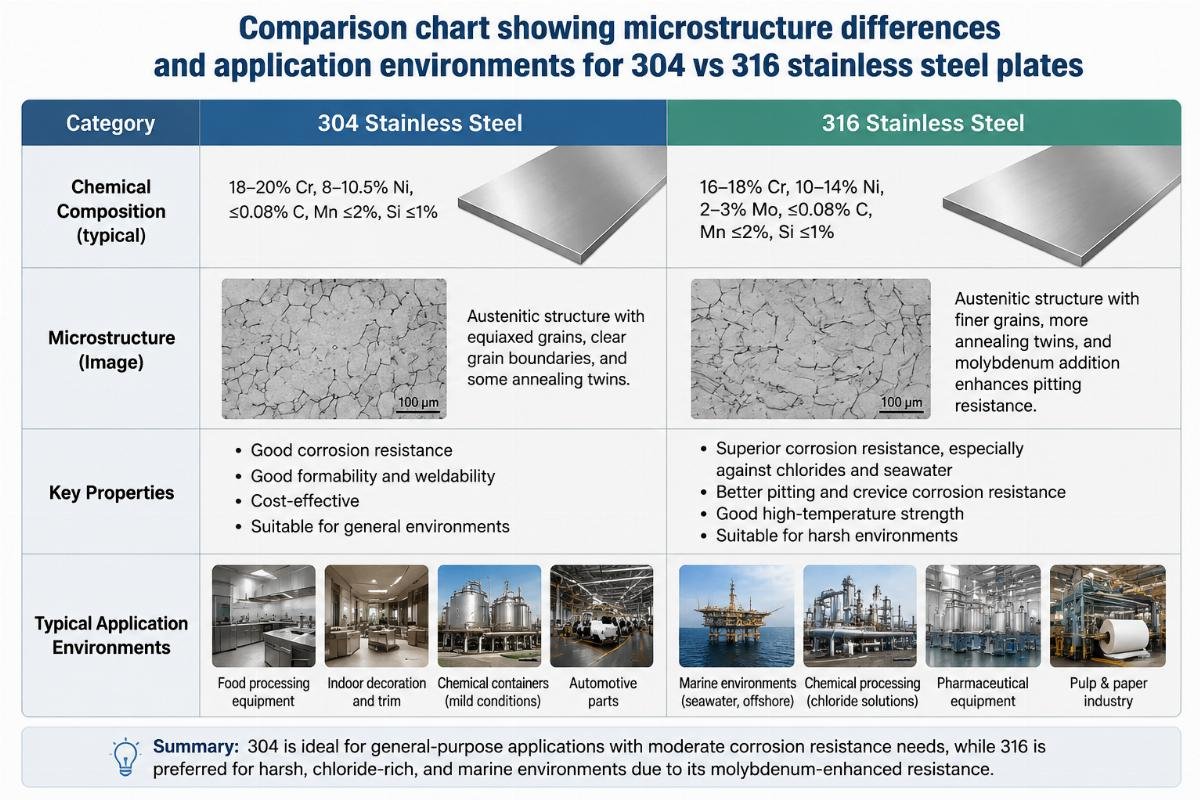
The primary distinction lies in the chemical composition, specifically the presence of molybdenum in 316 grade. This element significantly enhances resistance to pitting and crevice corrosion in chloride-rich environments. For indoor architectural applications or dry industrial settings, 304 (often referred to as 18/8 stainless) provides ample durability and cost efficiency. However, for coastal infrastructure, chemical processing plants, or marine structures, 316 is mandatory. [NEED_CITE: chemical composition differences between AISI 304 and AISI 316 stainless steel]
Many global buyers assume that all Chinese mills offer the same baseline quality. This is a dangerous misconception. Only manufacturers with dedicated in-house laboratories and strict adherence to EN10210 or EN10219 standards can guarantee the chemical consistency required for international tenders. Without proper control, the carbon content may fluctuate, affecting weldability and long-term structural integrity.
| Feature | 304 Stainless Steel Plate | 316 Stainless Steel Plate |
|---|---|---|
| Primary Alloying Elements | Chromium, Nickel | Chromium, Nickel, Molybdenum |
| Corrosion Resistance | Good for indoor/dry environments | Superior for marine/chemical environments |
| Cost Implication | More cost-effective | Higher material cost due to Molybdenum |
| Typical Application | Indoor architecture, food processing | Coastal structures, chemical tanks, marine hardware |
| Verification Focus | Standard Mill Test Certificate | Enhanced PMI testing for Molybdenum content |
A European fabrication shop once requested non-standard sizes for a multi-level car park structure near the coast. They initially considered 304 to cut costs. After reviewing the project’s proximity to salt spray zones, we recommended 316. The slight increase in material cost was negligible compared to the potential expense of early replacement. We provided precision laser cutting with tight tolerances, ensuring the plates fit their complex framework without additional on-site modification. [NEED_CITE: role of molybdenum in pitting corrosion resistance]
When sourcing from a 304/316 stainless steel plate manufacturer, always request a Positive Material Identification (PMI) test report for 316 orders. This ensures the molybdenum content is within the specified range, protecting your project from substandard substitutions.
What Are the Critical Quality Checks Before Shipment?
Surface treatment is the first line of defense against corrosion, yet it is the most frequently overlooked aspect in export contracts.
Mill scale, oil residues, and handling marks can initiate corrosion cells even on high-grade stainless steel. For export projects, especially those bound for strict regulatory markets like Europe or developed infrastructure projects in the Middle East, simple pickling is often insufficient. Certified shot blasting or sandblasting to a specific cleanliness standard is essential. [NEED_CITE: ISO 8501 surface preparation standards for steel]
In my early years managing exports, I saw a batch rejected because the visual inspection protocol was ignored. The plates looked clean to the naked eye, but under closer scrutiny, patches of iron contamination from handling equipment remained. These microscopic particles rust quickly, staining the stainless surface and causing client complaints. Now, we enforce a strict visual inspection protocol under controlled lighting before packing.
Dimensional accuracy is equally critical. A deviation of even a few millimeters can halt a construction site. For custom fabrication, precision cutting services must maintain tight tolerances. We utilize advanced laser and waterjet cutting technologies to achieve ±1mm tolerance on non-standard sizes. This precision allows distributors and fabricators to minimize waste and reduce on-site labor costs.
| Quality Check Point | Standard Requirement | Risk of Non-Compliance |
|---|---|---|
| Surface Cleanliness | Free from oil, grease, and mill scale | Rapid localized corrosion, aesthetic rejection |
| Shot Blasting | Certified record of abrasive cleaning | Poor adhesion for subsequent coatings if painted |
| Dimensional Tolerance | Within ±1mm for custom cuts | Fabrication delays, material waste |
| Edge Condition | Deburred and smooth | Safety hazards, handling injuries |
A Southeast Asia distributor needed consistent batch quality for resale to local workshops. They emphasized the importance of uniform surface finish across multiple containers. By implementing standardized shot blasting records and batch-level tracking, we ensured that every plate met the same visual and tactile standards. This consistency helped them build a reputation for reliability in their local market. [NEED_CITE: importance of surface roughness in corrosion initiation]
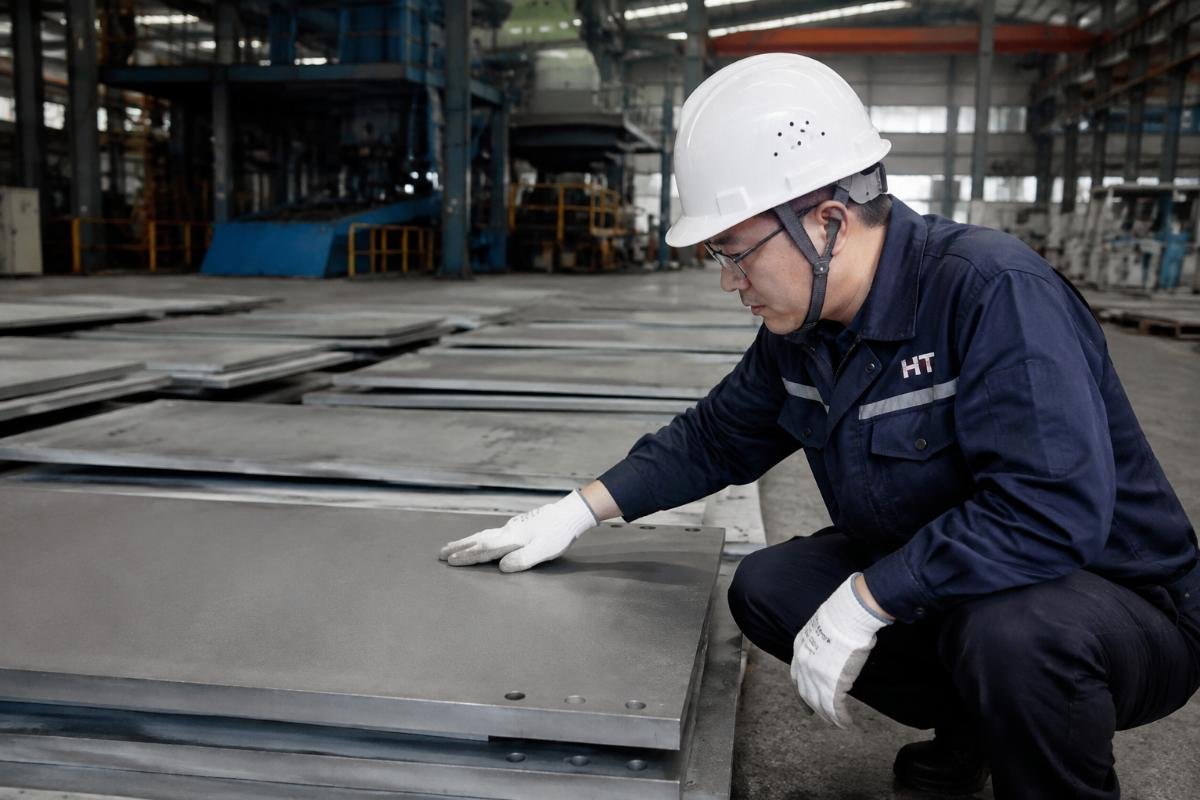
Always ask your 304/316 stainless steel plate manufacturer for photos of the surface treatment process and recent inspection reports. Do not rely solely on the final certificate; verify the process controls.
How to Verify a Manufacturer’s Compliance and Capability?
Certifications are not just paper; they are proof of a manufacturer’s investment in quality control infrastructure.
Many suppliers claim compliance with EN standards, but few possess the in-house laboratory capabilities to verify every batch independently. Look for manufacturers who hold EN10219 and EN10210 certifications, as these indicate a rigorous approach to structural steel production. These standards require regular testing of mechanical properties and chemical composition, ensuring that the material performs as expected under load. [NEED_CITE: requirements of EN10219 and EN10219 standards for structural hollow sections and plates]
Xin Jiyuan operates over twenty production lines with an integrated in-house laboratory. This setup allows for real-time verification of quality parameters, reducing the reliance on external third-party tests for every single order. With access to more than 2800 standard specifications, we can meet diverse project needs, from standard construction beams to custom non-standard sizes. This breadth of capability is crucial for EPC firms managing complex infrastructure projects.
When evaluating a supplier, ask for evidence of their custom fabrication proofs. Can they handle mixed-container consolidation? Do they have the technical data sheets to support engineering compliance? A capable manufacturer will provide detailed documentation, including tolerance charts and material safety data sheets, without hesitation.
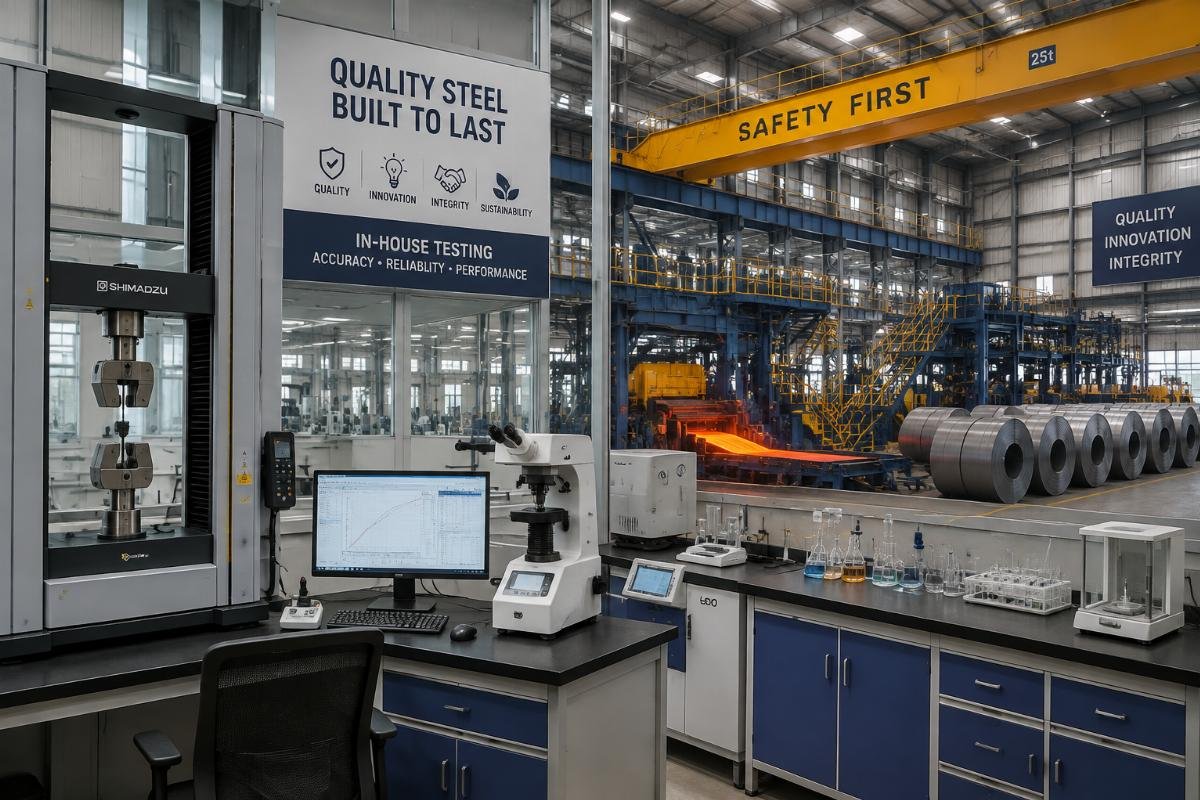
For instance, a trading company consolidating orders for a large infrastructure project in Latin America required detailed cross-referencing of EN and ASTM standards. Our team provided comprehensive documentation that aligned with both sets of regulations, facilitating smooth approval from their engineering consultants. This level of support is what separates a simple trader from a true manufacturing partner. [NEED_CITE: comparison of EN and ASTM standards for stainless steel]
Ensure your 304/316 stainless steel plate manufacturer can demonstrate their production capacity and quality control processes through virtual tours or detailed process videos. Transparency builds trust.
What Documentation Ensures Smooth Customs Clearance?
Incomplete or inaccurate documentation is the leading cause of customs delays and demurrage charges.
Even if the physical goods are perfect, paperwork errors can stall your shipment for weeks. Essential documents include the Certificate of Origin (COO), Mill Test Certificates (MTC), and detailed packing lists. These documents must align perfectly with the destination country’s import regulations. [NEED_CITE: standard export documentation requirements for steel products]
The MTC is particularly critical. It must match the actual heat numbers stamped on the plates. Discrepancies here can lead to immediate rejection by customs authorities or end-users. We ensure that every MTC is generated directly from our laboratory data, guaranteeing accuracy and traceability. For certain markets, third-party inspection support from agencies like SGS or Bureau Veritas may be required. A reliable manufacturer will welcome these inspections as part of their standard service.
| Document | Purpose | Common Pitfall |
|---|---|---|
| Mill Test Certificate (MTC) | Verifies chemical and mechanical properties | Mismatched heat numbers |
| Certificate of Origin (COO) | Determines tariff rates and eligibility | Incorrect HS code classification |
| Packing List | Details weight, dimensions, and package count | Vague descriptions causing inspection delays |
| Commercial Invoice | Declares value for customs duty | Undervaluation triggers audits |
A distributor in the CIS region once faced a delay because the packing list did not clearly specify the grade and dimensions of each bundle. Customs officials suspected misdeclaration. By providing a granular packing list that matched the physical markings on each plate, we resolved the issue quickly. This experience highlights the need for meticulous attention to detail in documentation. [NEED_CITE: importance of accurate HS coding for steel imports]
Work closely with your 304/316 stainless steel plate manufacturer to review all documents before shipment. A small error in the HS code or description can have costly consequences.
Conclusion
Reliability in stainless steel sourcing comes from verifying process, not just product.
Choosing the right partner involves looking beyond the price tag to examine surface treatment standards, dimensional precision, and documentation accuracy. By prioritizing EN-certified manufacturers with in-house quality control, buyers can mitigate the risks of corrosion, rejection, and customs delays. Ensure your supplier provides transparent access to their production and testing capabilities to secure the long-term success of your project.