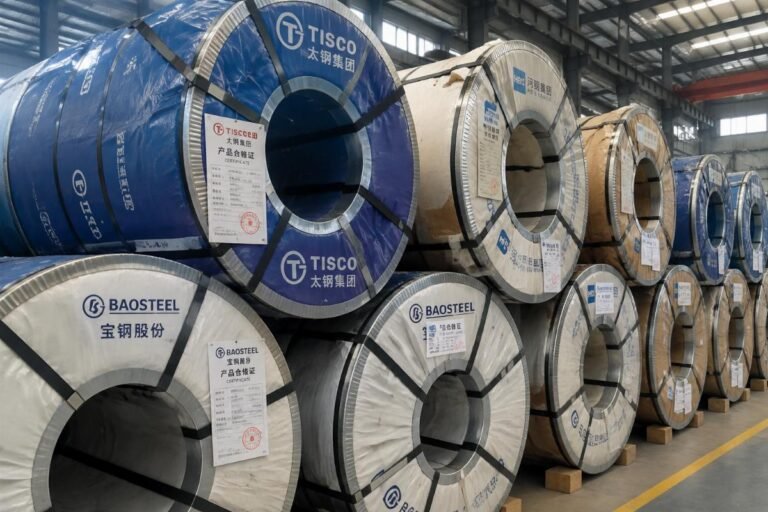

Q235B Q345B Steel Coil Bulk Sourcing for African & Latin American Buyers
Grade selection is only half the battle; packaging determines whether your steel arrives as structural material or scrap.
Successful Q235B Q345B steel coil bulk sourcing for emerging markets requires more than just picking the right yield strength. It demands specific packaging protocols for humid logistics chains and strict verification of mechanical properties against local structural codes. Buyers who focus solely on price per ton often overlook the hidden costs of corrosion during port delays and the safety risks of grade mismatches in load-bearing structures.
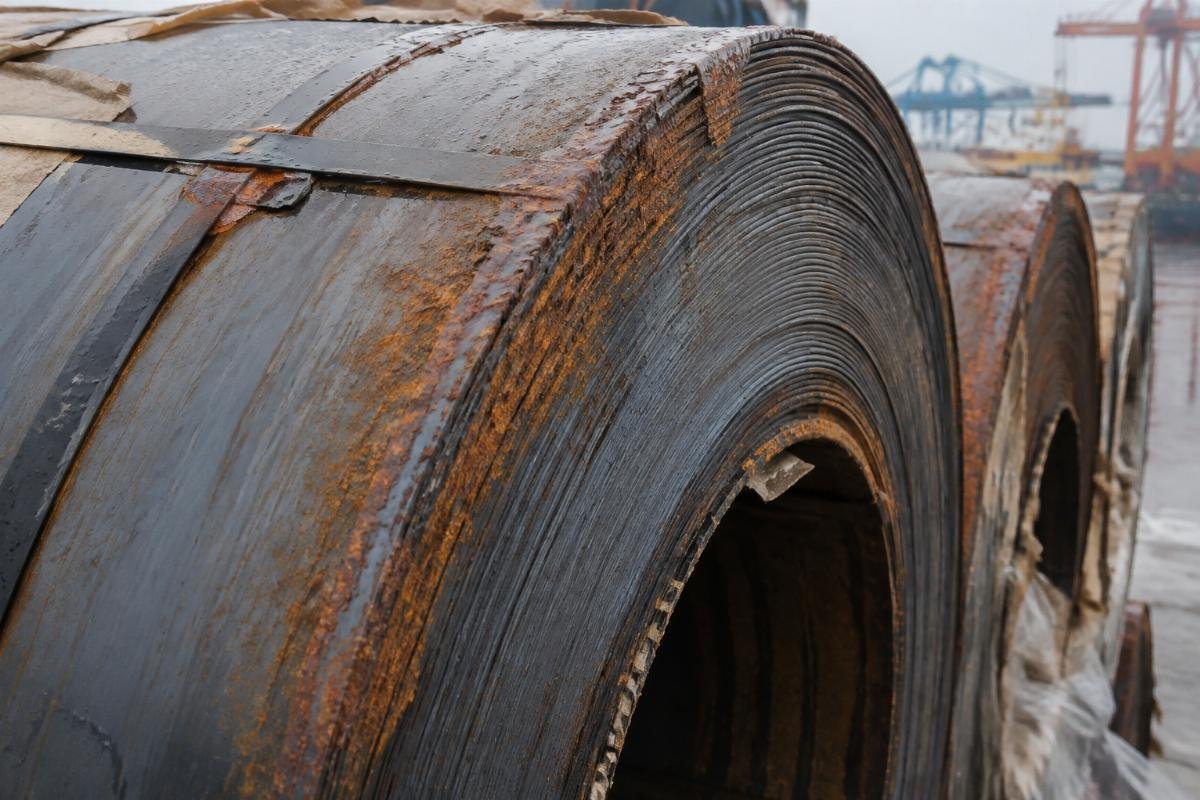
I have seen too many containers opened in Lagos or Santos with visible edge corrosion, not because the steel quality was poor, but because the wrapping could not withstand the tropical humidity during customs holds. The real expertise in Q235B Q345B steel coil bulk sourcing lies in understanding the entire supply chain, from mill certification to final site identification.
Why Grade Selection Matters for Structural Integrity?
Q345B offers significantly higher yield strength for heavy-load applications, while Q235B is suitable for general fabrication and non-critical structures.
Many buyers assume that Q235B is a “cheaper” alternative that can substitute for higher grades in all scenarios. This is a dangerous misconception. The difference in yield strength between 235 MPa and 345 MPa means that using Q235B in a design calculated for Q345B requires a substantial increase in material volume to achieve the same load capacity. [NEED_CITE: yield strength comparison between GB/T 700 Q235B and GB/T 1591 Q345B]
In one case, a contractor in Latin America ordered Q235B coils for high-load warehouse beams, assuming it was equivalent to the specified S355JR. The structural engineer later flagged the mismatch, forcing a costly redesign or material replacement. Understanding the mechanical property differences is critical before finalizing any order for Q235B Q345B steel coil bulk sourcing.
| Property | Q235B (GB/T 700) | Q345B (GB/T 1591) | S355JR (EN 10025) |
|---|---|---|---|
| Yield Strength | ≥ 235 MPa | ≥ 345 MPa | ≥ 355 MPa |
| Tensile Strength | 370-500 MPa | 470-630 MPa | 470-630 MPa |
| Primary Use | General fabrication, light structures | Heavy infrastructure, bridges, high-rise | European standard structural projects |
| Carbon Equivalent | Lower | Higher (requires welding care) | Controlled for weldability |
The table above highlights why substituting grades without engineering approval is risky. Q345B and S355JR are often considered comparable for international projects, but Q235B falls short in high-stress applications. [NEED_CITE: structural steel grade equivalence standards]
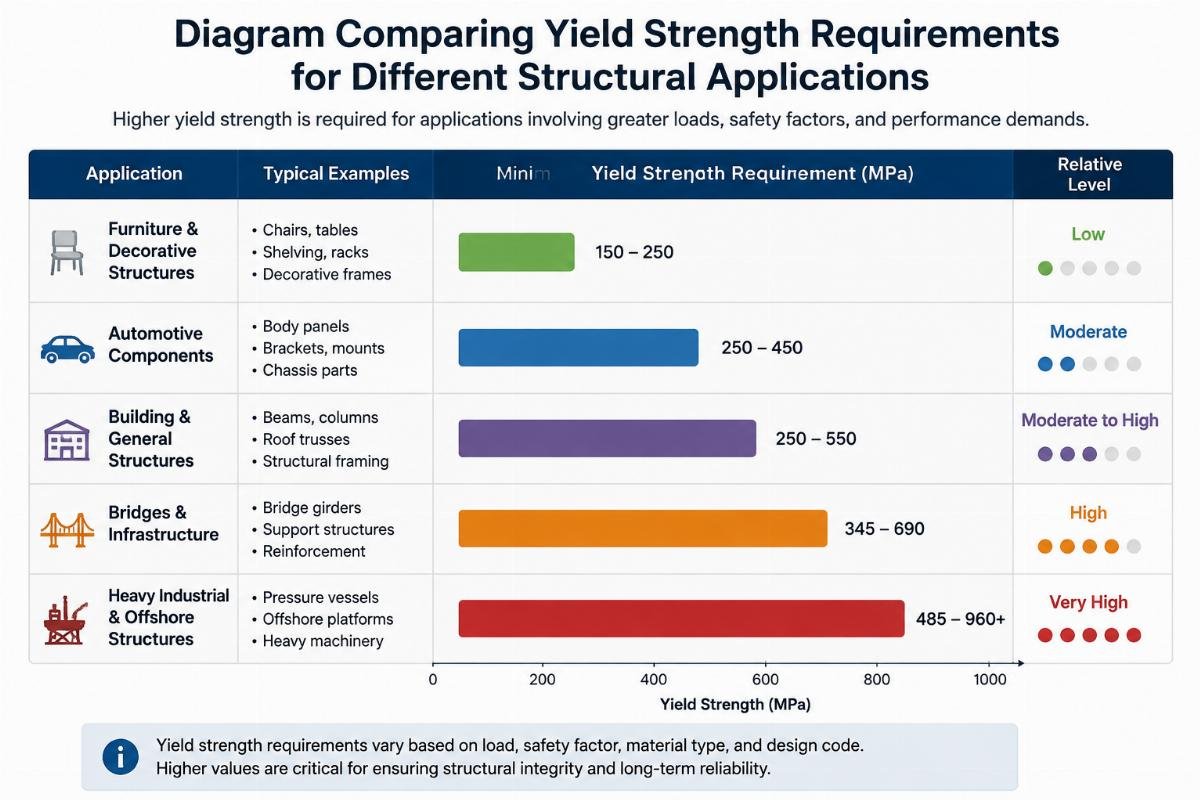
When engaging in Q235B Q345B steel coil bulk sourcing, always confirm the design specifications with your structural engineer. If the project requires high load-bearing capacity, Q345B is the non-negotiable choice. For lighter frameworks or secondary components, Q235B provides a cost-effective solution without compromising safety.
How to Prevent Corrosion During Long-Haul Shipping?
Standard wrapping fails in humid ports; specify VCI and double-layer waterproofing for tropical climates.
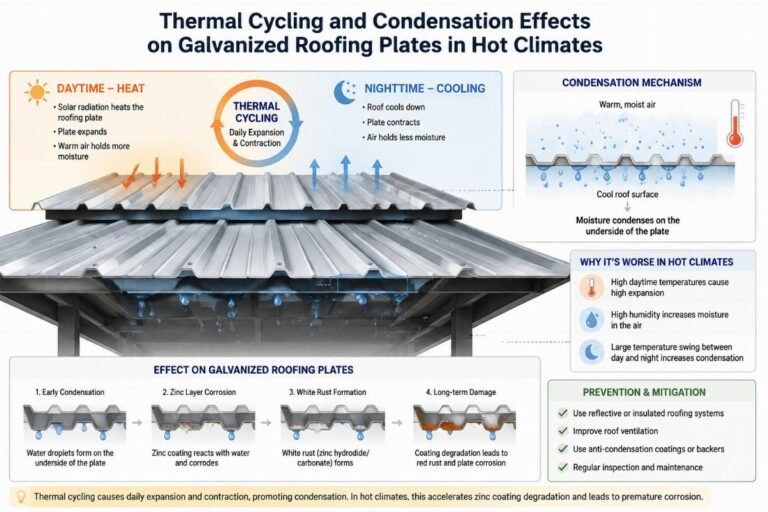
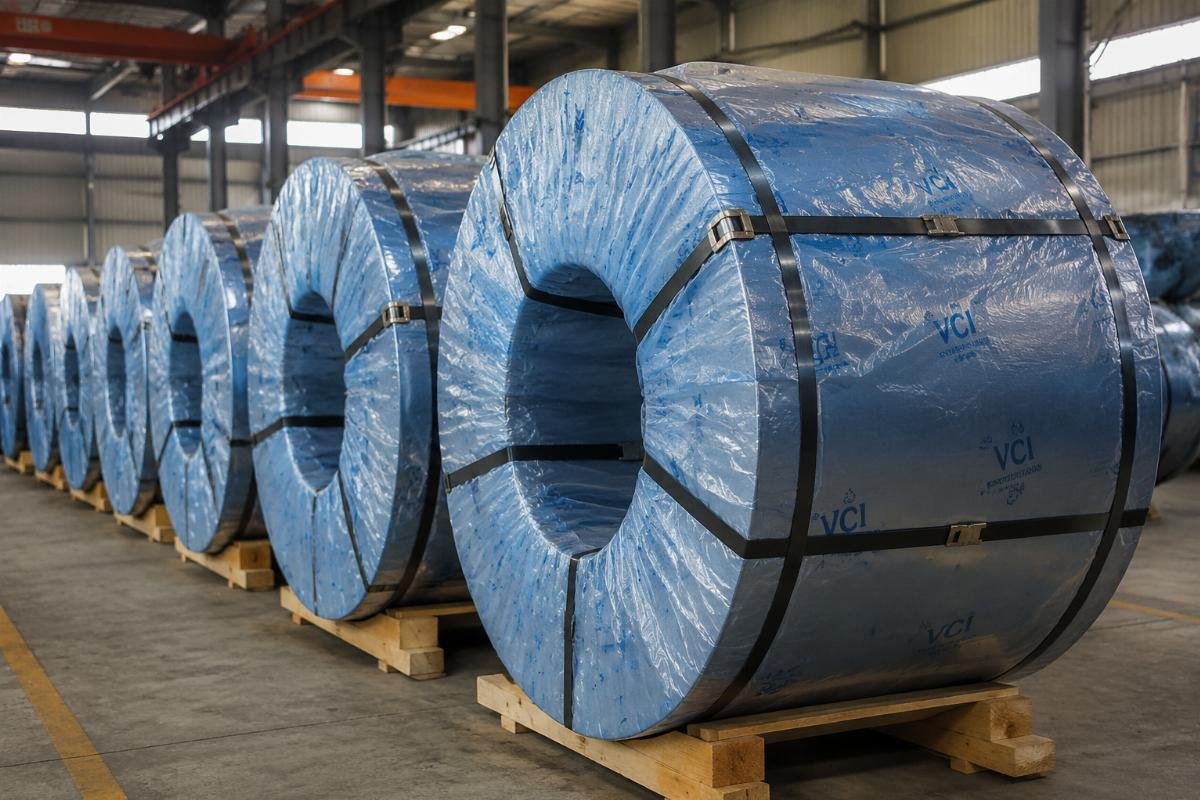
Most buyers think grade is the only quality metric, but packaging determines arrival condition in tropical climates. A common pitfall I observed involved a shipment to West Africa where the lack of Volatile Corrosion Inhibitor (VCI) wrapping led to severe edge corrosion after a three-week customs hold in Lagos. The rain season had just started, and the standard waterproof paper was insufficient to protect the steel from the high humidity and salt air. [NEED_CITE: corrosion rates in tropical marine environments]
To avoid this, your procurement specification for Q235B Q345B steel coil bulk sourcing must include detailed packaging requirements. Do not just ask for “standard export packing.” Specify moisture barrier thickness, the use of VCI film, and the number of desiccant units per container. Steel strapping should be frequent enough to prevent movement, and corner protection is essential to avoid damage during handling.
| Packaging Component | Standard Practice | Tropical/High-Risk Specification |
|---|---|---|
| Inner Layer | Basic waterproof paper | VCI-infused waterproof paper |
| Outer Layer | Single layer plastic film | Double-layer reinforced plastic |
| Desiccants | None or minimal | Multiple units per container |
| Edge Protection | Basic cardboard | Reinforced steel or hard plastic corners |
| Strapping | Standard frequency | High-frequency with tension control |
Upgrading these details adds a small fraction to the total cost but saves a mid-six-figure loss if the entire batch is rejected due to rust. When you prioritize these specs in your Q235B Q345B steel coil bulk sourcing strategy, you ensure the material arrives in mill-condition, ready for immediate use.
What Documents Verify Authenticity?
Mill Test Certificates must match heat numbers and show actual chemical and mechanical results, not just standard compliance.
A certificate that merely states “Complies with GB/T 1591” is useless. You need a Mill Test Certificate (MTC) that lists the actual chemical composition (Carbon, Manganese, Silicon) and mechanical test results (Yield Strength, Tensile Strength, Elongation) for each heat number. [NEED_CITE: mandatory content of EN 10204 3.1 certificates]
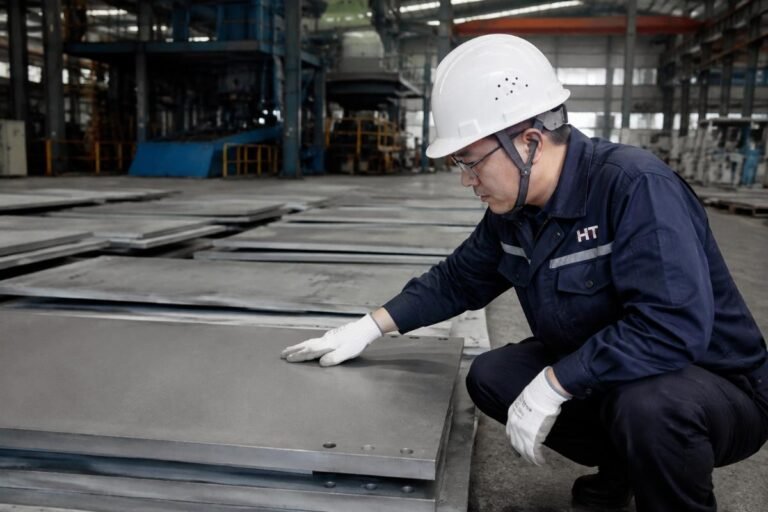
In my experience, distributors sometimes mix Q235B and Q345B in one shipment without clear marking. This creates chaos on-site. To prevent this, require color-coding standards and stencil marking on each coil. The MTC should correspond directly to these markings. If the manufacturer has an in-house laboratory, as some reputable producers do, they can provide additional verification reports that add a layer of trust.
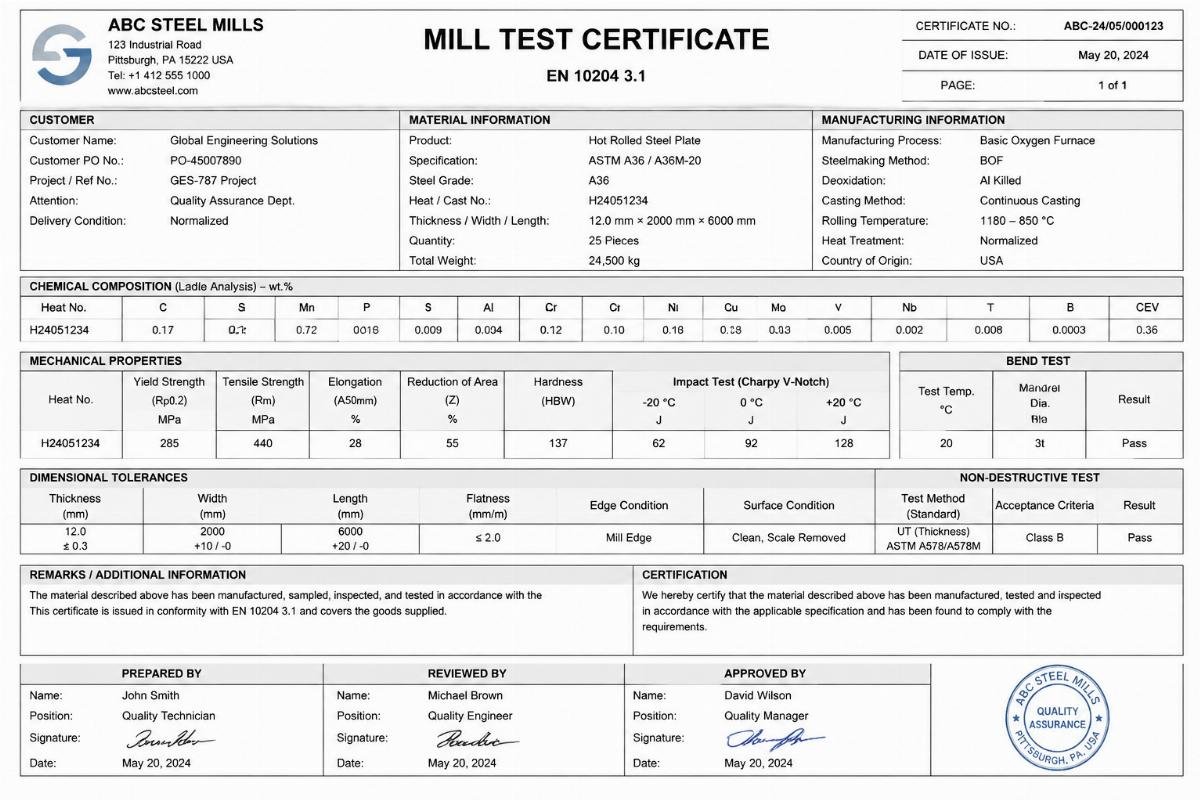
Verifying these documents is a critical step in Q235B Q345B steel coil bulk sourcing. Ask for sample MTCs before production begins. Check if the chemical limits for C, Mn, and Si align with the standard. For Q345B, the carbon equivalent is particularly important for weldability. If the supplier cannot provide detailed, heat-specific data, consider it a red flag. Reliable documentation is the backbone of quality assurance.
How to Optimize Bulk Order Logistics?
Consolidate mixed sizes wisely to maximize container space without compromising unloading efficiency.
Shipping steel coils efficiently requires balancing weight and volume. Overloading a container can lead to fines at the destination port, while underloading wastes money. A smart approach in Q235B Q345B steel coil bulk sourcing is to mix different widths and thicknesses to achieve optimal weight distribution. However, this must be done carefully to ensure that heavier coils do not crush lighter ones during transit.
One effective method is to place heavier, thicker coils at the bottom and lighter, thinner coils on top, separated by sturdy wooden dunnage. Also, consider the unloading capabilities at the destination. If the site lacks heavy lifting equipment, ordering excessively large coils may cause delays. Discuss the maximum coil weight and diameter with your logistics provider and the end-user.
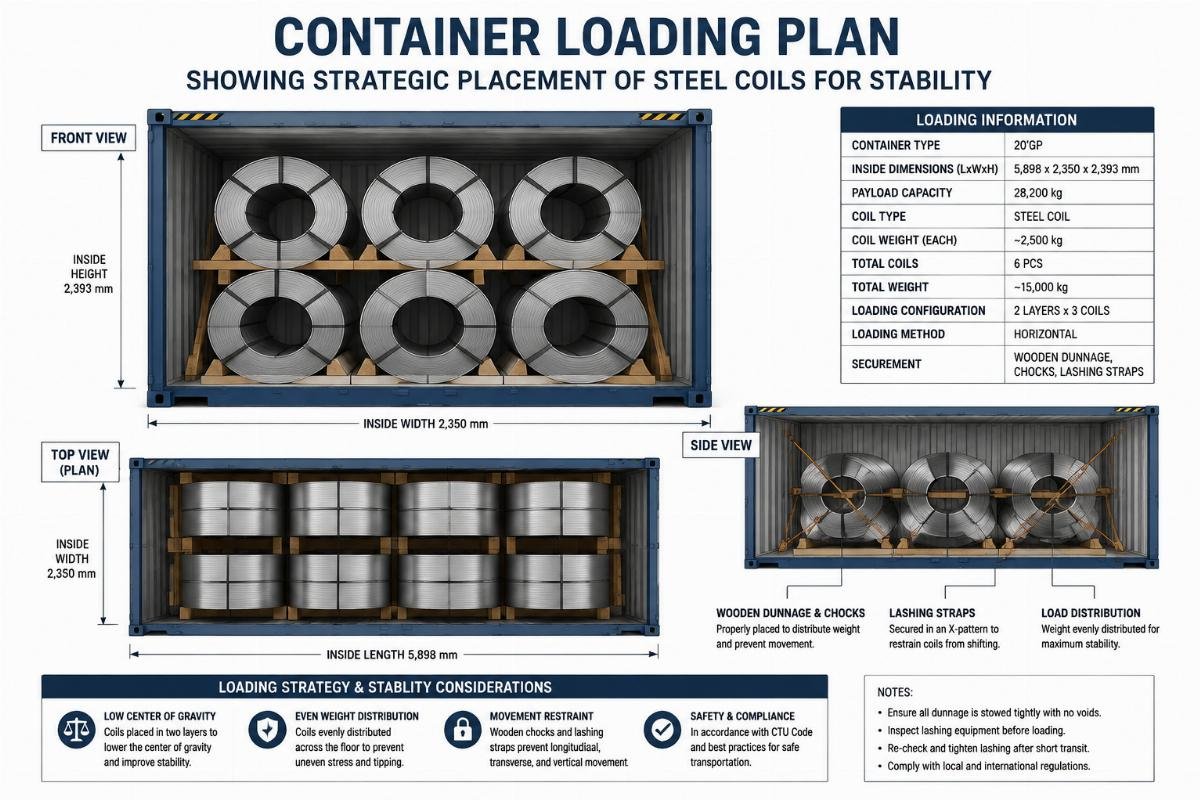
By planning the load sequence in advance, you reduce the risk of damage and speed up the unloading process. This logistical foresight is part of professional Q235B Q345B steel coil bulk sourcing. It ensures that the material not only arrives in good condition but also moves quickly from the port to the construction site, minimizing storage costs and exposure to the elements.
Conclusion
Successful steel procurement balances technical specs with logistical reality.
Mastering Q235B Q345B steel coil bulk sourcing means looking beyond the price tag. It requires selecting the correct grade for structural needs, specifying robust packaging for tropical climates, verifying authentic mill certificates, and optimizing logistics for efficient delivery. By focusing on these practical details, buyers in Africa and Latin America can secure reliable materials that support their infrastructure projects without unexpected delays or quality issues.