
Q235B Hot-Rolled Steel Plate Wholesale Supplier for Construction
Most buyers assume Q235B is a generic commodity grade; in reality, batch-to-batch chemical consistency matters more for welding integrity than the base grade name itself.
Selecting a reliable Q235B Hot-Rolled Steel Plate Supplier requires verifying mill test certificates for specific chemical composition limits and dimensional tolerances, not just accepting the grade label. Structural failures often stem from unnoticed deviations in manganese content or thickness negative tolerances that comply with national standards but fail critical engineering calculations.
I spent years on the shop floor in Jinan before moving into trade, watching how subtle variations in rolling temperatures affected the final product. One afternoon, a procurement manager from a Middle East warehouse project sent me photos of welds cracking like spiderwebs across a 12mm plate. The material had passed initial visual checks, and the certificate claimed compliance. Yet, the fracture pattern suggested low ductility. We traced it back to a batch where manganese levels sat at the absolute bottom of the permissible range, technically “qualified” but practically brittle for heavy structural welding. That incident shifted my focus from merely checking grades to scrutinizing the heat numbers and actual lab results behind every shipment.
Why Does Q235B Plate Quality Vary Among Suppliers?
Consistency in rolling and cooling processes defines reliability, not just the chemical mix.
Many buyers treat Q235B as a uniform standard, expecting identical performance from any mill. However, the mechanical properties of hot-rolled plates are heavily influenced by the thermal history during production. If the cooling rate after rolling is too fast, internal stresses can remain locked in the metal, leading to warping or unexpected brittleness during fabrication. [NEED_CITE: impact of cooling rates on hot-rolled steel microstructure]
A Q235B Hot-Rolled Steel Plate Supplier with integrated production lines can control these variables directly. In contrast, traders sourcing from multiple small mills may deliver plates with varying grain structures, even if they share the same grade designation. This inconsistency becomes apparent during cutting or bending, where one plate might spring back differently than another from the same order.
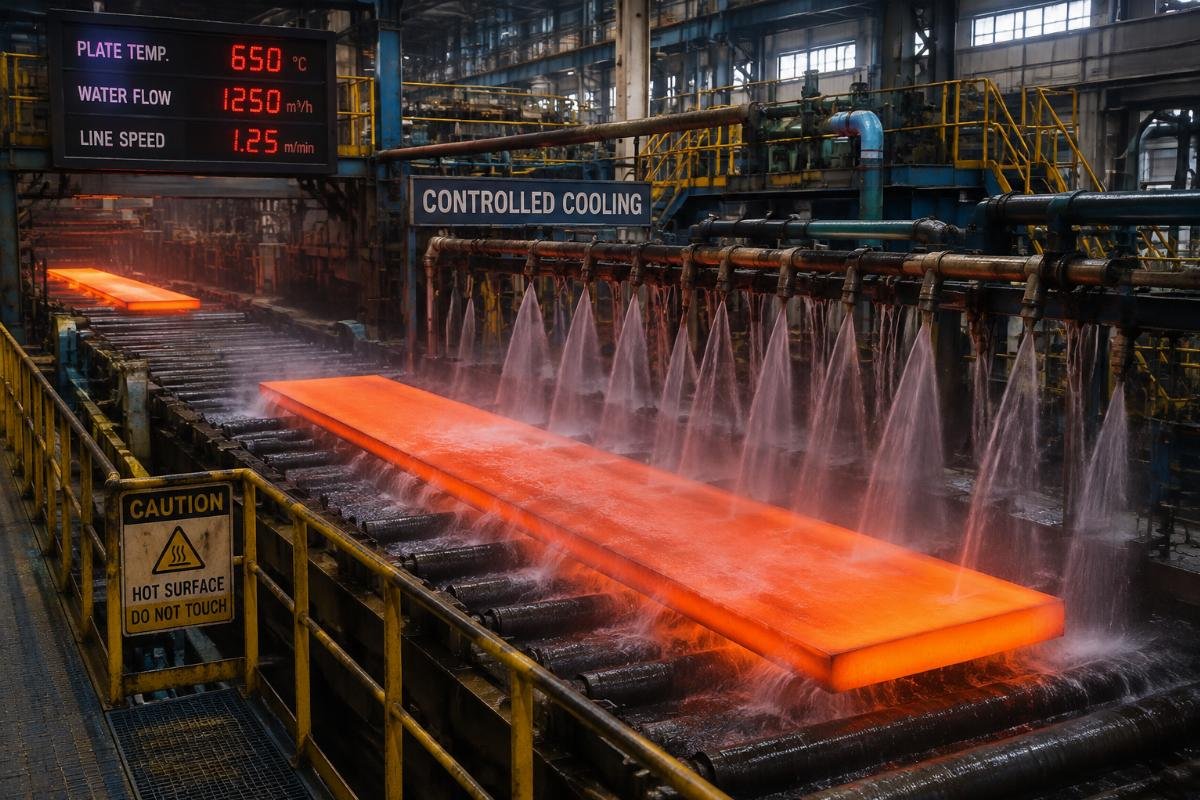
The variation isn’t always visible to the naked eye. It manifests in the yield strength stability. While the standard requires a minimum yield strength of 235 MPa, high-quality suppliers consistently deliver values well above this threshold with minimal deviation between heats. This margin provides a safety buffer for engineers designing load-bearing structures. Without strict process control, a plate might meet the minimum requirement on paper but lack the reserve capacity needed for dynamic loads in infrastructure projects.
What Critical Specs Must You Check Before Ordering?
Focus on yield strength, elongation, and specific chemical composition limits rather than just the grade name.
When reviewing technical data sheets, most buyers glance at the tensile strength and stop there. However, for construction applications involving welding and heavy loads, other parameters are equally critical. The carbon equivalent (CE) value, for instance, determines weldability. A high CE increases the risk of cold cracking in the heat-affected zone. [NEED_CITE: relationship between carbon equivalent and weldability in structural steel]
| Parameter | Standard Requirement (GB/T 700) | Recommended for Critical Welding | Verification Method |
|---|---|---|---|
| Yield Strength | ≥ 235 MPa | > 245 MPa (Buffer) | Tensile Test Report |
| Elongation | ≥ 26% (for ≤16mm) | ≥ 28% | Tensile Test Report |
| Carbon (C) | ≤ 0.22% | ≤ 0.20% | Chemical Analysis |
| Manganese (Mn) | 0.30-0.70% | 0.45-0.65% (Optimal) | Chemical Analysis |
| Sulfur (S) | ≤ 0.045% | ≤ 0.035% | Chemical Analysis |
A reputable Q235B Hot-Rolled Steel Plate Supplier will provide detailed mill test certificates (MTCs) that list these individual elements for each heat number. Do not accept a certificate that only states “Pass” without numerical values. For projects in seismic zones or those requiring extensive welding, requesting a lower sulfur and phosphorus content can significantly improve toughness and reduce the risk of lamellar tearing.
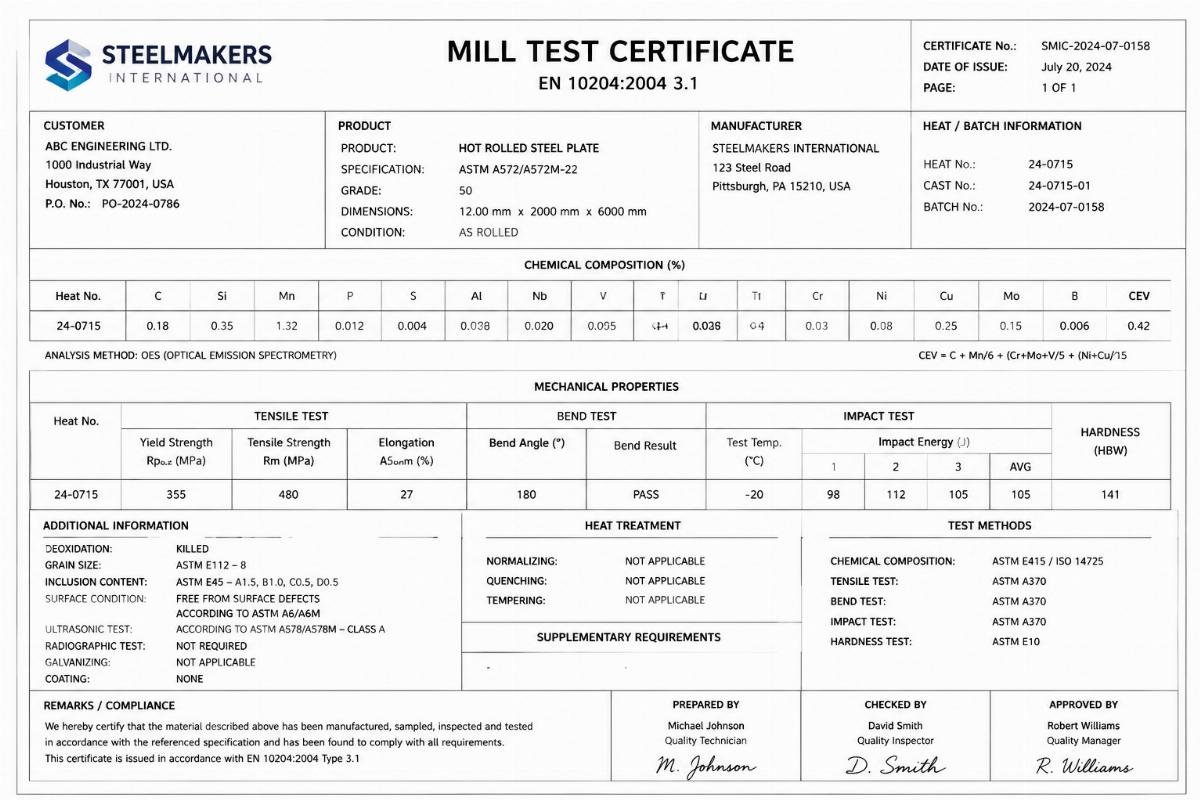
In one case, a bridge support project in Africa faced delays because the supplied plates had thickness deviations that, while within national tolerance limits, caused alignment issues during assembly. The buyer had not specified tighter tolerance classes. By referencing GB/T 709, we identified that the standard allows for specific negative tolerances. For critical load-bearing components, specifying a higher precision class or negotiating tighter tolerances upfront prevents costly on-site adjustments.
How to Verify Mill Test Certificates for Authenticity?
Match heat numbers, check lab signatures, and validate testing standards against physical markings.
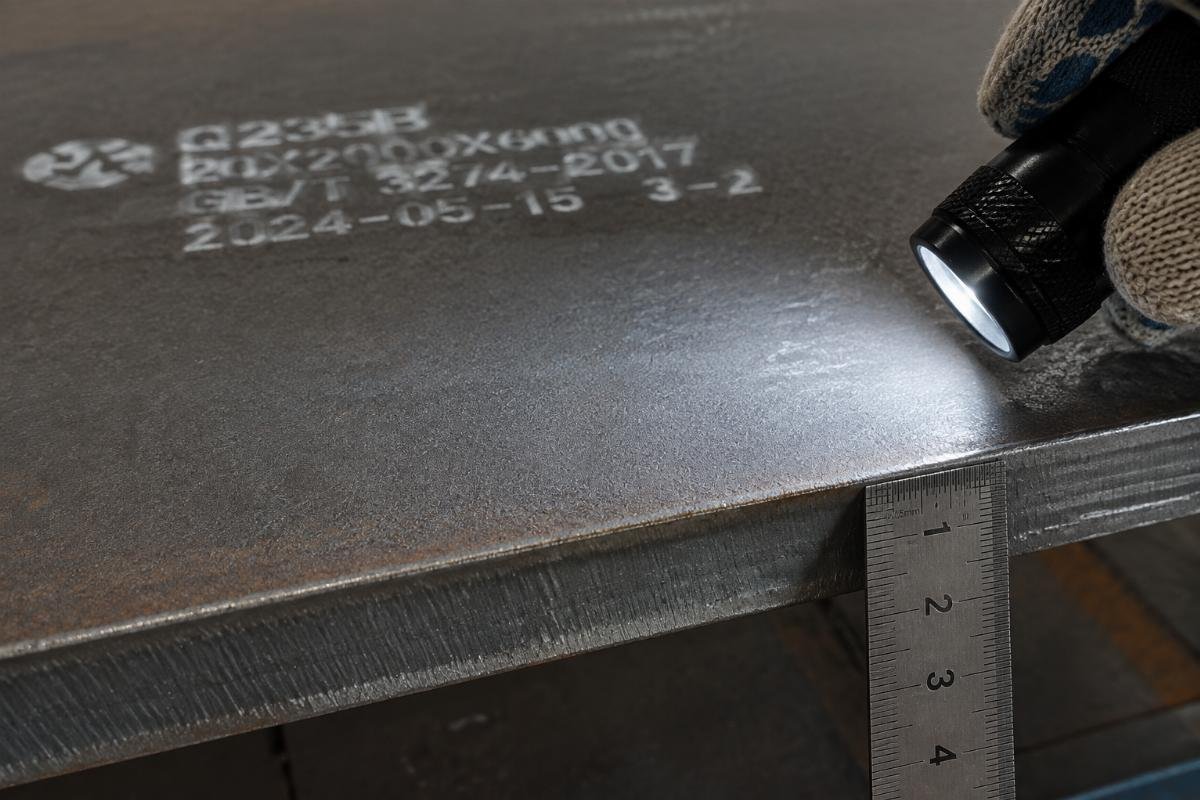
Mill test certificates are the primary proof of quality, but they are also the easiest document to forge or misinterpret. A genuine MTC must link directly to the physical stock. Each plate or bundle should have a heat number stamped or tagged on it. This number must match the one listed on the certificate. [NEED_CITE: standard practices for steel traceability and marking]
When working with a Q235B Hot-Rolled Steel Plate Supplier, ask for the original MTC from the mill, not a reissued summary from the trader. Original documents often contain specific laboratory stamps, tester signatures, and detailed testing equipment references. Look for the testing standard cited, such as GB/T 228 for tensile testing or GB/T 223 for chemical analysis. If the certificate cites an outdated or irrelevant standard, it raises a red flag.
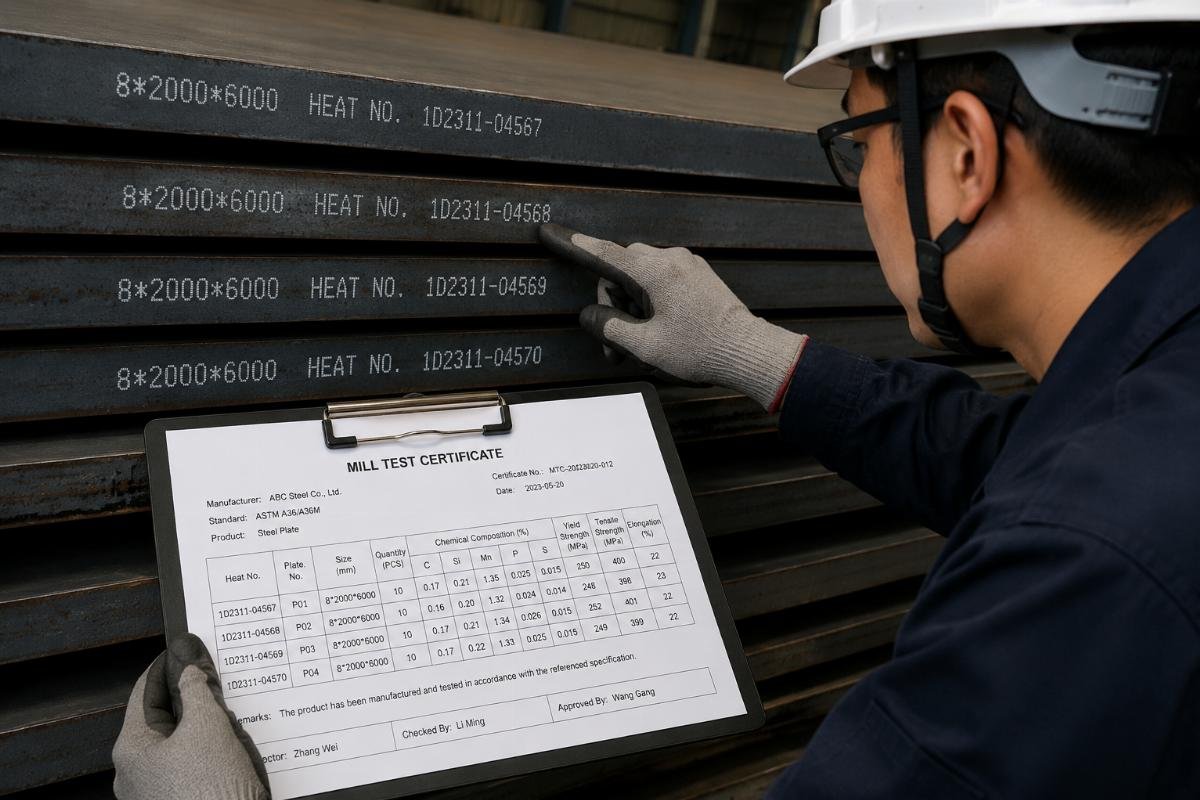
Cross-checking is essential. If the certificate lists a tensile strength of 450 MPa, but the supplier claims their material is “premium grade” without providing additional data, be skeptical. Premium performance should be backed by consistent data across multiple heats, not just a single outlier result. Some suppliers maintain in-house laboratories to perform random sampling checks before shipment. This extra layer of verification ensures that the material delivered matches the certificate provided, reducing the risk of receiving off-spec material mixed into a compliant batch.
What Are Common Pitfalls in Thickness and Surface Quality?
Understand allowable tolerances and specify surface treatment requirements before shipment.
Thickness deviation is a frequent source of dispute. National standards like GB/T 709 permit negative tolerances, meaning a 10mm plate might legally be 9.7mm thick. For general construction, this is acceptable. However, for structural calculations where every millimeter counts, this deviation can reduce the load-bearing capacity. Buyers must clarify whether they need nominal thickness or guaranteed minimum thickness. [NEED_CITE: GB/T 709 thickness tolerance standards for hot-rolled steel]
Surface quality is another area where expectations often diverge. Hot-rolled plates naturally have a scale layer and minor surface imperfections. If the plates are intended for painting or coating, this scale must be removed. A common mistake is ordering standard hot-rolled plates and expecting them to be ready for immediate painting. Without shot blasting or pickling, paint adhesion will fail, leading to premature rust and maintenance costs.
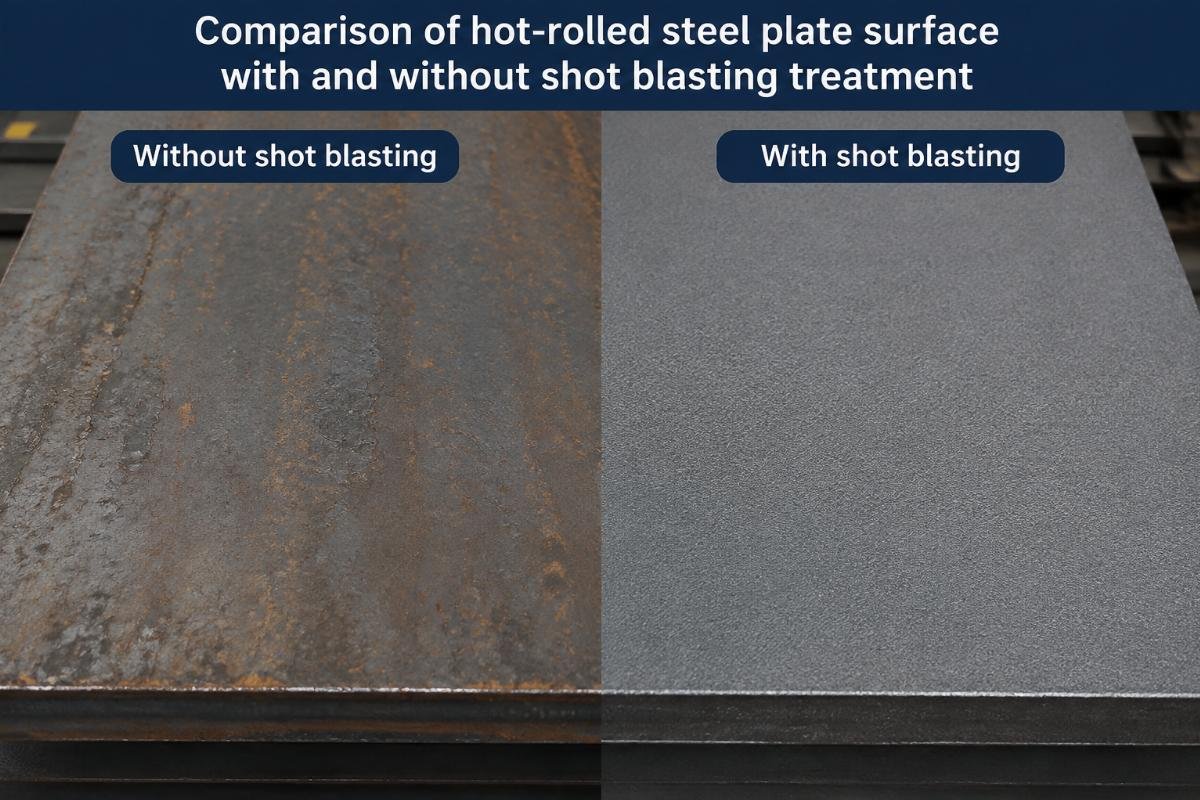
A Southeast Asia factory frame project encountered this issue when surface rust formed under the paint within months of installation. The root cause was inadequate surface preparation before coating. By specifying a shot blasting grade (such as Sa 2.5) in the purchase order, buyers can ensure the surface is clean and profiled for optimal coating adhesion. A proactive Q235B Hot-Rolled Steel Plate Supplier will offer these surface treatments as part of the manufacturing process, ensuring the material arrives ready for fabrication.
How to Choose a Reliable Wholesale Partner?
Look for in-house labs, EN certification, and transparent export documentation.
Selecting the right partner goes beyond price. It involves assessing their capability to maintain quality consistency and provide technical support. Suppliers with in-house laboratories can perform real-time quality checks, reducing the reliance on external testing and speeding up the verification process. Certification to international standards like EN10219 or EN10210 indicates a commitment to rigorous quality management systems that align with global construction requirements. [NEED_CITE: benefits of EN10219 certification for structural hollow sections and plates]
Transparency in documentation is crucial. A reliable supplier will provide clear packing lists, certificates of origin, and detailed MTCs without hesitation. They will also be open to third-party inspections, allowing buyers to verify quality before shipment. This openness builds trust and reduces the risk of disputes upon arrival.

Experience in handling export logistics also matters. A supplier familiar with the documentation requirements for different regions can prevent customs delays and ensure smooth delivery. They understand the importance of proper packaging to prevent damage during transit, especially for sea freight to distant markets. By choosing a partner who views quality control as a shared responsibility, buyers can secure a steady supply of reliable material for their construction projects.
Conclusion
Verifying chemical consistency and dimensional tolerances is more critical than simply selecting the Q235B grade.
Successful procurement of structural steel depends on diligent verification of mill test certificates and clear communication of tolerance requirements. By focusing on traceability, surface preparation, and supplier capabilities, buyers can mitigate risks and ensure the longevity of their construction projects. A trusted Q235B Hot-Rolled Steel Plate Supplier acts as a technical partner, providing the transparency and quality assurance needed for critical infrastructure.