
Steel Plate Container Loading & MOQ Terms for Sale
Most buyers assume a “full container” means maximizing weight, but in steel plate shipping, volume limits often hit first, leaving you paying for empty air.
The most cost-effective approach to Steel Plate Container Loading & MOQ Terms for Sale is not simply ordering the maximum tonnage, but aligning plate dimensions with container internal geometry to optimize the weight-to-volume ratio. This strategy, combined with flexible Minimum Order Quantities (MOQ), prevents demurrage fees and ensures that documentation matches physical cargo exactly, avoiding customs delays at destination ports.
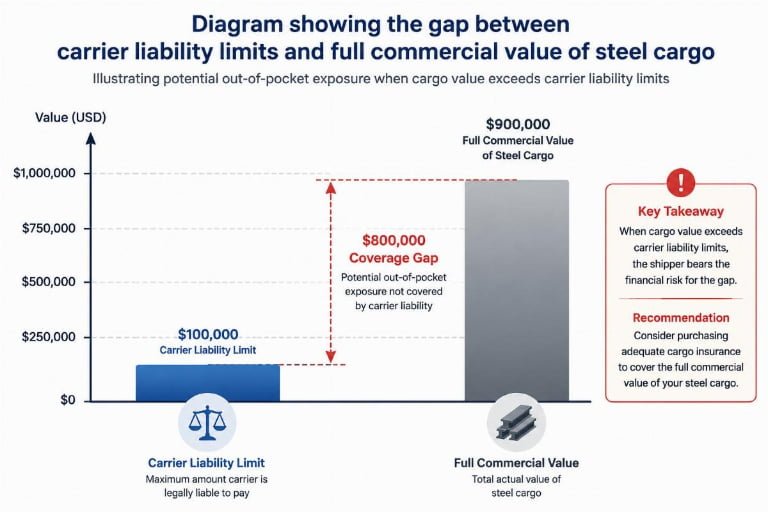
I still remember the humidity of Lagos port, standing next to a container of square tubes that had been stuck for weeks. The issue wasn’t the quality of the steel; it was a mismatch between the product description on the Bill of Lading and the HS code used by the local clearing agent. The demurrage charges eventually exceeded the profit margin of the entire order. That incident shifted my focus from merely selling tons to mastering the logistics of Steel Plate Container Loading & MOQ Terms for Sale. It taught me that efficient loading and precise paperwork are not administrative afterthoughts but primary cost-control levers in international trade. [NEED_CITE: impact of documentation errors on customs clearance times]
Understanding these dynamics is crucial for procurement managers who need to balance inventory costs with shipping efficiency. Let’s break down how to navigate these complexities without falling into common logistical traps.
How Do MOQ Terms Impact Your Total Landed Cost?
Flexible MOQs are often misunderstood as a concession to small buyers, but they are actually a strategic tool for optimizing cash flow and reducing total landed costs through smarter consolidation.
Many importers believe that lower Minimum Order Quantities inevitably lead to higher unit prices due to lost economies of scale. However, when analyzing Steel Plate Container Loading & MOQ Terms for Sale, the reality is more nuanced. A rigid high-MOQ policy might force a buyer to purchase more material than needed, tying up capital in inventory and incurring storage fees. Conversely, a flexible MOQ allows for mixed-container consolidation, where different grades or sizes are combined to fill a single container efficiently. [NEED_CITE: economic benefits of mixed-load consolidation in steel trade]
For instance, a fabrication shop in Southeast Asia once needed a small batch of S355JR plates for an urgent repair job, alongside a regular order of structural beams. By negotiating a flexible MOQ, we were able to include the plates in the same container as the beams. This avoided the exorbitant cost of Less than Container Load (LCL) shipping, which often involves multiple handlings and higher risk of damage. The key is to view MOQ not as a barrier, but as a variable that can be adjusted to fit the container’s capacity.
When evaluating suppliers, look for those who offer MOQ flexibility from single pieces to full containers. This capability indicates a mature production line that can handle custom cuts without disrupting standard workflows. It also suggests that the manufacturer understands the diverse needs of global buyers, from large EPC firms to smaller distributors. [NEED_CITE: supplier flexibility metrics in B2B steel exports]
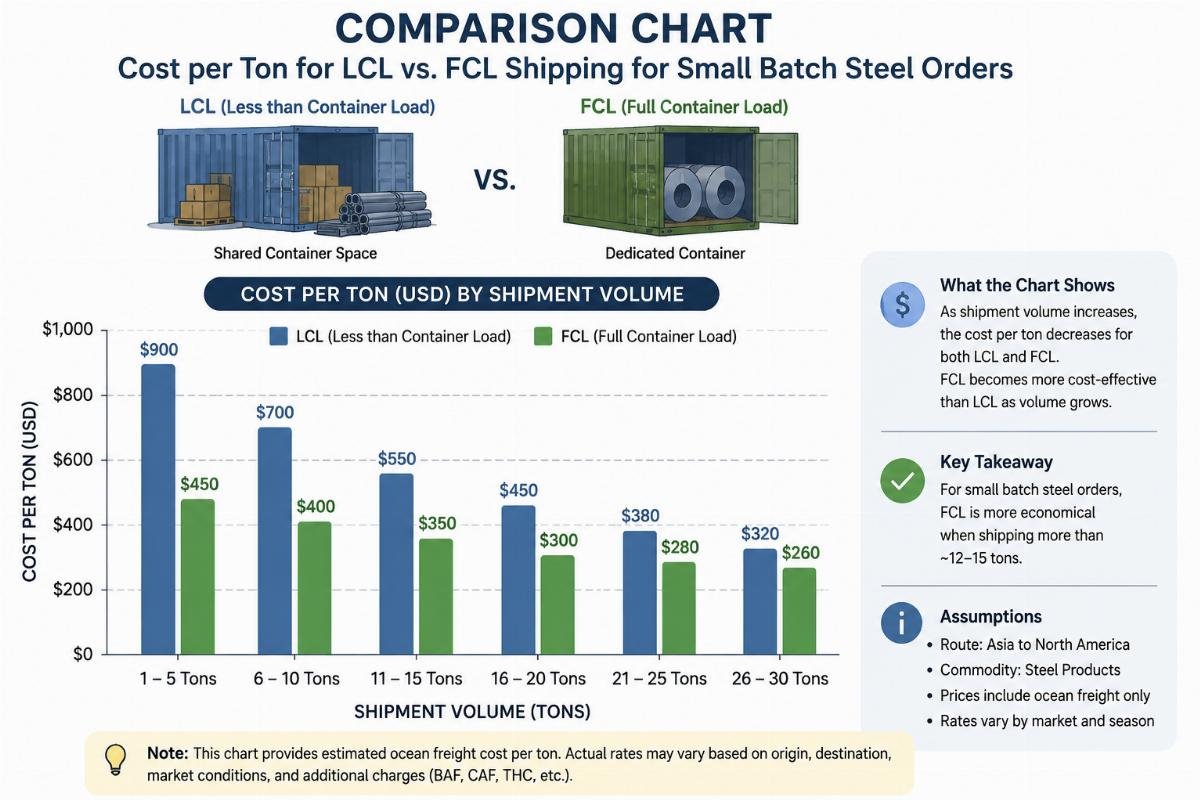
The takeaway is clear: do not let MOQ dictate your order size arbitrarily. Instead, use it to plan your shipments around container capacities. This approach minimizes partial shipment fees and ensures that every cubic meter of the container is utilized effectively.
What Is the Optimal Way to Load Steel Plates in a Container?
Strategic stacking is not just about fitting more steel; it is about balancing weight distribution to prevent damage and ensure safe transport within port handling limits.
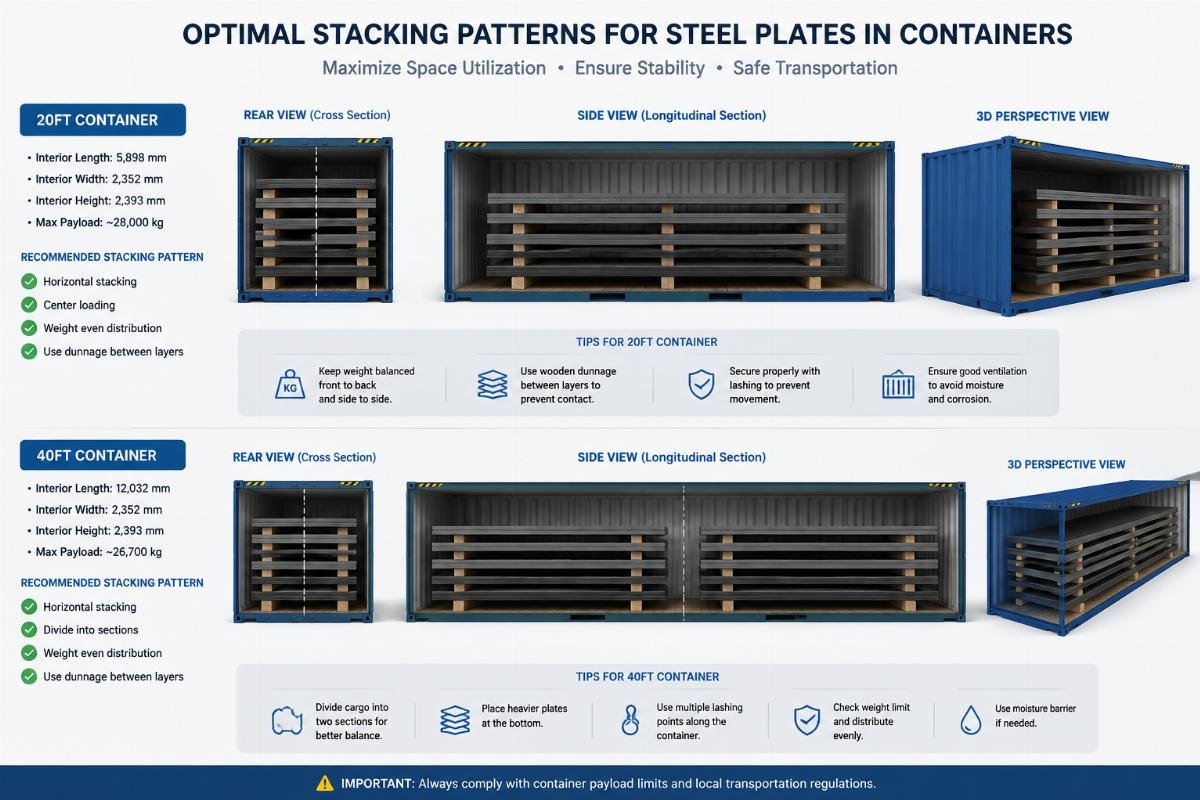
A common misconception is that you should always load a container to its maximum weight limit. In practice, for steel plates, volume often becomes the constraint before weight, especially when dealing with wider or longer plates. Understanding the internal dimensions of standard 20ft and 40ft containers is essential for effective Steel Plate Container Loading & MOQ Terms for Sale. A 20ft container typically has an internal length of roughly 5.9 meters, while a 40ft container offers about 12 meters. Loading 6-meter plates in a 20ft container requires careful arrangement to avoid overhang or wasted space. [NEED_CITE: standard ISO container internal dimensions for cargo planning]
Consider the case of a distributor in the Middle East who ordered Q235B plates. Initially, they loaded them randomly, resulting in significant void spaces and unstable stacks. By switching to a systematic stacking method—placing heavier, thicker plates at the bottom and lighter, thinner ones on top—we improved stability and maximized the load. Additionally, using dunnage bags or wooden spacers between layers prevented surface scratches and shifted weight evenly across the container floor.
Another critical factor is the weight-to-volume ratio. For dense materials like steel plates, the weight limit is usually reached before the volume limit. However, if the plates are cut to non-standard lengths that do not align with container dimensions, you may end up with unusable gaps. This is where custom cutting services become valuable. By adjusting plate lengths to fit the container’s internal width and length precisely, you can eliminate waste and reduce the number of containers needed. [NEED_CITE: best practices for securing heavy cargo in intermodal shipping]
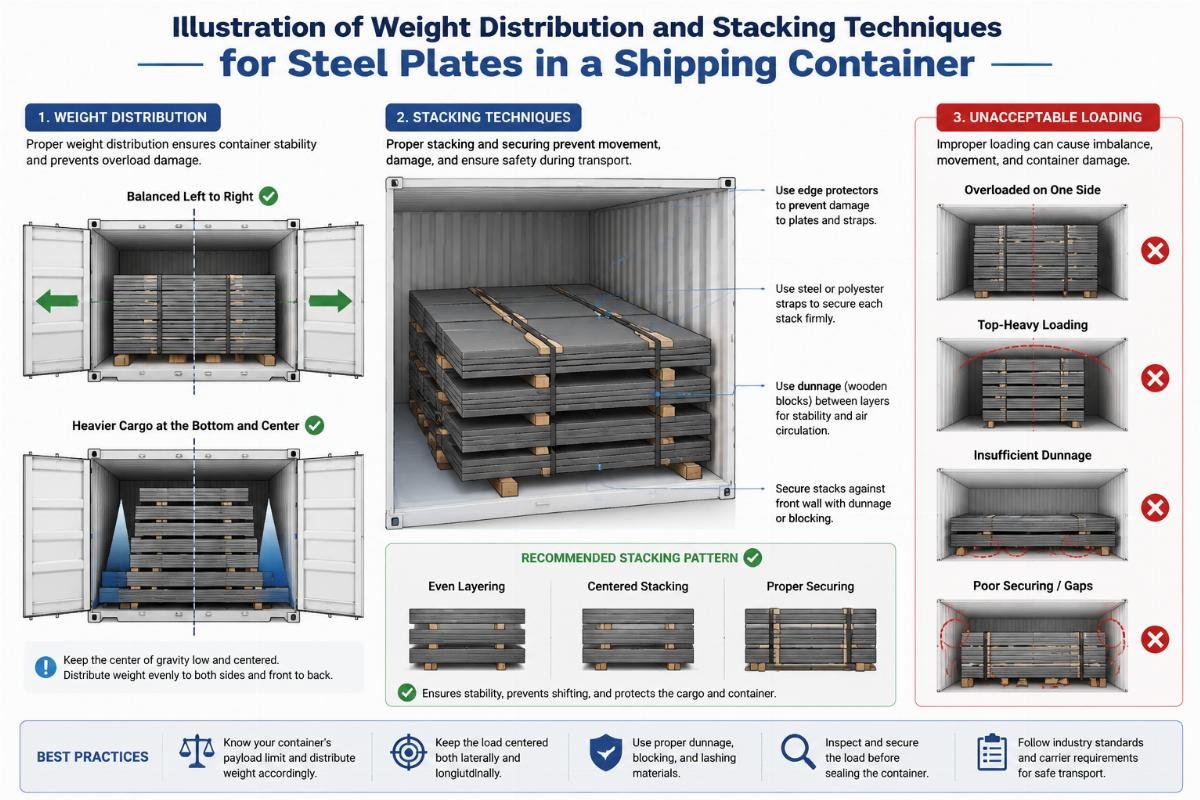
Optimal loading also involves considering the destination port’s handling equipment. Some ports have strict limits on axle weights for truck transport after discharge. Ensuring that the weight is distributed evenly within the container helps avoid fines and delays during inland transportation. Therefore, the optimal loading strategy is a balance of geometric efficiency, weight distribution, and compliance with local transport regulations.
Why Do Customs Delays Happen and How to Avoid Them?
Customs delays are rarely random; they are usually the result of minor discrepancies between the Bill of Lading, commercial invoice, and the physical cargo’s HS code classification.
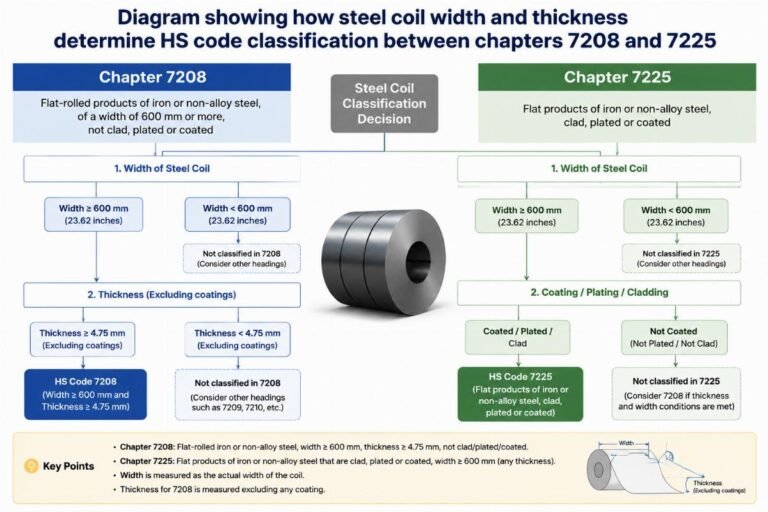
One of the most frequent causes of port congestion for steel importers is a mismatch in documentation. When the product description on the Bill of Lading does not align perfectly with the HS code declared by the importer, customs authorities may flag the shipment for inspection. This can lead to days or even weeks of delay, accruing demurrage charges that can erase any savings achieved through competitive pricing. [NEED_CITE: common reasons for customs holds on steel imports]
In my experience, the devil is in the details. For example, describing cargo generically as “steel plates” might not be sufficient. Customs agents often require specific details such as grade (e.g., S355JR), dimensions, and surface treatment (e.g., shot blasted). If the Mill Test Certificate lists a specific chemical composition that differs slightly from the generic description on the invoice, it can raise red flags. Therefore, ensuring consistency across all documents is non-negotiable for smooth Steel Plate Container Loading & MOQ Terms for Sale transactions.
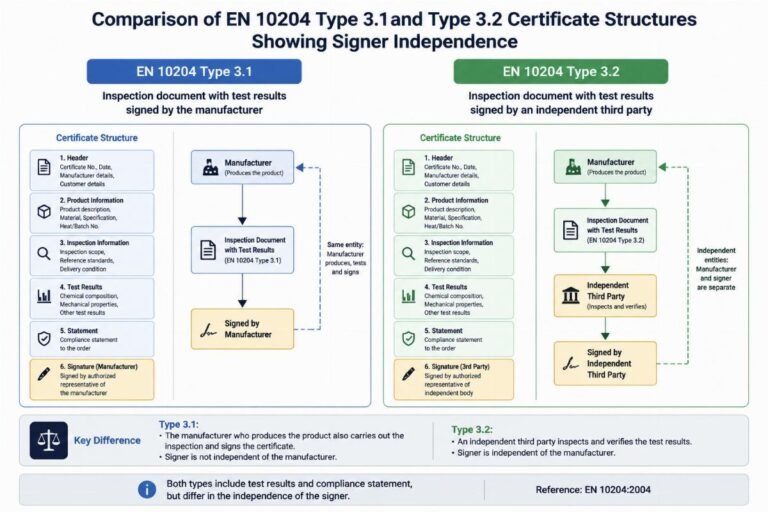
A European buyer once faced a significant delay because the packing list listed “structural steel” while the Bill of Lading specified “hot-rolled plates.” Although both terms referred to the same goods, the inconsistency triggered a manual review. To avoid this, we now implement a rigorous documentation checklist that includes verifying the HS code against the latest customs tariffs of the destination country and ensuring that the Mill Test Certificates match the batch numbers on the packing list. [NEED_CITE: importance of document consistency in international trade compliance]
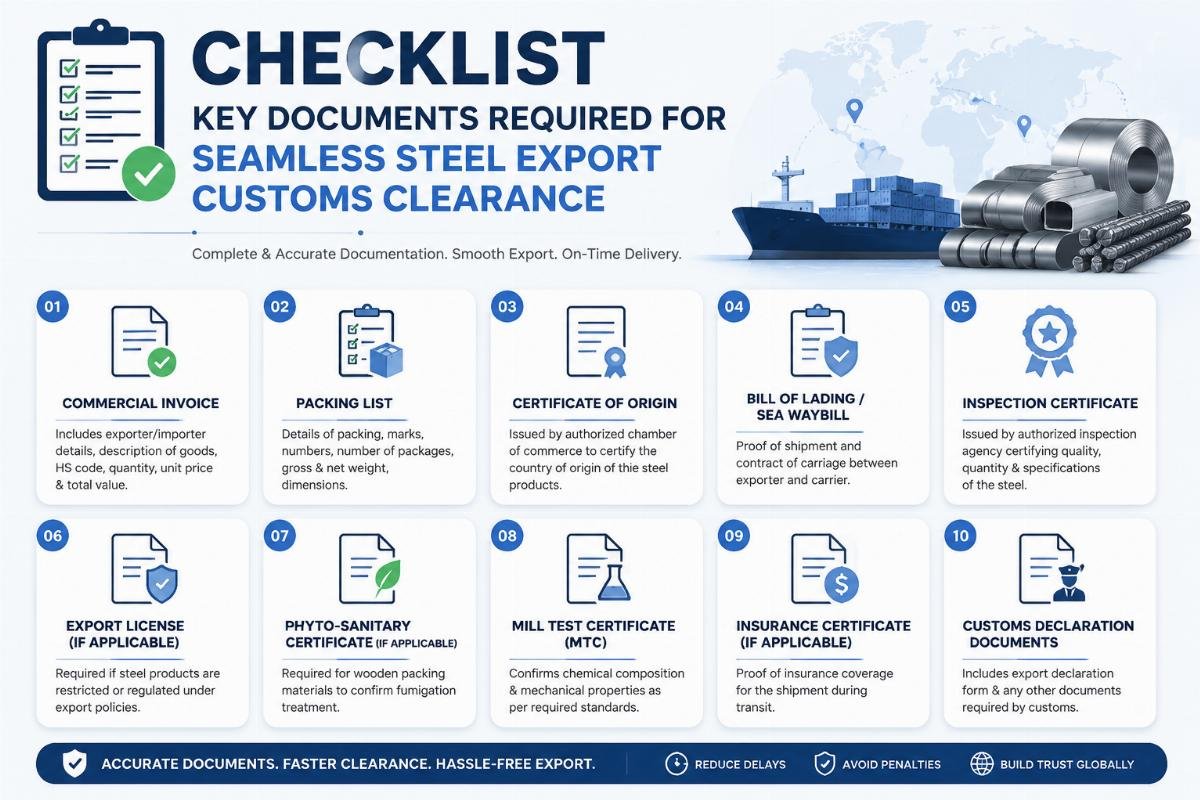
To mitigate these risks, always request a pre-shipment document review from your supplier. Confirm that the product descriptions, weights, and dimensions on the Bill of Lading, Commercial Invoice, and Packing List are identical. Additionally, verify that the HS code used is accepted in the destination country. Some countries have specific sub-headings for certain types of steel products, and using the wrong one can lead to incorrect duty assessments or outright rejection. Proactive communication and attention to detail are the best defenses against costly customs delays.
Can You Mix Different Steel Products in One Container?
Mixed-container loading is a viable and often superior strategy for distributors, provided that compatibility and secure stowage are carefully planned to prevent damage during transit.
Many buyers hesitate to mix different steel products, fearing that heavier items might crush lighter ones or that different materials might react chemically. However, with proper planning, mixed loading can significantly reduce shipping costs per ton. This is particularly relevant for Steel Plate Container Loading & MOQ Terms for Sale, where combining plates with hollow sections or beams can optimize the use of both weight and volume capacity. [NEED_CITE: safety guidelines for mixed cargo loading in maritime transport]
For example, a distributor in Latin America regularly combines heavy steel plates with lighter Rectangular Hollow Sections (RHS). The plates are placed at the bottom to form a stable base, while the RHS bundles are stacked on top, filled with smaller accessories or fittings in the remaining voids. This approach maximizes the container’s utility without exceeding weight limits. The key is to ensure that the heavier items do not shift during transit, which could damage the lighter goods above them.
Secure stowage is critical. Using steel strapping, wooden dunnage, and shrink wrap can help keep different products separated and stable. It is also important to consider the surface finish of the products. Mixing galvanized items with bare steel, for instance, requires care to prevent galvanic corrosion if moisture is present. In such cases, using plastic separators or ensuring complete dryness before loading is essential. [NEED_CITE: prevention of galvanic corrosion in mixed steel shipments]
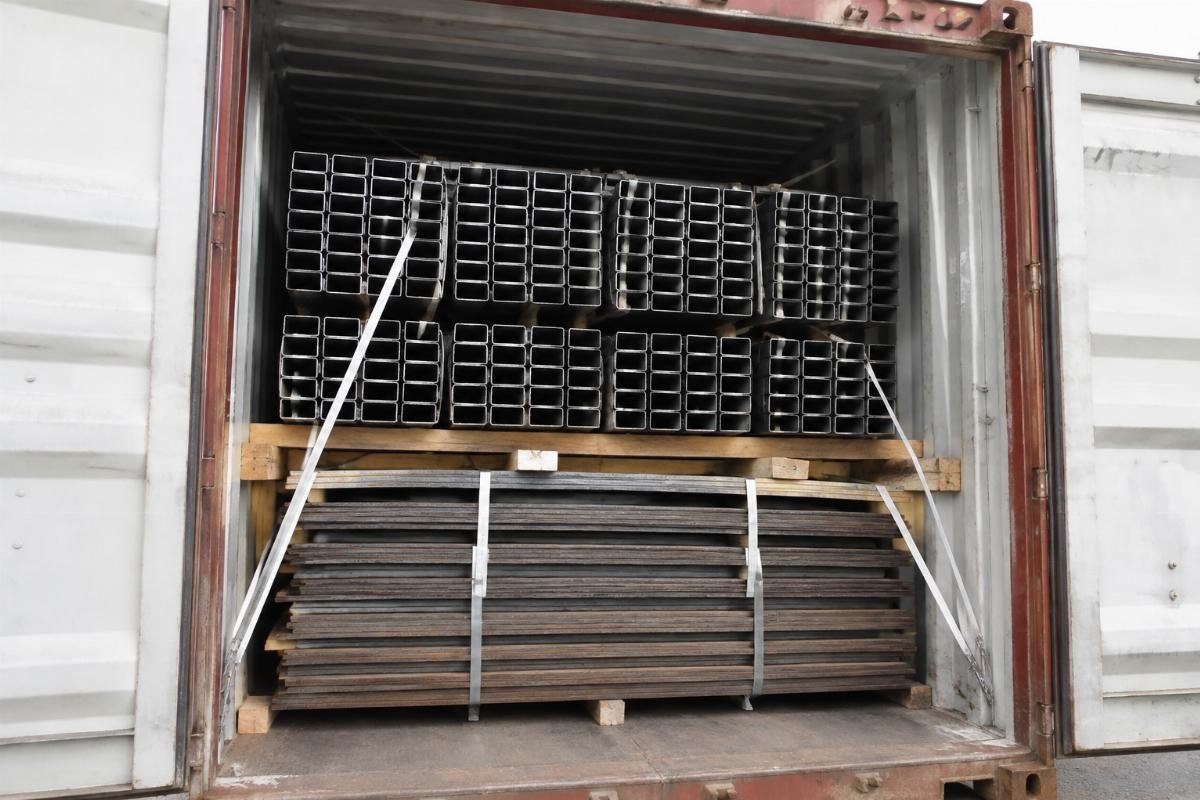
When planning a mixed load, always create a detailed loading plan that specifies the position of each item. Share this plan with the loading team to ensure execution matches the design. Additionally, inform your freight forwarder about the mixed nature of the cargo, as some carriers may have specific requirements for declaring mixed goods. By treating mixed loading as a strategic optimization rather than a logistical compromise, you can achieve significant cost savings and improve supply chain efficiency.
Conclusion
Efficient Steel Plate Container Loading & MOQ Terms for Sale are defined by precision in documentation and geometry, not just by the volume of steel shipped.
Mastering these elements transforms logistics from a cost center into a competitive advantage. By aligning plate dimensions with container specs, negotiating flexible MOQs, and ensuring flawless documentation, importers can avoid hidden fees and delays. This disciplined approach ensures that every shipment arrives on time, within budget, and ready for immediate use.