
Steel Plate Freight Insurance for Int’l Container Shipments Wholesale
Carrier liability is not cargo insurance.
For international steel plate shipments, freight insurance is mandatory because standard carrier liability covers only a fraction of the commercial value and excludes common damages like rust, condensation, and handling dents. Buyers must secure an “All Risks” policy under Institute Cargo Clauses (A) to protect against total loss from corrosion or rejection at destination ports.
I still remember the silence on the phone line when my client in Lagos told me the Q345B plates had arrived with edges rusted through. It wasn’t a storm at sea that caused it. It was twenty days of demurrage at the port, sitting in humid air while customs paperwork stalled. Because we had relied on the basic carrier coverage instead of proper Steel Plate Freight Insurance, the shipping line’s liability cap meant they paid almost nothing. The buyer rejected the cargo, and the manufacturer absorbed a mid-six-figure loss. That single container taught me more about risk transfer than any textbook ever could. [NEED_CITE: limitations of carrier liability under Hague-Visby Rules]
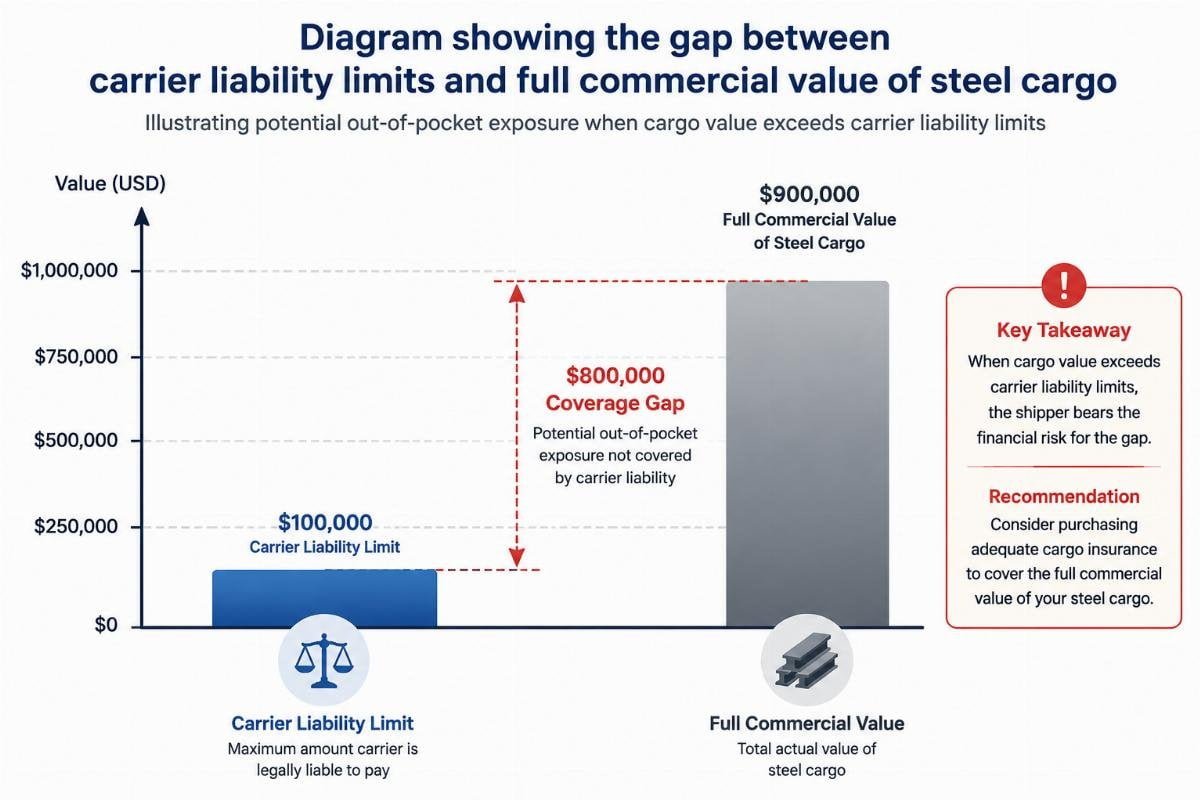
Understanding this gap is critical. Many importers assume that if goods are damaged, the shipping line will make them whole. In reality, maritime law caps carrier responsibility at a rate per kilogram or per package, which is negligible compared to the value of high-grade structural steel. This guide breaks down who needs to buy coverage, what “All Risks” truly means for metal products, and how to document claims so you actually get paid.
Who Should Buy Insurance: FOB vs. CIF Responsibilities?
The Incoterm determines who pays for the policy, but it does not always determine who bears the risk during transit.
Under FOB (Free On Board), the risk transfers from seller to buyer once the goods cross the ship’s rail at the port of loading. This means the buyer is responsible for insuring the cargo from that moment onward. If the buyer fails to arrange Steel Plate Freight Insurance, and the vessel encounters heavy seas causing shifting loads, the buyer has no recourse against the seller. [NEED_CITE: ICC Incoterms 2020 rules for FOB risk transfer]
Conversely, under CIF (Cost, Insurance, and Freight), the seller arranges and pays for the insurance. However, a common misconception is that CIF provides superior protection for the buyer. In practice, sellers often purchase the minimum required coverage—typically Institute Cargo Clauses (C)—which only covers major casualties like fire, explosion, or sinking. It rarely covers water damage from condensation or minor handling issues.
Consider a scenario where a European distributor buys steel beams under CIF terms. The seller provides a certificate for Clause C coverage. During transshipment in Southeast Asia, rainwater enters the container due to a faulty seal. Since “rain damage” is not a named peril in Clause C, the claim is denied. The buyer is left with oxidized stock. To avoid this, buyers under CIF should insist that the seller upgrades the policy to Clause A or arranges their own top-up coverage.
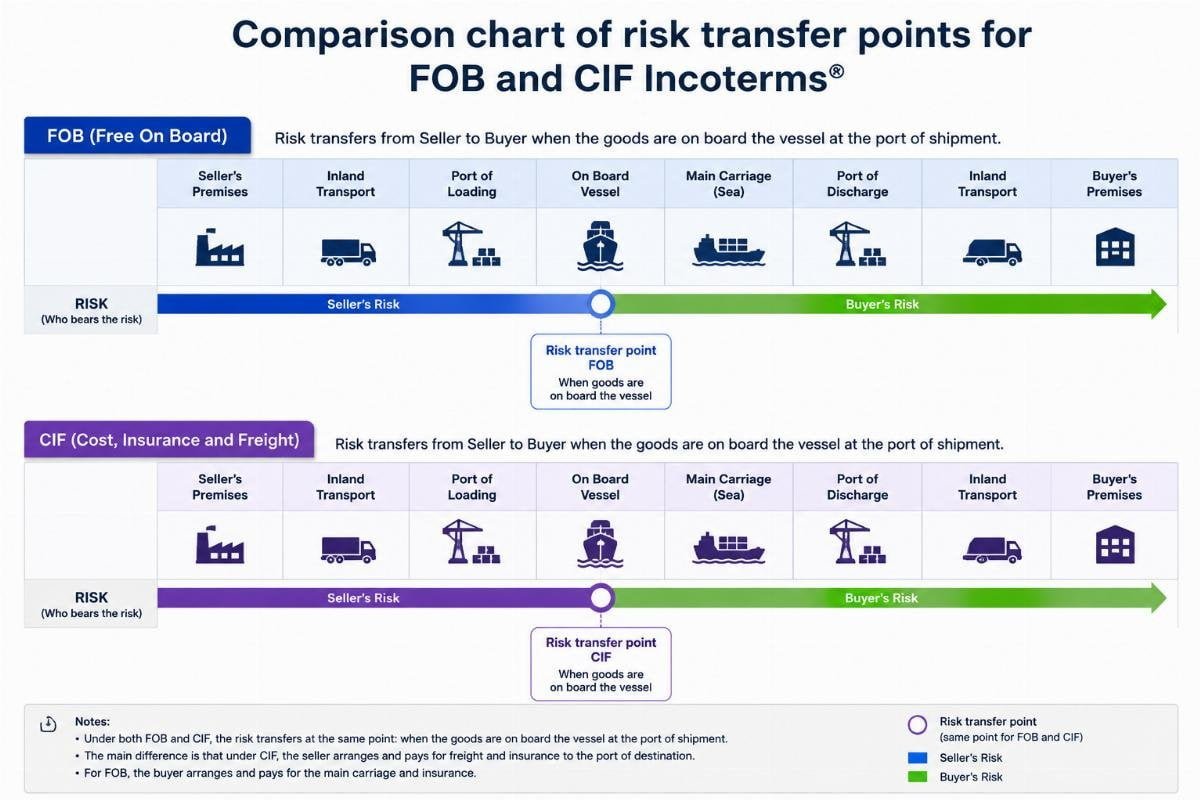
The key takeaway is that the party bearing the financial risk of loss should always control the insurance policy. For high-value structural steel, relying on a seller’s minimum CIF policy is a gamble most procurement managers cannot afford.
What Does “All Risks” Actually Cover for Steel Plates?
“All Risks” is a misnomer; it covers all external causes of physical loss or damage unless specifically excluded.
In marine insurance, Institute Cargo Clauses (A) is commonly referred to as “All Risks.” For steel plates, this is the gold standard, but it is not a blanket guarantee. Insurers frequently deny claims based on “inherent vice” or poor packaging. Inherent vice refers to defects within the product itself, such as pre-existing mill scale instability or insufficient drying before packing. [NEED_CITE: Marine Insurance Act guidelines on inherent vice]
Common exclusions for steel include:
- Rust and Oxidation: If the steel was not properly coated or packaged, insurers may argue the rust was inevitable due to the nature of the material.
- Condensation Sweat: Water droplets forming inside containers due to temperature changes are often excluded if ventilation was inadequate.
- Handling Dents: Minor dents from forklifts may be considered wear and tear rather than accidental damage.
However, a well-documented claim can overcome these hurdles. For instance, a shipment of Q345B plates destined for a construction project in Brazil suffered surface oxidation. The insurer initially rejected the claim, citing poor packaging. But because the manufacturer had applied professional shot blasting and waterproof wrapping before loading, the surveyor confirmed the damage was due to seawater ingress from a cracked container wall—an external cause. The claim was paid.
This is where manufacturing quality intersects with insurance viability. At our production facilities in Jinan, we prioritize surface treatments like shot blasting and galvanizing not just for compliance, but to mitigate the “inherent vice” argument. When steel leaves the factory in optimal condition, it strengthens the case that any subsequent damage is due to transit accidents, covered under Steel Plate Freight Insurance.
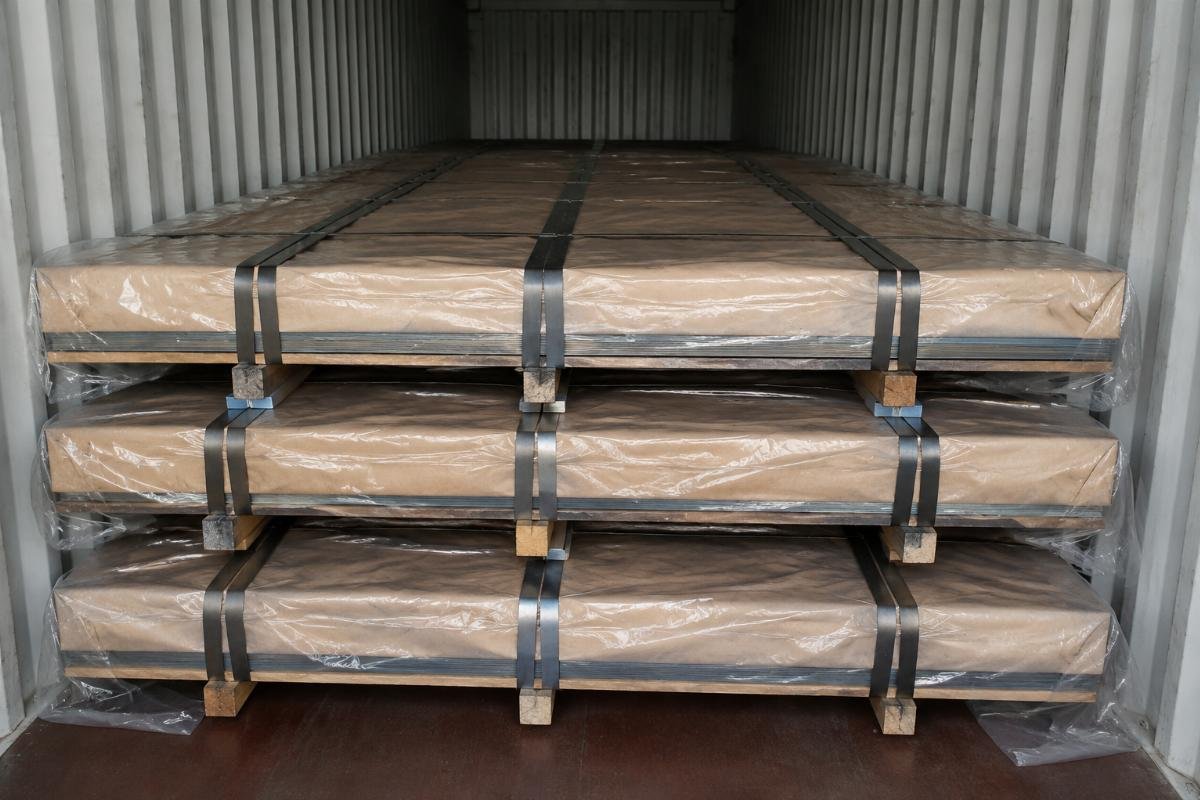
Buyers must verify that the policy explicitly covers rust and condensation, often requiring additional clauses. Without this, “All Risks” may leave significant gaps for metal products.
How to Calculate the Right Insured Value?
Insuring only the FOB price leaves you exposed to unrecoverable landed costs.
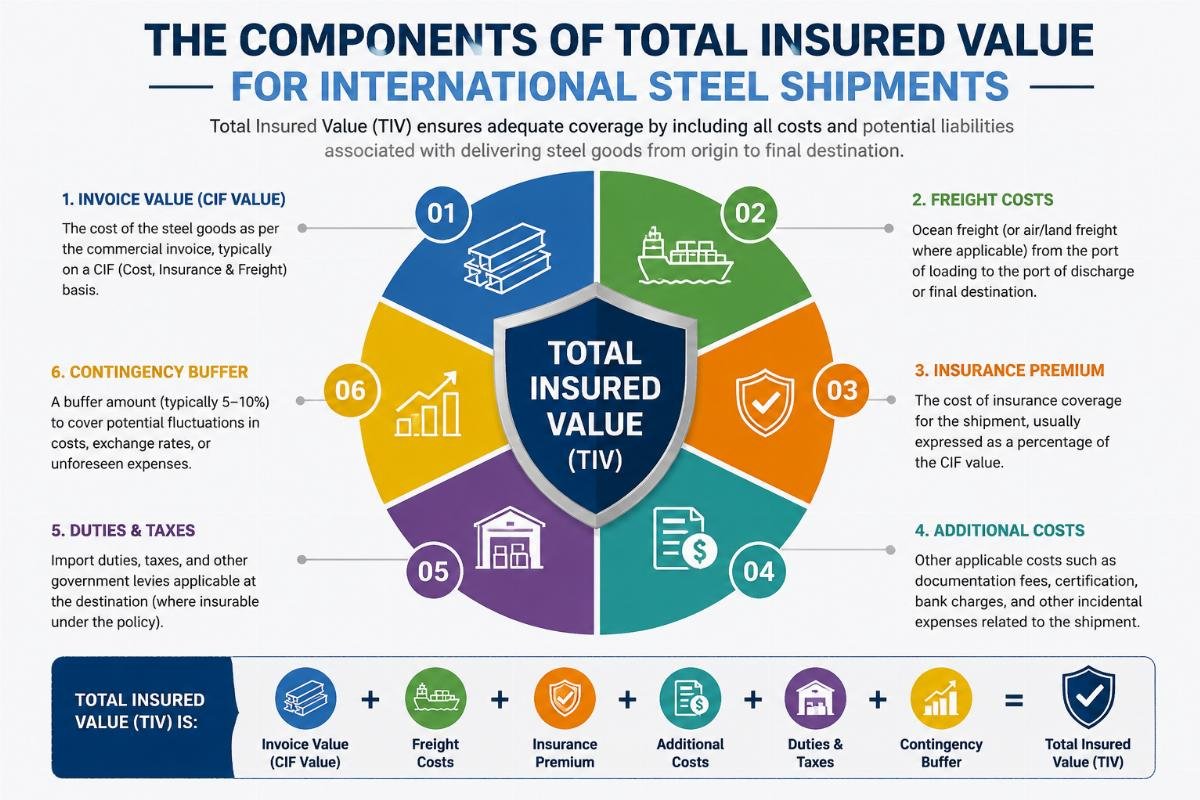
A frequent error in procurement is setting the insured value equal to the invoice price of the goods. This ignores freight costs, duties, taxes, and the buyer’s expected profit margin. If a total loss occurs, reimbursing only the ex-factory cost means the buyer loses the money spent on shipping and customs, plus the opportunity cost of the project delay.
The standard industry practice is to insure for 110% to 115% of the CIF value. This buffer covers administrative costs and a small portion of lost profit. [NEED_CITE: Institute of London Underwriters guidelines on insured value calculation]
| Cost Component | Included in Basic Coverage? | Recommended Action |
|---|---|---|
| Commercial Invoice Value | Yes | Base amount |
| Ocean Freight Charges | Yes | Add to base |
| Import Duties & Taxes | No | Add to insured value |
| Expected Profit Margin | No | Add 10-15% buffer |
| Demurrage Costs | No | Generally excluded |
For example, if a container of structural beams has a CIF value of $50,000, insuring it for $50,000 is insufficient. The correct insured value should be approximately $57,500 (CIF + 15%). This ensures that in the event of a total loss, the buyer can replace the goods and cover the associated landing costs without out-of-pocket expense.
When negotiating Steel Plate Freight Insurance, always specify the currency and ensure the value includes all incidental charges up to the final destination. Underinsuring is a form of self-insurance that rarely pays off in high-stakes infrastructure projects.
Common Claim Pitfalls and How to Avoid Them?
Time is the enemy of a successful insurance claim.
The most common reason for claim rejection is not lack of coverage, but failure to follow procedure. Insurers require immediate notification and evidence preservation. If a buyer waits until the goods are moved to a warehouse or, worse, used in construction, the claim is likely void.
Key pitfalls include:
- Delayed Inspection: Failing to appoint a surveyor within 48 hours of discharge.
- Broken Seals: Accepting a container with a broken or replaced seal without noting it on the delivery receipt.
- Poor Documentation: Submitting photos that do not show the extent of damage or the container number.
A case in point involved a shipment to a Middle East port. The consignee noticed rust on the outer bundles but signed the delivery note as “clean.” Two weeks later, upon unpacking, they found severe corrosion throughout. The insurer denied the claim because the initial clean receipt contradicted the later report of damage. The burden of proof shifted to the buyer, who could not prove the damage occurred during transit rather than during storage.
To avoid this, always request a joint survey with the carrier’s representative if visible damage is suspected. Take timestamped photos of the container exterior, seals, and interior stowage before unloading. These details are crucial for validating Steel Plate Freight Insurance claims.
Checklist for a Smooth Insurance Claim Process?
Preparation begins before the ship sails.
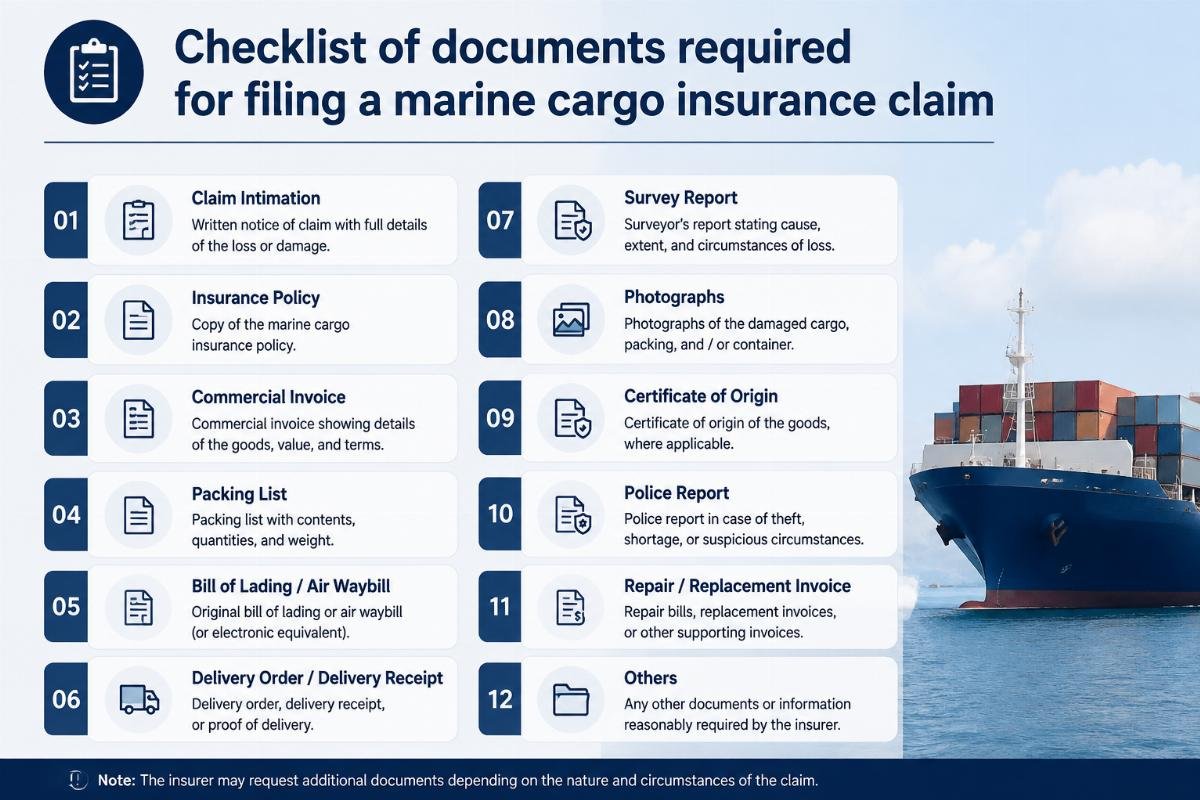
A smooth claim process relies on meticulous documentation. Having the right files ready can reduce settlement time from months to weeks.
- Original Bill of Lading: Proof of title and contract of carriage.
- Commercial Invoice and Packing List: To establish value and quantity.
- Insurance Certificate: The original policy document showing coverage terms.
- Survey Report: An independent assessment of damage by a licensed surveyor. [NEED_CITE: importance of independent surveyors in marine claims]
- Photos and Videos: Clear images of damage, container numbers, and seals.
- Correspondence Log: Emails with the carrier and insurer regarding notification of loss.
Ensure that the surveyor is appointed immediately upon discovery of damage. Do not attempt to repair or sell damaged goods without insurer approval, as this can be seen as admitting liability or destroying evidence.
By maintaining this rigorous documentation standard, buyers protect their interests and ensure that Steel Plate Freight Insurance serves its intended purpose: financial security in an unpredictable global trade environment.
Conclusion
Freight insurance is a strategic tool, not just a compliance checkbox.
Ignoring the nuances of coverage clauses and insured values exposes importers to significant financial risk. By understanding the limitations of carrier liability, selecting the correct Institute Cargo Clauses, and maintaining strict documentation protocols, buyers can safeguard their steel investments. Proper risk management ensures that projects stay on budget, even when logistics go wrong.